 how-to
Emergency Roof Repair: What Insurance Covers
Table of Contents
- What Emergency Roof Repairs Does Insurance Cover
- How to Stop a Roof Leak During Rain: Immediate Steps
- Understanding Covered Perils vs. Wear and Tear
- Documenting Roof Damage for Insurance Claims
- Average Cost of Emergency Roof Repair and Deductibles
- Filing Your Roof Damage Claim: Step-by-Step Process
- When Insurance Denies Roof Claims and What to Do
- Conclusion
- Frequently Asked Questions
Last Updated: September 30, 2026
What Emergency Roof Repairs Does Insurance Cover
Emergency roof repair insurance coverage depends on what caused the damage. Most homeowners insurance policies cover sudden, accidental damage like storm damage, wind damage, and hail damage. They typically do NOT cover damage from wear and tear, poor maintenance, or gradual leaks.
Common covered perils include:
- Wind and windstorm damage
- Hail damage
- Ice dam damage
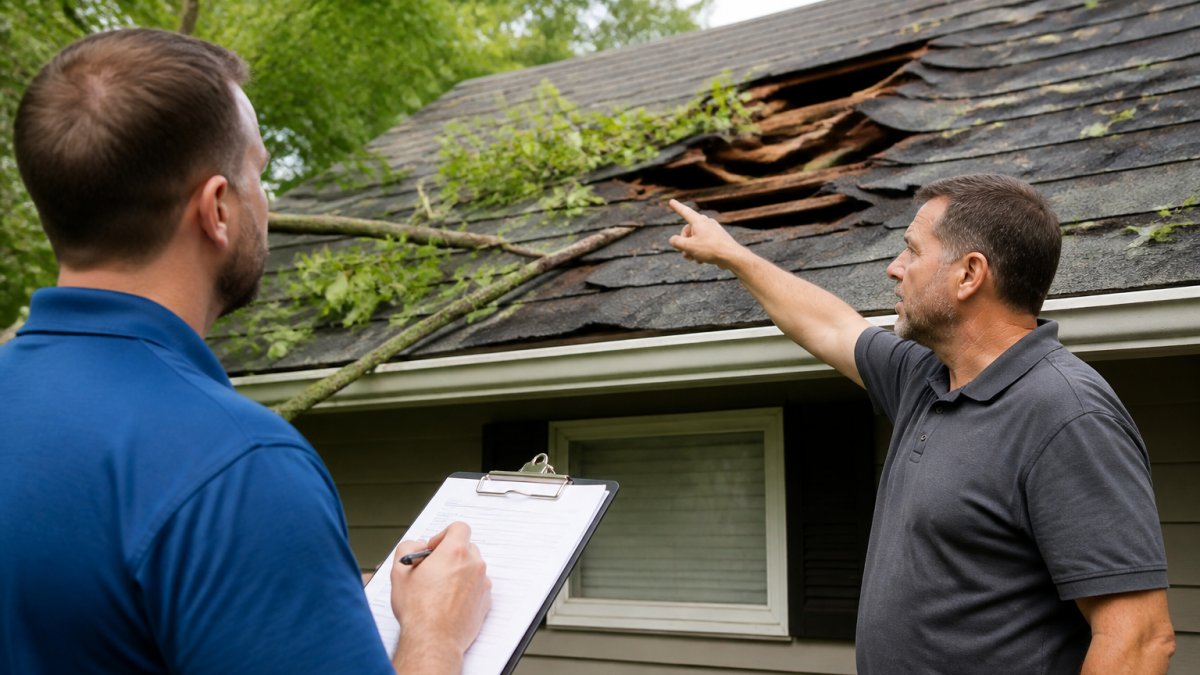
- Tree falling on roof
- Fire or lightning damage
- Sudden water damage from a storm
Common exclusions include:
- Wear and tear from age
- Lack of maintenance
- Gradual leaks
- Damage from poor ventilation
- Mold or fungal growth
- Damage from improper installation
According to the National Association of Insurance Commissioners, homeowners should review their policy details carefully. Not all policies cover the same perils. Your specific coverage depends on your policy type and what your insurer includes.
How to Stop a Roof Leak During Rain: Immediate Steps
Act quickly to prevent interior damage. The "Duty to Mitigate" requires you to take reasonable steps to prevent additional damage; failure to do so may result in claim denial.
Here are immediate steps to stop a roof leak during rain:
Step 1: Move valuables and catch water (Time: 5-10 minutes)
- Move furniture, electronics, and belongings away from the leak area
- Place buckets or tarps under the leak to catch water
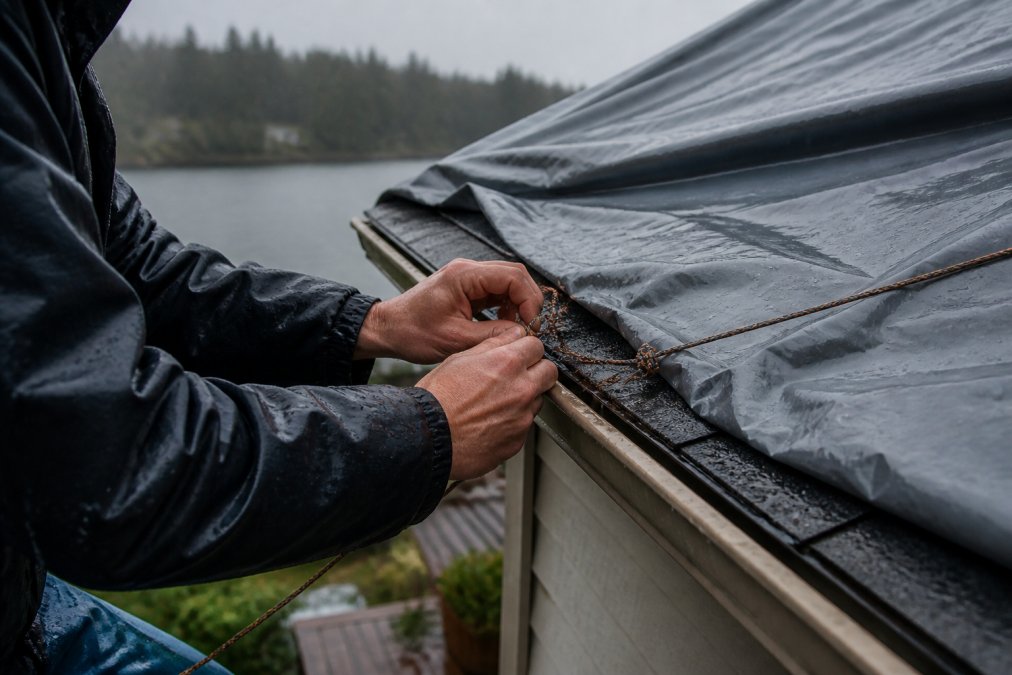
Step 2: Apply emergency tarping (Time: 15-30 minutes)
- Use a heavy-duty plastic tarp or emergency roof patch kit
- Secure it over the damaged area with rope or fasteners, extending at least 6 feet past the damage in all directions
Step 3: Document the damage (Time: 10-15 minutes)
- Take photos and videos of the leak, water damage, and tarped area with timestamps
Step 4: Call your insurance company (Time: 5-10 minutes)
- Report the damage within 24-48 hours with your policy number and description
Understanding Covered Perils vs. Wear and Tear
Your insurance company will determine whether damage is a covered peril (sudden, accidental events like storms, hail, or falling trees) or excluded damage like wear and tear (gradual deterioration from aging or poor maintenance).
An adjuster will inspect your roof to determine if damage is from a covered peril or wear and tear.
Documenting Roof Damage for Insurance Claims
Document damage immediately after it occurs, do not wait for the adjuster. Take clear photos and videos from multiple angles, as adjusters base decisions on the evidence you provide.
Documentation checklist:
- Wide-angle and close-up photos of damage from multiple angles
- Photos from inside your attic showing water stains or leaks
- Video walk-through of all affected areas
- Photos of temporary repairs or tarping applied
- Photos of interior water damage (ceilings, walls, floors)
- All photos with date and time stamps
- Receipts for emergency repairs or supplies
- Date, time, and weather conditions when damage occurred
- Details about what caused damage (storm type, wind speed if known)
- Contact information from neighbors who witnessed damage
- Pre-damage roof photos for comparison (if available)
Average Cost of Emergency Roof Repair and Deductibles
Emergency roof repair costs vary by damage severity, roof size, and repair type. While your deductible determines your initial out-of-pocket cost, depreciation often reduces your payout far more than the deductible itself.
The depreciation trap: Why older roofs get smaller payouts
Filing Your Roof Damage Claim: Step-by-Step Process
Step 1: Report the damage (Time: 5-10 minutes)
- Call your insurance company within 24-48 hours with your policy number and description
- Document the date and time you called and the representative's name
Step 2: Document everything (Time: 30-60 minutes)
- Take comprehensive photos and videos
- Write down what caused the damage, date, time, and weather conditions
- Collect weather reports showing the storm or event
Step 3: Obtain a contractor estimate (Time: 1-2 days)
- Get a written estimate with photos from a roofing contractor
Step 4: Schedule the adjuster inspection (Time: varies)
- Be present during inspection and ask the adjuster to explain findings
Step 5: Review the adjuster's report (Time: 1-2 weeks)
- Request a copy and compare it to your contractor's estimate
- Note any missed damage
Step 6: Submit your claim (Time: varies)
- Provide all documentation: photos, estimates, receipts, and adjuster's report
- Keep copies of everything submitted
Step 7: Follow up on claim status (Time: ongoing)
- Contact your insurance company for updates and payment timeline
- Document all communications
When Insurance Denies Roof Claims and What to Do
Insurance companies deny roof claims for specific reasons. Common denial reasons include wear and tear, policy exclusions, maintenance issues, pre-existing damage, timing issues, insufficient documentation, or depreciation disputes. Understanding these reasons and your response options helps you recover a fair settlement.
Your response options, and when to use each:
Use this option if:
- The denial reason is unclear or seems contradictory
- You have additional photos or documentation the adjuster may have missed
- The damage is clearly from a covered peril (storm, hail, wind)
Use this option if:
- You have new evidence the adjuster didn't see
- You can document that you maintained your roof properly
- The adjuster's findings contain factual errors
Use this option if:
- The insurance adjuster's findings seem questionable
- You want a professional opinion before spending more money
- The claim amount is moderate ($3,000-$8,000) and a second opinion might resolve the dispute
How public adjusters work:
- You sign a contract giving them authority to represent you
- They conduct their own damage assessment and prepare a detailed claim
- They negotiate directly with your insurance company
- They are paid only if they increase your settlement (typically 5-10% of the increase)
- If they don't increase your settlement, you pay nothing
When hiring a public adjuster makes sense:
- Claim over $5,000 (negotiation often recovers more than their fee)
- Your claim was denied (they specialize in overturning denials)
- Heavy depreciation applied (they can challenge and recover thousands)
- Contractor's estimate significantly exceeds insurance company's estimate
- You lack time or expertise to handle the process
Skip a public adjuster if:
- Claim is under $2,000 (fee won't justify the cost)
- Claim was approved and you're satisfied
- Denial is clearly your responsibility
- You have time and confidence to appeal yourself
Use this option if:
- You've exhausted other options and believe the insurer acted in bad faith
- The denial violates your state's insurance regulations
- You want to create an official record of the dispute
Use this option if:
- Your claim exceeds $10,000 and was wrongfully denied
- You believe the insurer acted in bad faith or violated state law
- You've exhausted administrative remedies and want legal recourse
The decision tree:
- Denial just received? → Request detailed denial letter and gather additional documentation (Option 1)
- Have strong evidence the denial is wrong? → File formal appeal (Option 2)
- Unsure if adjuster's assessment is accurate? → Get second opinion (Option 3)
- Claim is $5,000+, heavy depreciation, or appeal failed? → Hire public adjuster (Option 4)
- Insurer won't budge? → File complaint with state insurance commissioner (Option 5) or consult attorney (Option 6)
Conclusion
Emergency roof repair insurance depends on what caused the damage. Sudden, accidental damage like storms and hail are typically covered; gradual wear and tear is usually not. The most important steps are immediate mitigation (tarping), thorough documentation, and prompt claim filing. Sound Roof Care helps homeowners complete emergency repairs. Get in touch today to discuss your roof damage and insurance coverage.
Frequently Asked Questions
Does homeowners insurance cover emergency roof repairs from storm damage?
Yes, most homeowners insurance policies cover emergency roof repairs caused by sudden, accidental events like hail, wind, or falling trees. Storm damage is typically classified as a covered peril under dwelling coverage. However, damage from wear and tear, lack of maintenance, or gradual deterioration is not covered. Review your policy's covered perils section or contact your insurer to confirm what specific events your policy includes.
What should I do immediately when I discover a roof leak during heavy rain?
First, stop water from entering your home by placing buckets under the leak and moving valuables away from the affected area. If safe, access your attic to locate the leak's source. Apply temporary tarping from inside the attic if possible, or use emergency patching materials. Document the damage with photos and video. Then contact your insurance company to report the damage and begin the claim process. Avoid making permanent repairs until the adjuster inspects the damage, as this could affect your claim.
How do I document roof damage properly for an insurance claim?
Take clear photos and video of all visible damage from multiple angles, both close-up and wide shots. Document the date, time, and weather conditions when damage occurred. Keep receipts for any emergency repairs or mitigation costs. Create a written list of damaged items and areas affected. Store all documentation in one folder and provide copies to your insurance company. This documentation supports your proof of loss and helps prevent claim denial.
What is the typical deductible for roof damage claims, and how does it affect my reimbursement?
Standard homeowners insurance deductibles range from $500 to $2,500, though some policies have higher amounts. Your deductible is the amount you pay out of pocket before insurance reimburses the rest of the claim. For example, if repairs cost $5,000 and your deductible is $1,000, you pay $1,000 and insurance covers $4,000. Some policies include separate wind or hail deductibles, which may be a percentage of your home's insured value rather than a fixed dollar amount. Check your policy documents to understand your specific deductible structure.