 how-to
How to Clean Roof Moss Without a Pressure Washer
Last Updated: October 28, 2026
Quick Summary
To clean roof moss without a pressure washer, kill the moss first with a moss-killing treatment applied by pump sprayer or watering can, let it soak for the full dwell time, then rinse with low pressure and remove the dead moss with a soft brush. High-pressure water strips shingle granules and voids many shingle warranties.
- Oxygen bleach is safe on asphalt shingles and most tile, with a typical dwell time of 15 to 30 minutes.
- Moss turns brown or yellow as it dies, which signals it is ready for removal.
- Rinse from the top down with a garden hose on low pressure so debris washes toward the gutters.
- Never mix bleach with vinegar or ammonia because the fumes are dangerous.
- Check local rules on runoff before starting, since many areas restrict what can flow into storm drains.
Table of Contents
- Why Pressure Washing Damages Roofs and What to Do Instead
- What to Use to Kill Moss on a Roof
- Roof Moss Removal Tools You Actually Need
- Step-by-Step: Applying Treatment, Rinsing, and Removing Dead Moss
- Protecting Plants, Gutters, and Roof Runoff
- How to Prevent Moss from Growing on a Roof
- When to Call for Professional Roof Moss Removal
- Frequently Asked Questions
Why Pressure Washing Damages Roofs and What to Do Instead
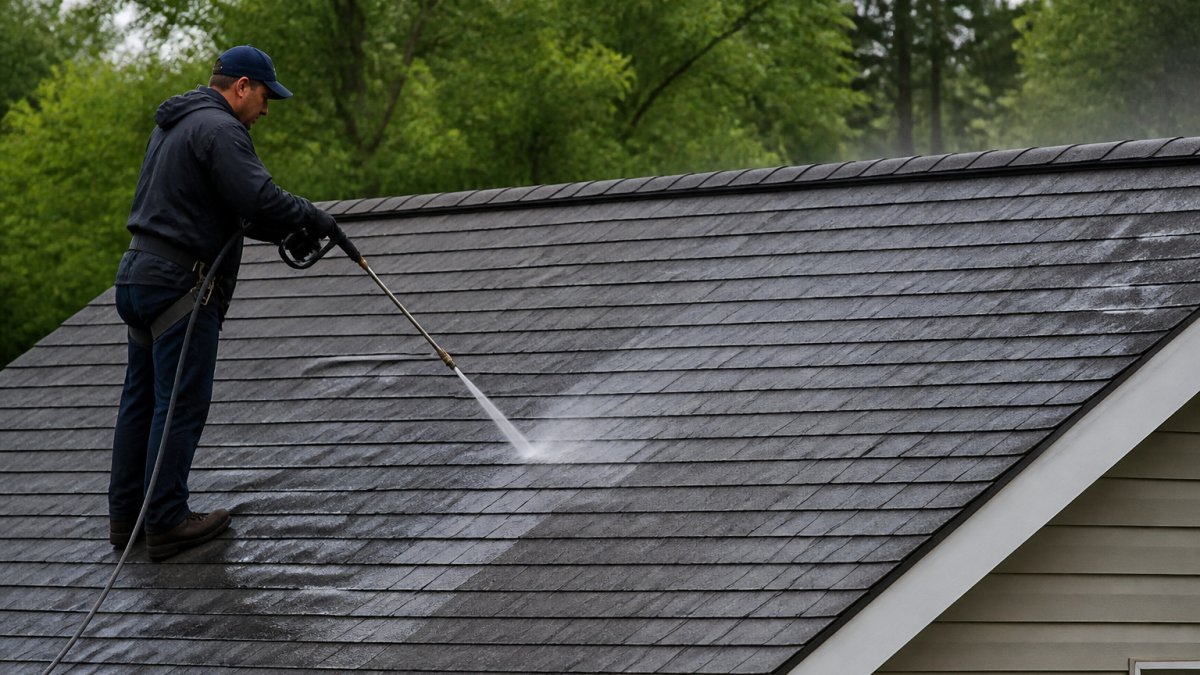
Learning how to clean roof moss without a pressure washer protects the single most expensive surface on your home, and it starts with knowing what to clean roof moss with. High-pressure water strips the protective granules that shield shingles from rain and sun. Once those granules are gone, the shingle ages fast.
What Pressure Washing Does to Shingles and Tiles
A pressure washer forces water under shingle edges and into seams. That water traps moisture where moss already likes to grow. On tile roofs, the spray can crack brittle tiles and blast away the surface glaze. On a shed roof or a steep roof, the damage happens even faster because water runs harder downhill.
The Asphalt Roofing Manufacturers Association warns that high-pressure cleaning voids many shingle warranties. That alone should stop you before you rent a machine.
The Non-Pressure Approach at a Glance
The safe method kills moss first, then lets it dry, then removes it gently. Here is the whole process in order:
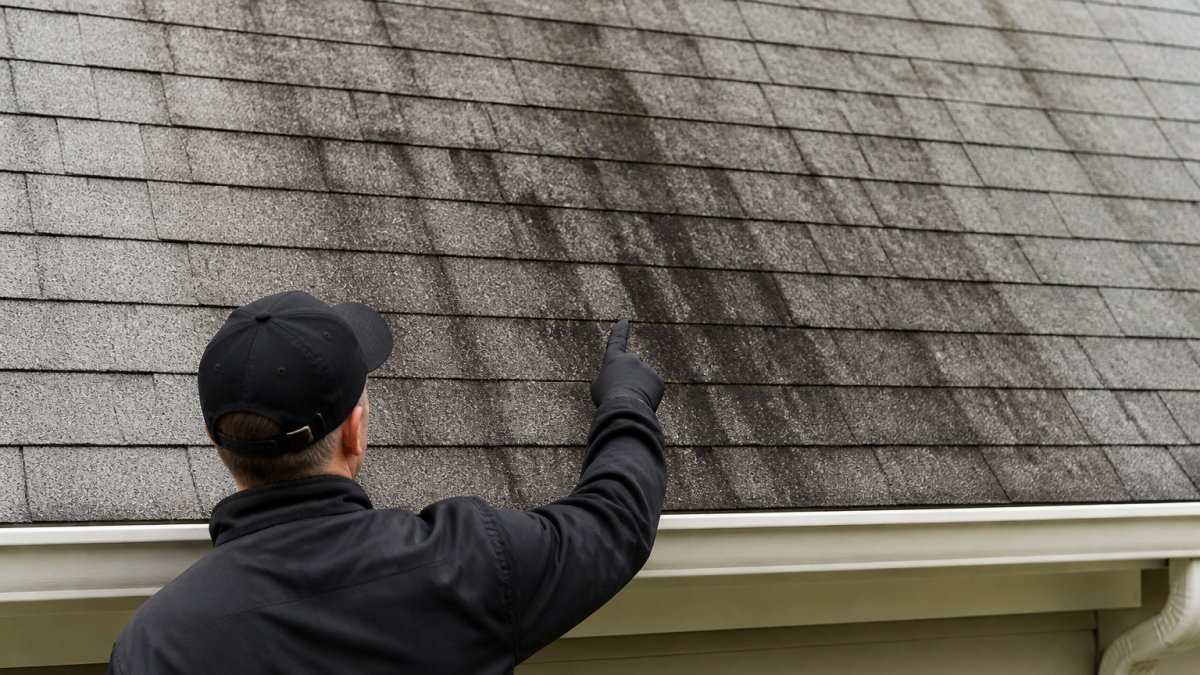
- Assess the roof and check for damage
- Apply a moss-killing treatment with a pump sprayer or watering can
- Let it soak for the full dwell time
- Rinse the treated areas with low pressure
- Remove dead moss with a soft brush or by hand
- Clear the gutters and clean up the runoff
No pressure washer. No scraping at live moss. Just patience and the right products.
What to Use to Kill Moss on a Roof
Watch out: never mix bleach with vinegar or ammonia. The fumes are dangerous, and the mix can damage shingles.
Comparing Moss Killers: Safety and Environmental Trade-Offs
Every moss killer carries a trade-off between cleaning effectiveness and safety. The table below adds the factors most guides skip: surface compatibility, runoff risk, and realistic dwell time.
| Product | Best For | Surface Compatibility | Runoff Risk | Typical Dwell Time | Repeat Needed |
|---|---|---|---|---|---|
| Oxygen bleach | Most roofs | Safe on asphalt shingles and most tile; test on metal | Low when diluted; still keep runoff off beds | 15-30 minutes | Sometimes |
| Soap-based cleaner | Shaded, damp areas | Generally safe on shingles and tile; may leave film on metal | Low toxicity, but surfactants can harm aquatic life if it reaches storm drains | 10-20 minutes | Often |
| Fatty acids | Small patches | Check label; some formulations can stain porous tile | Moderate; avoid overspray near gutters | Per label (often 10-15 minutes) | Yes |
| Vinegar | Light moss | Safe for most plants at low strength; acidic runoff can shift soil pH | Moderate; acidic runoff near beds | 20-30 minutes | Yes, frequently |
For homeowners who would rather have professional moss treatment, we also offer a professional moss treatment service.
Roof Moss Removal Tools You Actually Need
If you want the full walkthrough that puts these tools to work, read how to remove moss from roof safely. It covers ladder safety and access in detail, which matters more than most people expect.
Step-by-Step: Applying Treatment, Rinsing, and Removing Dead Moss
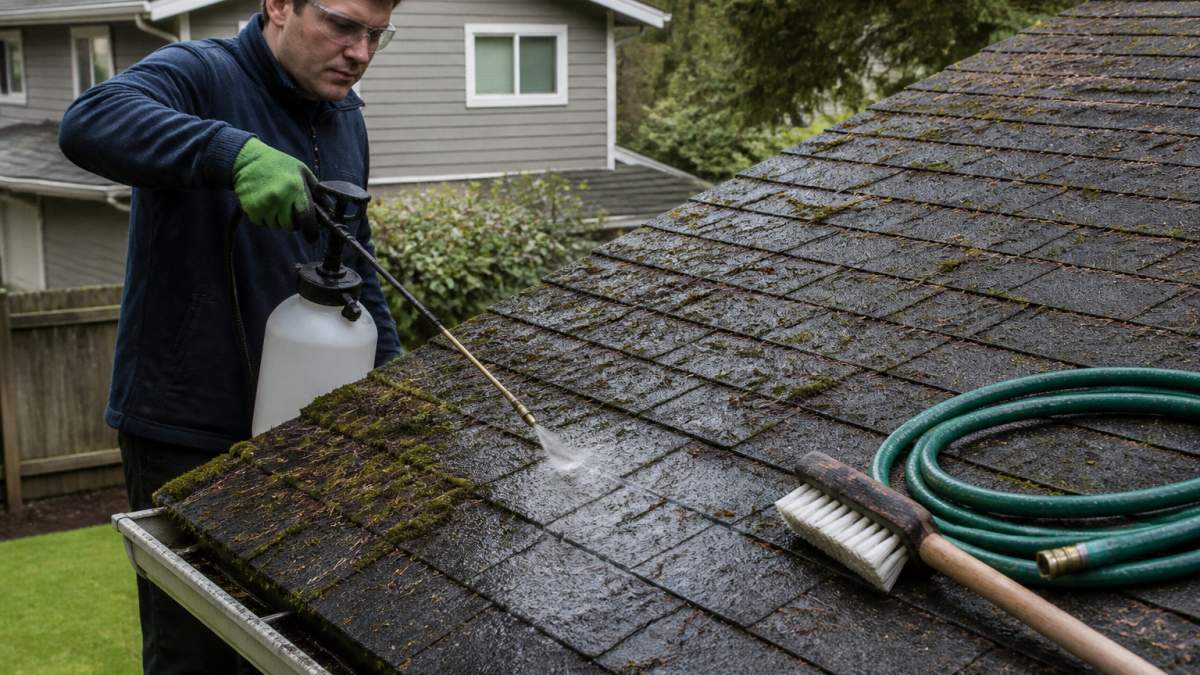
Spray until the moss is fully soaked, not dripping. On a steep roof, use a sprayer with a long wand so you never lean past the ladder.
How Long to Leave Treatment on the Roof
Moss turns brown or yellow as it dies. That color change is your signal. If patches stay green after the full dwell time, plan a repeat application rather than soaking longer.
Rinsing and Removing Loosened Debris
Rinse with a garden hose on low pressure. Never aim a hard stream at shingles. Rinse from the top down so loosened moss and dead moss wash toward the gutters, not into your flower beds.
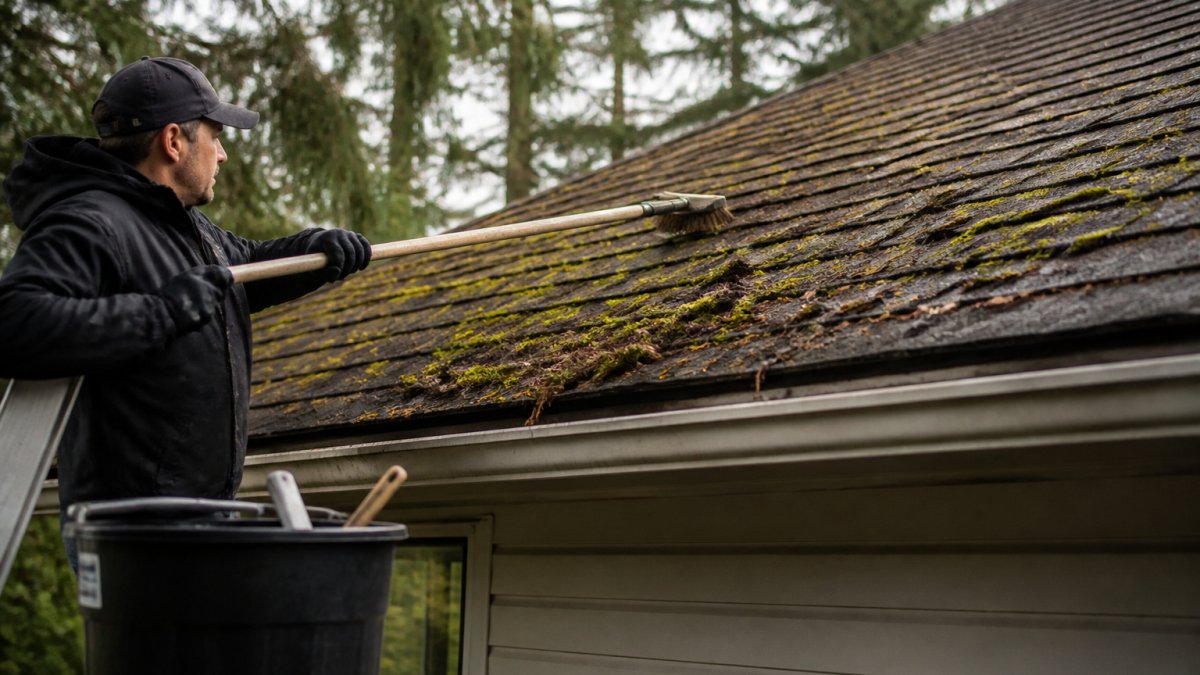
Wait for the roof to dry, then remove the dead moss with a soft brush. Most of it lifts away with light pressure. Scraping at stubborn patches is fine, but stop if you feel the tool catch on shingle edges. Bag the debris rather than washing it into the yard.
Protecting Plants, Gutters, and Roof Runoff
Check local rules on runoff before you start. Many areas restrict what can flow into storm drains, so follow the product label and your state environmental agency guidance on disposing of cleaning solution.
How to Prevent Moss from Growing on a Roof
A common mistake is skipping prevention once the roof looks clean. In wet climates, moss returns quickly without a maintenance plan. Our complete guide to how to prevent moss on roof lays out a full seasonal schedule.
When to Call for Professional Roof Moss Removal
We tell homeowners the same thing every time: moss treatment is not a substitute for roof maintenance. If your roof is over 20 years old, a cleaning may reveal problems that need a real repair plan. Our comparison of DIY vs professional roof moss cleaning breaks down the costs, safety risks, and results so you can decide with clear eyes.
Frequently Asked Questions
Can you remove roof moss without a pressure washer?
Yes. A liquid moss killer applied with a pump sprayer or watering can, followed by a rinse and gentle scraping with a soft brush, removes moss without the risk of pressure washing. Pressure washers force water under shingles and strip protective granules, which shortens roof life. The non-pressure method takes longer, often two to three weeks for moss to die and loosen, but it leaves the roof surface intact.
What is the most effective tool for removing moss from a roof?
A soft-bristle brush or plastic scraper is the safest tool for loosened moss on asphalt shingles. For tile roofs, a stiff brush works without scratching the surface. Pair the tool with a pump sprayer for treatment and a garden hose for rinsing. Never use a metal scraper or wire brush, which gouges shingles and removes granules. Roof moss removal tools should always be paired with fall protection and non-slip footwear.
How long does it take for moss to die after treatment?
Most liquid moss treatments need 15 to 30 minutes of dwell time to begin working, but the moss may take one to three weeks to fully die and turn brown. After that, it loosens enough to brush off. In shaded or damp areas, a repeat application may be needed. Check the product label for the recommended application rate and interval between treatments.
How do you prevent moss from growing back on a roof?
Trim tree branches to increase sunlight, clear debris from gutters, and treat the roof with a moss preventive every one to two years. Zinc or copper strips along the ridge line can also slow regrowth. In the Pacific Northwest, where moisture and shade are constant, a maintenance plan with professional roof moss removal is the most reliable way to keep moss from returning quickly.
Moss on a roof is a maintenance problem, not a one-time chore, and the wrong tools can cost you a warranty. Sound Roof Care is a family-owned company serving the Puget Sound region since 2009, with certified, safety-focused technicians and honest pricing with no hidden fees. We handle professional cleaning, moss treatment, and long-term maintenance plans built for this wet, moss-prone climate. Get started with Sound Roof Care and protect your roof for the long run.