 how-to
7 Causes of Black Streaks on Roof Shingles
Last Updated: November 2, 2026
Quick Summary
The black streaks on roof shingles are almost always Gloeocapsa magma, an airborne algae that feeds on the limestone filler in asphalt shingles and spreads into dark stains that run downhill with every rain. It thrives on moisture, warmth and shade, and it sits on the surface rather than eating through the shingles.
- Pressure washing blasts off protective granules and can void your shingle warranty.
- North-facing slopes stay damp longest and collect the heaviest algae growth.
- Many modern shingles use copper-infused algae-resistant granules that slow growth but do not make a roof immune.
- Let a diluted sodium hypochlorite solution dwell 10 to 15 minutes, then rinse at low pressure.
- Trim tree overhang and clear debris to remove the shade and damp pockets algae needs.
Table of Contents
- What Causes Black Streaks on Roof Shingles
- Gloeocapsa Magma: The Algae Behind Most Black Streaks
- Black Algae on Roof Shingles: Why Asphalt Shingles Feed It
- Conditions That Let Roof Algae Thrive
- Are Black Streaks on Roof Shingles Harmful?
- How to Remove Black Streaks from Roof Shingles
- How to Prevent Roof Algae from Coming Back
- Book a Roof Inspection Before the Streaks Spread
- Frequently Asked Questions
What Causes Black Streaks on Roof Shingles
The black streaks on roof shingles are almost always a living organism, not dirt or age.
This guide covers the seven causes behind those streaks, how to tell algae from moss or damage, and what stops it from coming back.
- Cause one: airborne algae spores landing on the roof
- Cause two: limestone filler inside asphalt shingles feeding the growth
- Cause three: moisture and humidity that keep the roof damp
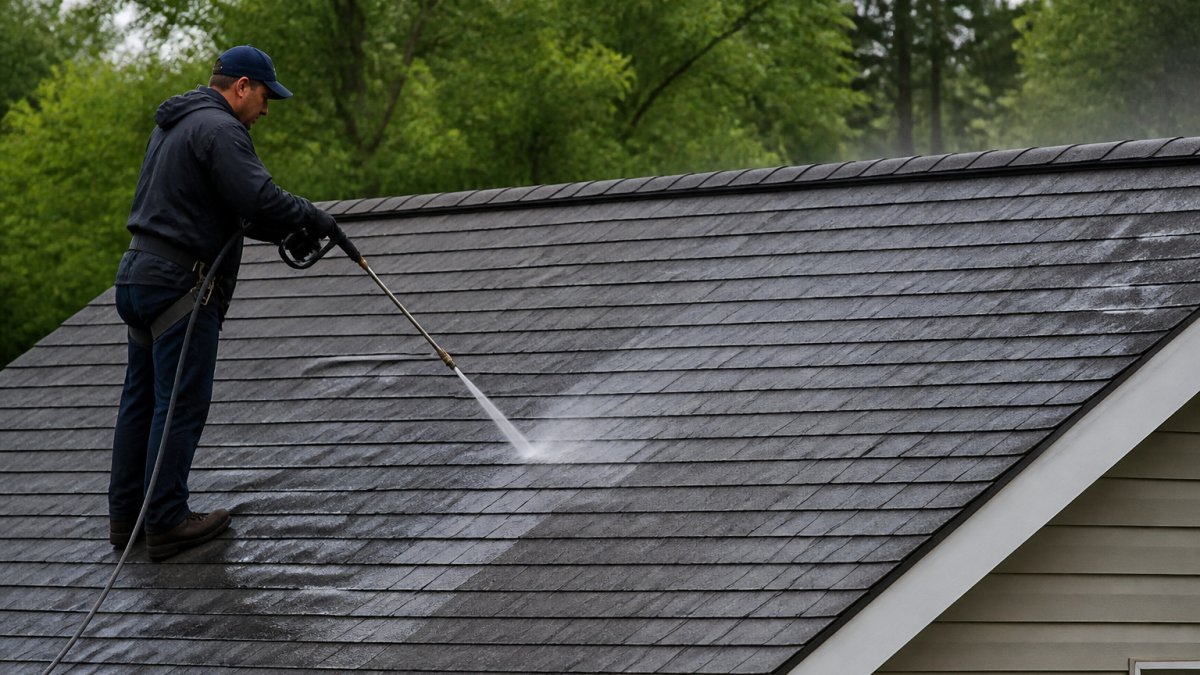
Watch out: the biggest mistake homeowners make is pressure washing the streaks away. That blasts off the protective granules and can void your shingle warranty.
Gloeocapsa Magma: The Algae Behind Most Black Streaks
Gloeocapsa magma is a blue-green algae, or cyanobacteria, that forms those dark, streaky stains on roof surfaces.
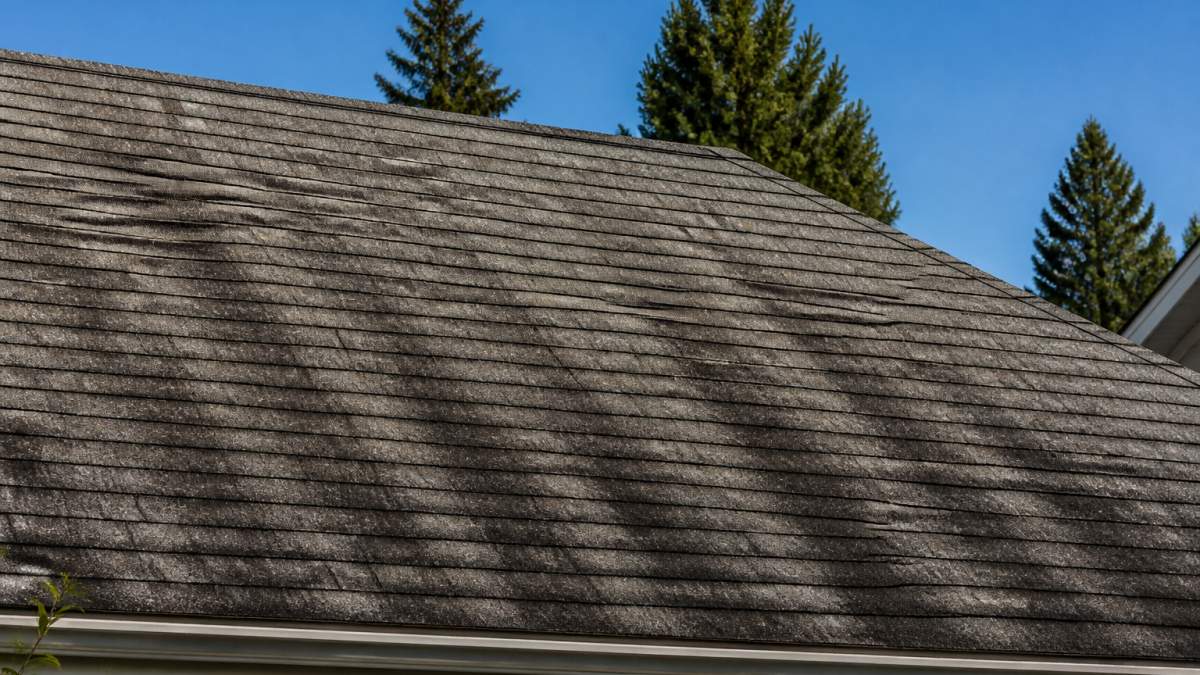
This is one of the most common forms of roof discoloration in humid climates, and it spreads fastest on shaded, north-facing slopes that stay damp longest.
The good news: it sits on the surface and does not eat through shingles the way rot or moss roots can.
Black Algae on Roof Shingles: Why Asphalt Shingles Feed It
Black algae on roof shingles grows so well because of what is inside the shingles.
Shingle granules make it worse over time. As granules wear away, the surface gets rougher and holds more moisture, giving algae more places to take hold.
Manufacturers know this. Many modern shingles now include algae-resistant granules, often copper-infused, that slow growth on the treated surface (Algae & Moss Prevention and Cleaning for Asphalt Roofing Systems). Asphalt Roofing Manufacturers Association guidance on algae-resistant shingles explains how these treated granules work.
If you want to keep your granules intact while cleaning, our guide on how to clean asphalt shingles without damaging granules walks through the safe method.
Conditions That Let Roof Algae Thrive
Roof algae thrives on three things: moisture, warmth, and shade. Take away any one and growth slows. In the Pacific Northwest, all three tend to line up.
- Humidity: damp air keeps the roof surface wet long after rain stops
- Shade: tree overhang and north-facing slopes block the sun that would dry the roof
- Warm climate: algae grows fastest in warm, humid conditions
North-facing roof slopes are the classic trouble spot. They get less direct sun, dry out slower, and collect more organic growth than south-facing planes. If your streaks are heaviest on the shaded side of the house, that is your confirmation.
Are Black Streaks on Roof Shingles Harmful?
Are black streaks on roof shingles harmful? Mostly to your home's appearance and value, but they can point to real trouble underneath. The algae itself sits on the surface and does not structurally damage shingles on its own.
The harder question is what you are actually looking at. Algae, mold, soot, and shingle deterioration can all read as "black streaks" from the ground, and each calls for a different response.
Algae versus mold versus soot versus shingle wear
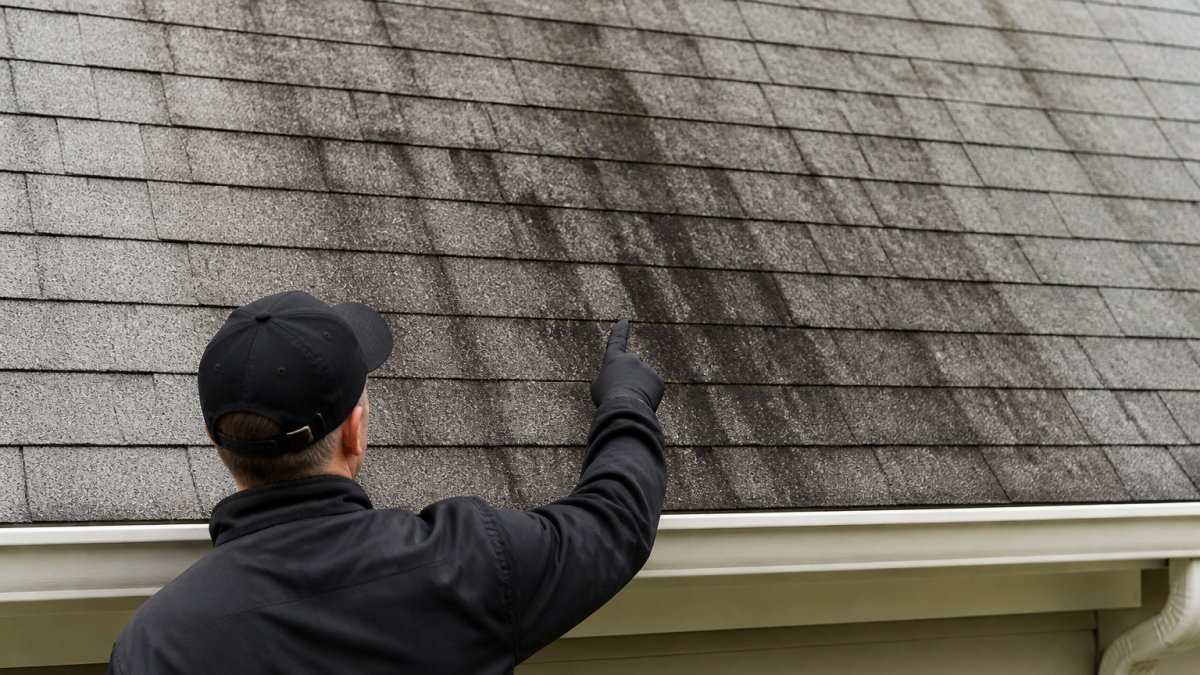
- Algae (Gloeocapsa magma): Dark streaks that run straight downhill in bands, usually heaviest on shaded or north-facing slopes. The streaks follow the flow of rainwater and tend to be darkest at the top of the slope and fade as they run down. Up close, the surface feels slightly slick or powdery, not fuzzy.
- Mold or mildew: Patchy, fuzzy, or velvety growth that clusters in damp corners, around chimneys, and in valleys rather than running in clean vertical lines. Mold often shows up indoors too, as musty odors or ceiling stains, which algae does not cause.
- Soot and pollution: A uniform gray-to-black film that coats the whole roof evenly rather than streaking. It is common near busy roads, wood-burning chimneys, and industrial areas, and it wipes off with a rag in a way algae does not.
A quick field test helps. Scrub a small inconspicuous spot with a soft brush and a little water. Algae lightens or lifts in streaks; soot smears; mold may smear and smell musty; granule loss leaves bare asphalt that stays dark no matter how hard you scrub.
When the streaks mean something more serious
Cosmetic algae is a maintenance issue. The following signs mean you should stop thinking about cleaning and get the roof inspected:
- Granule loss: Check the gutters and the ground at downspouts. A heavy accumulation of sand-like granules means the shingles are aging out, and the dark patches may be exposed asphalt rather than algae.
- Curling, cracking, or missing shingles: These are signs of a roof near the end of its service life or of ventilation problems underneath.
- Soft decking: If the roof feels spongy underfoot or the fascia boards are soft, moisture has reached the structure.
Homeowners often call about streaks and learn the real issue is a roof at the end of its life. That is why an inspection before cleaning is worth the time: it tells you whether you are buying a cleaning or a replacement.
The cost of leaving algae alone
Algae stains are cosmetic and treatable, but not free to ignore. A stained roof reads as a maintenance problem to buyers and can pull down perceived value even when the roof is structurally sound. Left for years, the constant damp film can accelerate granule loss and give moss a foothold, shortening roof lifespan. Treat algae early as maintenance, and treat curling, bald patches, and leaks as repair decisions.
| What you see | Likely cause | What to do |
|---|---|---|
| Dark streaks running downhill, heaviest on shaded slopes | Algae | Clean and treat the roof |
| Fuzzy or velvety patches in damp corners | Mold or mildew | Fix the moisture source, then treat |
| Even gray-black film across the whole roof | Soot or pollution | Wash with a mild cleaner |
| Bald patches, curling edges, grit in gutters | Shingle deterioration | Get a roof inspection |
| Soft spots or interior leaks | Roof damage | Call a roofer now |
How to Remove Black Streaks from Roof Shingles
Removing black streaks safely comes down to one rule: kill the algae, then rinse it away at low pressure.
Follow these steps:
- Inspect first. Check for cracked, curled, or missing shingles before you touch anything.
- Protect the plants below. Cover shrubs and rinse runoff away from landscaping.
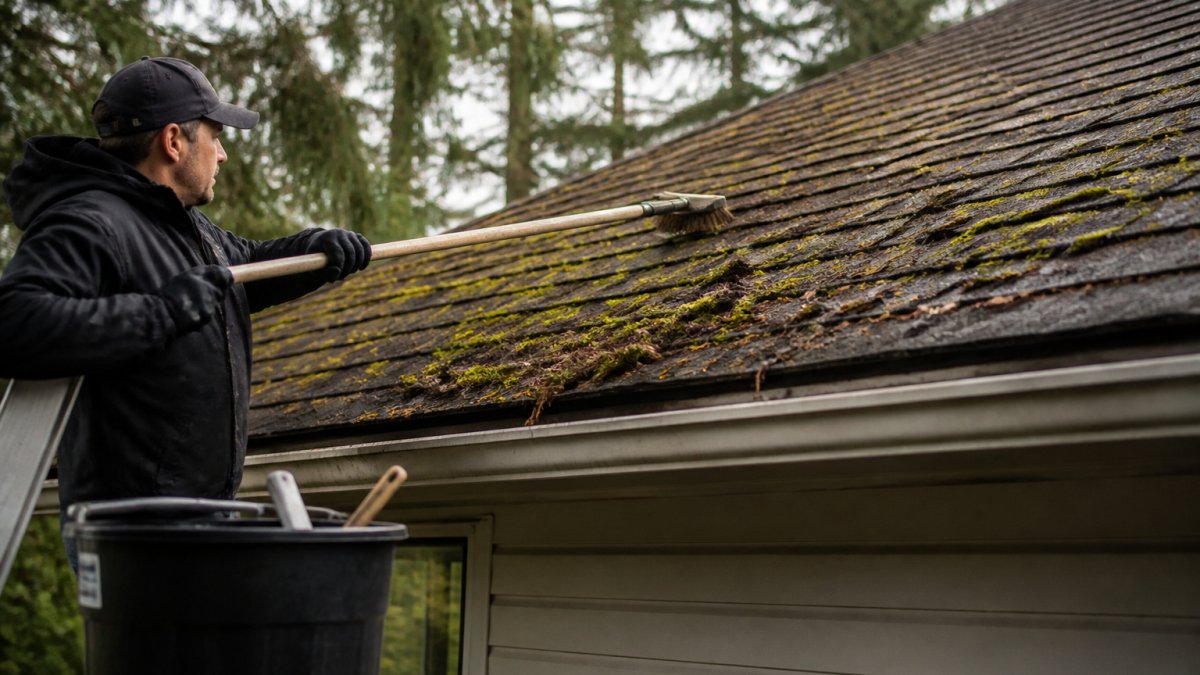
- Apply a cleaning solution. A diluted sodium hypochlorite mix, following the label, kills algae on contact.
- Let it dwell. Give the solution time to work, usually 10 to 15 minutes. Do not let it dry.
- Rinse at low pressure. Use a garden hose or soft wash setup, never a pressure washer.
- Work top to bottom. Clean in sections so runoff does not re-stain clean areas.
- Rinse the gutters. Flush debris and leftover solution out of the system.
If you would rather not climb up there, our professional roof cleaning service can help.
Watch out: mixing bleach with other cleaners can create dangerous fumes. Never combine sodium hypochlorite with ammonia-based products.
Are you worried about warranty? Our article on whether pressure washing voids your roof warranty explains what manufacturers actually cover.
How to Prevent Roof Algae from Coming Back
Prevention works, but it is a maintenance habit, not a one-time fix. Cleaning kills what is there; stopping the return means removing the conditions that let algae grow back.
What each prevention measure actually does
- Trim tree overhang: Removing branches that shade the roof lets sunlight and air dry the surface. Expect meaningful reduction on affected slopes, but not elimination, because spores still land from neighboring trees and wind. This is the highest-value step for most homes.
- Clear debris: Leaves, needles, and seed pods hold water against the shingles and feed growth. Clearing valleys, gutters, and roof planes removes the damp pockets algae needs. This is a seasonal chore, not a permanent fix.
- Improve attic ventilation: Trapped warm, moist air rises into the roof deck and keeps shingles damp from underneath. Better intake and exhaust ventilation helps dry the roof, but it is a construction project, not a weekend task, and works best alongside the other steps.
What to expect from algae-resistant shingles
Many modern asphalt shingles include copper-infused algae-resistant granules, and manufacturers often back them with limited warranties against algae discoloration. Read those warranties closely: they typically cover discoloration from algae specifically, not moss, mold, or general staining, and usually require installation per the manufacturer's instructions. If your roof already has these shingles, prevention is mostly about keeping the surface clean and dry so the treated granules can do their job.
Check the manufacturer's instructions before you treat
Before applying any cleaner or installing metal strips, check the shingle manufacturer's care and maintenance guidance. Cleaning methods and products fine on one shingle line can void the warranty on another, and some manufacturers specify approved cleaners or prohibit certain chemicals. A quick look at the label or the manufacturer's website protects your coverage. The Asphalt Roofing Manufacturers Association publishes general guidance on shingle care that is a reasonable starting point.
A realistic maintenance calendar
- Spring: Clear debris from the roof, valleys, and gutters; inspect for winter damage.
- Summer: Check shaded slopes for early streaking; spot-treat small patches before they spread.
- Fall: Remove leaves before they hold moisture through the wet season; trim overhanging branches.
If you want a treatment that keeps working after we leave, our moss treatment service is available for recurring organic growth.
Book a Roof Inspection Before the Streaks Spread
Streaks are a warning worth acting on.
A proper inspection tells you whether you are looking at algae alone or something more serious underneath. Our certified technicians can help you understand what needs fixing. Honest, transparent pricing is part of how we work.
With over two decades of experience and a family-owned team serving the Puget Sound region since 2009, we have helped thousands of homeowners protect their roofs. Get started with Sound Roof Care and keep your roof clean, protected, and structurally sound. Contact us today to book your inspection and get in touch with our team.
Frequently Asked Questions
Are black streaks on roof shingles caused by algae?
In most cases, yes. The dark staining is usually Gloeocapsa magma, a cyanobacteria that lands on the roof as an airborne spore and feeds on limestone filler in asphalt shingles. It spreads fastest on shaded, north-facing slopes and in humid climates. Dirt, moss, soot, and worn granules can also discolor a roof, so a close inspection matters before you assume algae and start cleaning.
Can black streaks damage roof shingles or shorten roof lifespan?
The algae itself mostly stains and does not eat through shingles. The real risk is what comes with it: a dark, damp film holds moisture, and in wet regions moss and lichen move in behind it. Left alone for years, that combination traps water against the shingle mat and speeds granule loss. Treating streaks early is cheaper than replacing a slope that rotted underneath them.
How do you safely remove black streaks from roof shingles?
Skip the pressure washer. High pressure strips granules and voids shingle warranties. The safer route is soft washing: a low-pressure application of a cleaning solution, commonly sodium hypochlorite diluted per the shingle manufacturer's instructions, followed by a plain water rinse. Work bottom to top, protect landscaping and gutters from runoff, and stay off the roof in wet or windy conditions. Many homeowners hand this to a professional for safety and warranty reasons.
How can you prevent roof algae from coming back after cleaning?
Cleaning kills what is there; prevention keeps it from returning. Trim tree overhang to open the roof to sunlight and airflow, clear debris from valleys and gutters, and fix attic ventilation so moisture escapes. In a wet, shaded climate, plan on periodic maintenance rather than a one-time wash.