 how-to
How to Prevent Moss on Roof: A Complete Guide
Table of Contents
- Why Moss Grows on Roofs in Wet Climates
- Installing Zinc Strips for Roof Moss Prevention
- How to Remove Moss from Roof Safely
- Roof Cleaning Frequency and Maintenance Schedules
- Improving Attic Ventilation to Reduce Moss
- Chemical Treatments and Eco-Friendly Alternatives
- Preventing Moss from Returning: Long-Term Strategies
- Frequently Asked Questions
Last Updated: September 21, 2026
Why Moss Grows on Roofs in Wet Climates
To prevent moss on roof surfaces, you need to understand that moss thrives in moisture, shade, and organic debris. Asphalt shingles hold moisture longer than other materials, making them especially vulnerable to moss colonization in wet climates like the Pacific Northwest.
Moss sends root-like structures into shingle granules, degrading the protective coating and causing leaks.
Three main factors drive moss growth:
- Moisture retention: Damp conditions from rain and humidity allow spores to germinate
- Shade exposure: North-facing slopes and areas under tree cover receive less sunlight, staying wetter longer
- Organic matter: Leaves, pine needles, and conifer debris accumulate and feed moss colonies
Left untreated, moss spreads rapidly, a small patch becomes widespread within one to two years. Prevention stops damage before it starts.
Installing Zinc Strips for Roof Moss Prevention
Zinc strips are highly effective for long-term moss prevention. When it rains, water carries zinc ions down the roof surface, creating an environment where moss cannot survive. This passive method requires no ongoing maintenance and addresses the root cause rather than treating symptoms.
How Copper Ions Work Against Moss
Copper and zinc both release metallic ions that prevent new spores from taking hold and stop established moss from spreading. Copper works similarly to zinc but is more expensive; the choice usually comes down to cost and availability.
Installation Steps for Zinc Strips
Installing zinc strips takes a few hours and requires basic roofing knowledge. Here's the process:
- Safety first: Wear a safety harness and use a stable ladder or roof access equipment
- Clean the roof: Remove debris and loose moss before installation
- Measure and cut: Zinc strips typically come in 50-foot rolls; cut them to match your roof length
- Position at the peak: Place strips along the roof ridge, running from top to bottom
- Secure properly: Use roofing nails or adhesive rated for your shingle type
- Space evenly: Install strips 4 feet apart across the roof width for full coverage
- Check overlap: Ensure each strip extends at least 6 inches down the slope
The strips work best when positioned so water flows over them naturally. Proper installation ensures zinc ions distribute across the entire roof surface as rain falls.
How to Remove Moss from Roof Safely
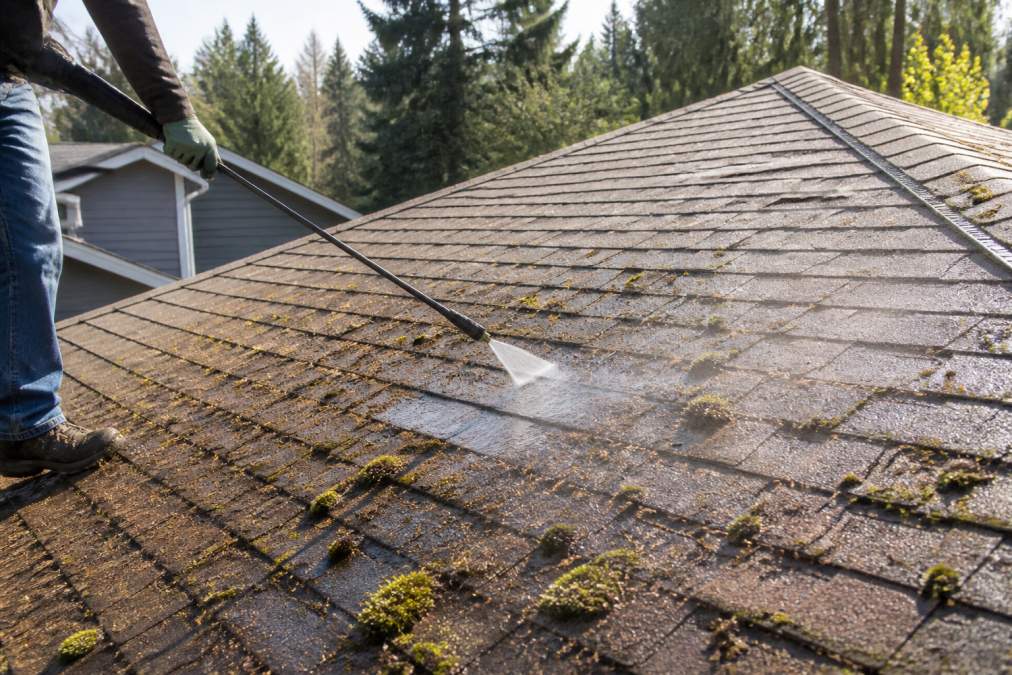
Removing existing moss requires caution. The wrong approach damages shingles, voids warranties, and creates safety hazards. Pressure washing is a common mistake that strips protective granules and shortens roof lifespan.
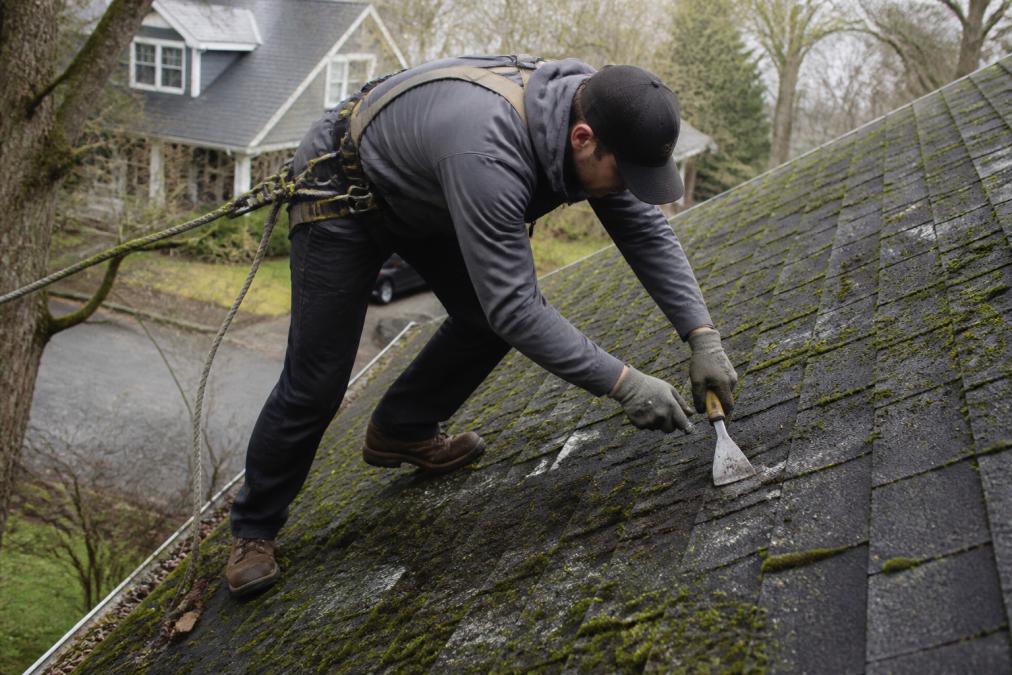
The safest method combines gentle cleaning with protective equipment. Never work on a wet roof or in poor weather. Fall hazards are real, and a slip can cause serious injury.
Warranty-Safe Cleaning Methods
Most asphalt shingle manufacturers, including GAF, Owens Corning, and CertainTeed, void warranties if homeowners use pressure washers. Pressure washing strips protective granules, damages shingle seals, creates micro-tears, and can dislodge shingles. Manufacturers can deny coverage for leaks or water damage if pressure washing is detected, costing thousands in uninsured repairs.
Warranty-compliant cleaning methods include:
- Soft washing: Low-pressure water (under 40 PSI) combined with biodegradable cleaner, approved by most manufacturers
- Hand removal: Gentle scraping with plastic tools, preserves granules and shingle integrity
- Biological washing powders: Enzyme-based cleaners that break down moss without mechanical force
- Zinc or copper strip installation: Passive prevention that requires no cleaning at all
If your roof is still under warranty, check your manufacturer's maintenance guidelines before cleaning. Many provide a list of approved cleaning contractors. Using an approved contractor ensures the work won't void your coverage, even if something goes wrong later.
Cleaning Methods for Asphalt Shingles
Soft washing uses low-pressure water (under 40 PSI) combined with biodegradable cleaner: mix solution, apply with soft brush, let sit 15-20 minutes, gently brush away moss, and rinse thoroughly. Avoid bleach-based cleaners; use biological washing powders instead. For small patches, hand removal with a plastic scraper is safest and warranty-compliant.
Safety Precautions for Roof Work
Essential safety equipment includes a safety harness, slip-resistant footwear, hard hat, work gloves, and a secure ladder. Never work alone; have someone monitor from ground level. Avoid wet conditions and high winds. If uncomfortable at height, lacking experience, or under warranty, hire a professional.
Roof Cleaning Frequency and Maintenance Schedules
In wet climates, inspect twice yearly (spring and fall). Heavy tree cover requires annual cleaning; steep pitches need less frequent attention. Spring cleaning removes winter debris; fall inspection prepares for heavy rains. Document findings to track changes.
Improving Attic Ventilation to Reduce Moss
Poor attic ventilation traps humid air against the roof, creating ideal moss conditions. Proper ventilation requires balanced intake (soffit vents) and exhaust (ridge or gable vents) with unobstructed airflow. Clean vents annually; blocked vents are common. Improving ventilation reduces moisture, discourages moss, prevents mold, and extends roof lifespan.
Chemical Treatments and Eco-Friendly Alternatives
Chemical moss killers work quickly but require reapplication every 1-2 years and can harm plants or water runoff.
Chemical vs. Natural: Cost and Effectiveness Over Time
Understanding the long-term cost of different prevention methods helps you choose the approach that makes financial sense for your home.
Chemical treatments (bleach, commercial moss killers):
- Upfront cost: $50-$150 for materials
- Application frequency: Every 1-2 years
- Effectiveness window: 12-24 months per application
- 10-year cost estimate: $250-$750 (5 applications)
- Pros: Fast results, kills existing moss quickly
- Cons: Requires ongoing maintenance, can damage plants and soil, may void warranties if applied incorrectly, environmental runoff concerns
Zinc or copper strips:
- Upfront cost: $200-$500 for materials and installation
- Application frequency: One-time installation
- Effectiveness window: 10+ years
- 10-year cost estimate: $200-$500 (one installation)
- Pros: Passive prevention, no reapplication, warranty-safe, protects against future growth
- Cons: Higher initial cost, doesn't remove existing moss, requires professional installation for optimal results
Professional cleaning + prevention strips:
- Upfront cost: $500-$1,200 (professional cleaning + strip installation)
- Application frequency: Annual or biannual inspections; strips last 10+ years
- Effectiveness window: Continuous with proper maintenance
- 10-year cost estimate: $800-$2,000 (initial service + 2-3 follow-up inspections)
- Pros: Removes existing moss safely, installs long-term prevention, protects warranty, professional expertise
- Cons: Higher initial investment, requires scheduling
DIY soft washing + manual removal:
- Upfront cost: $30-$100 for equipment and supplies
- Application frequency: 1-2 times yearly
- Effectiveness window: 3-6 months per cleaning
- 10-year cost estimate: $300-$1,000 (20 cleaning sessions over 10 years)
- Pros: Low cost, maintains warranty compliance, environmentally friendly
- Cons: Labor-intensive, safety risks, requires consistent effort, doesn't prevent regrowth
For homeowners in high-moisture climates (Pacific Northwest, Southeast, Northeast), the zinc strip approach typically delivers the best return on investment.
Eco-Friendly and Non-Toxic Alternatives
Eco-friendly alternatives are safer for plants, pets, and water systems than chlorine-based cleaners. They're especially important if you have a well, live near a stream, or have pets that spend time on or near your roof runoff.
Choosing the Right Treatment for Your Situation
For severe infestations with moss covering more than 25% of the roof, chemical treatments or professional cleaning work faster. For prevention and maintenance of a mostly clean roof, natural alternatives often suffice.
Preventing Moss from Returning: Long-Term Strategies
The best way to prevent moss on roof areas combines multiple approaches. No single method works alone in our climate. A layered strategy keeps moss under control year after year.
Start with these foundational steps:
- Install zinc or copper strips along the roof ridge for continuous prevention
- Improve attic ventilation to reduce moisture retention
- Trim tree branches to increase sunlight exposure on the roof
- Clean gutters regularly to prevent debris accumulation and water backup
- Remove leaves and needles from the roof surface during fall and winter
- Inspect annually to catch new growth before it spreads
| Prevention Method | Best For | Maintenance Required |
|---|---|---|
| Zinc strips | Long-term prevention | None after installation |
| Attic ventilation | Reducing moisture | Annual vent cleaning |
| Regular cleaning | Existing moss removal | As needed (1-2x yearly) |
| Tree trimming | Increasing sunlight | Annual or as needed |
| Eco-friendly treatments | Environmentally conscious homeowners | Reapplication every 1-2 years |
Frequently Asked Questions
What can I spray on my roof to prevent moss?
Zinc strips installed along roof ridges release copper ions that prevent moss spore dispersal. For chemical treatments, fungicide solutions and biological washing powder mixtures are effective preventatives. Eco-friendly alternatives include vinegar solutions or enzyme-based treatments. The best approach combines preventative surface treatment with regular maintenance. Professional roofers can recommend treatments suited to your roof's specific pitch and exposure conditions.
How often should you treat your roof for moss?
Roof cleaning frequency depends on your climate, shade exposure, and conifer needle accumulation. In wet regions, annual inspections are recommended, with treatment every 1-2 years. North-facing slopes accumulate moss faster due to moisture retention and reduced sunlight. Regular debris removal and gutter cleaning reduce organic matter buildup. Professional maintenance plans typically include seasonal inspections to catch early signs before moss compromises roof integrity.
Can moss cause permanent damage to asphalt shingles?
Yes. Moss retains moisture against shingles, accelerating deterioration of shingle granules and the underlying material. This moisture retention leads to premature roof failure, shortened lifespan, and potential interior water damage. Moss also creates conditions for mildew growth. Preventing moss through regular maintenance protects your roof's structural integrity. Early intervention with safe removal methods and preventative treatments preserves roof lifespan significantly.
Is it safe to pressure wash moss off a roof?
Pressure washing carries significant risks. High-pressure water can damage asphalt shingles, strip protective granules, and force water into the roof deck, causing leaks and attic moisture problems. Professional roofers use gentler methods like soft washing or manual removal with proper safety harness equipment. Protecting your roof's surface is critical to maintaining its warranty and structural integrity. Professional cleaning prevents costly damage from aggressive pressure washing techniques.