 listicle
Professional Roof Moss Removal Cost Review for 2026
Table of Contents
- How Much Does Professional Roof Moss Removal Cost in 2026?
- Roof Moss Treatment Cost Per Square Foot: What Drives the Number
- Professional Roof Cleaning vs Pressure Washing: Which Method Protects Your Shingles?
- How to Remove Moss From Roof Safely: DIY vs Hiring a Professional
- What Most Cost Guides Miss: Long-Term Roof Health and Warranty Impact
- How to Review a Roof Moss Removal Service Before You Sign
- Frequently Asked Questions
Last Updated: September 26, 2026
How Much Does Professional Roof Moss Removal Cost in 2026?
Professional roof moss removal cost depends on roof size, pitch, accessibility, and treatment method. This guide from Sound Roof Care breaks down what actually drives the number, so you can review an estimate with confidence instead of guesswork.
What a Standard Service Quote Includes
A complete service call typically includes:
- A roof inspection to assess shingle integrity and moss spread
- Manual removal of moss by hand or soft-bristle brush
- A zinc treatment or cleaning solution applied to kill remaining moss spores
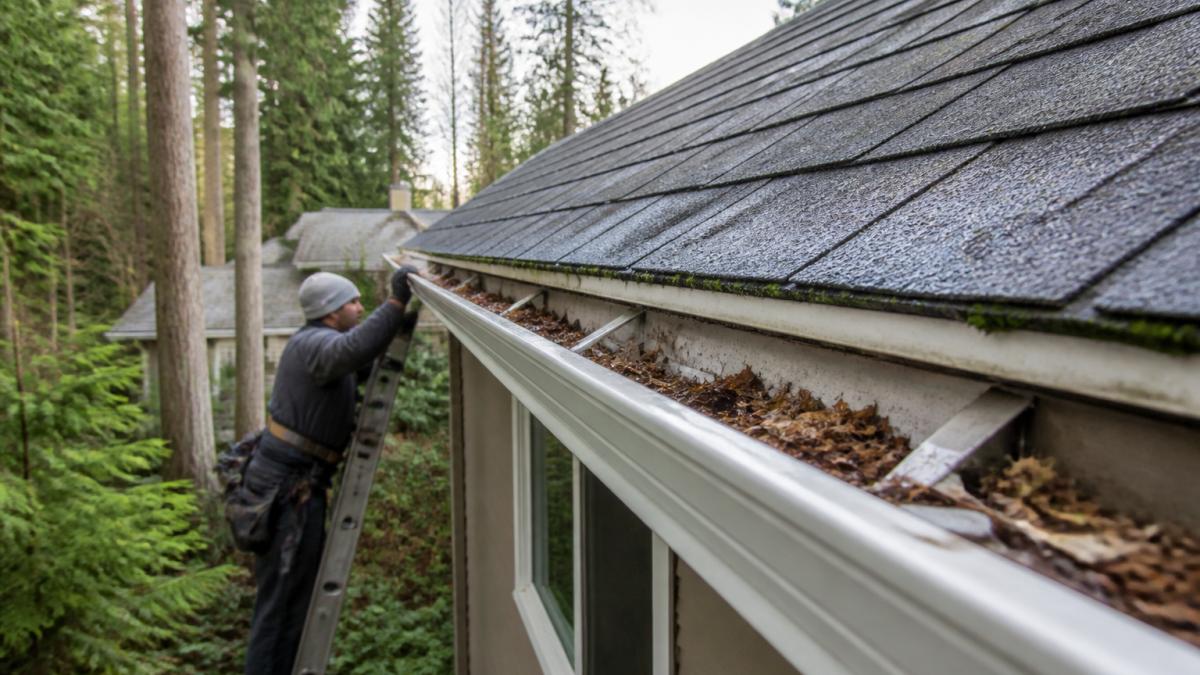
- Debris removal and gutter cleaning
- A written summary of any damage found
If a quote lists only "moss removal" with no inspection or treatment step, ask what happens to the spores left behind.
Why Two Estimates for the Same Roof Can Differ by Hundreds
Two contractors can quote very different numbers, and both may be honest. The difference is usually scope: one covers surface removal only, another includes chemical treatment, gutter clearing, and a follow-up visit. Labor, safety equipment, and insurance also vary, so a lower estimate often means fewer steps, not a better deal.
Roof Moss Treatment Cost Per Square Foot: What Drives the Number
Roof moss treatment cost per square foot is the clearest way to compare quotes, because it normalizes for roof size. Most contractors price by the square, which equals 100 square feet. The rate rises with difficulty, not just size: a large, low-pitch roof may cost less per square foot than a small, steep one.
| Cost Factor | What It Changes | Impact on Price |
|---|---|---|
| Roof pitch | Steep roof surcharge applies | Higher |
| Square footage | More surface to treat | Higher |
| Accessibility | Ladder placement, obstructions | Higher |
| Treatment method | Soft wash vs. manual removal | Varies |
| Roofing material | Asphalt shingles vs. tile | Varies |
Roof Pitch, Square Footage, and the Steep Roof Surcharge
Roof pitch is the single biggest variable in most estimates. A walkable roof lets a technician work quickly; a steep roof requires fall protection, anchors, and slower movement, adding labor hours. Square footage sets the baseline, but pitch sets the multiplier, which is why a steep roof surcharge is legitimate.
Labor, Safety Equipment, and Fall Protection Costs
Labor is the largest line item in most roof cleaning solution quotes. A crew cannot simply walk a wet, mossy roof; fall protection, harnesses, and anchoring systems are required, and that equipment costs money to buy, inspect, and maintain. A company that cuts corners on fall protection is cutting corners you cannot see until something goes wrong.
Professional Roof Cleaning vs Pressure Washing: Which Method Protects Your Shingles?
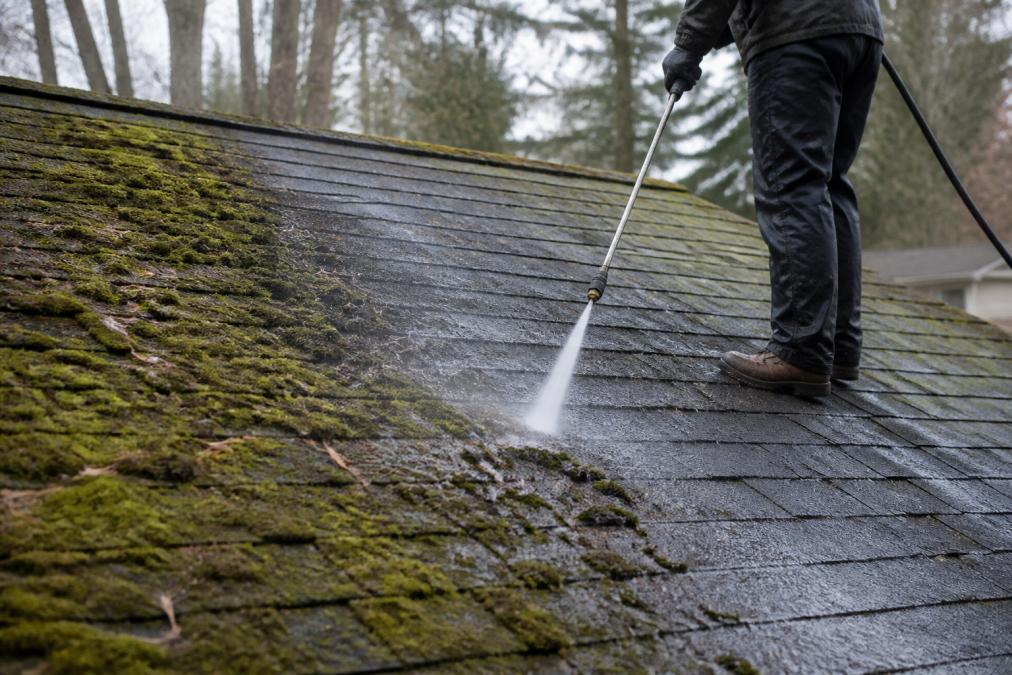
Professional roof cleaning and pressure washing are not the same service, and choosing the wrong one can damage your roof. Pressure washing forces water under shingle edges and strips the protective granules that shield asphalt shingles. Professional cleaning uses low-pressure methods instead.
Soft Wash, Zinc Treatment, and Biodegradable Cleaners
Soft wash is the industry-standard alternative to pressure washing: it applies a cleaning solution at low pressure, letting chemistry do the work instead of force. Zinc treatment works differently, zinc strips or solutions create an environment where moss spores cannot establish, making it preventative as much as a removal method. Biodegradable cleaners are increasingly common for homeowners concerned about runoff.
Why Pressure Washing Voids Many Roof Warranties
Pressure washing voids many roof warranties because it damages the shingle surface the warranty protects. Manufacturers set terms around proper maintenance, and high-pressure water does not qualify.
How to Remove Moss From Roof Safely: DIY vs Hiring a Professional
Learning how to remove moss from roof safely starts with one honest question: is your roof walkable? A common rule of thumb is that anything at or above a 6/12 pitch (6 inches of rise per 12 inches of run) is not a safe walking surface for an untrained homeowner, and moss makes even a low-slope roof slicker than it looks.
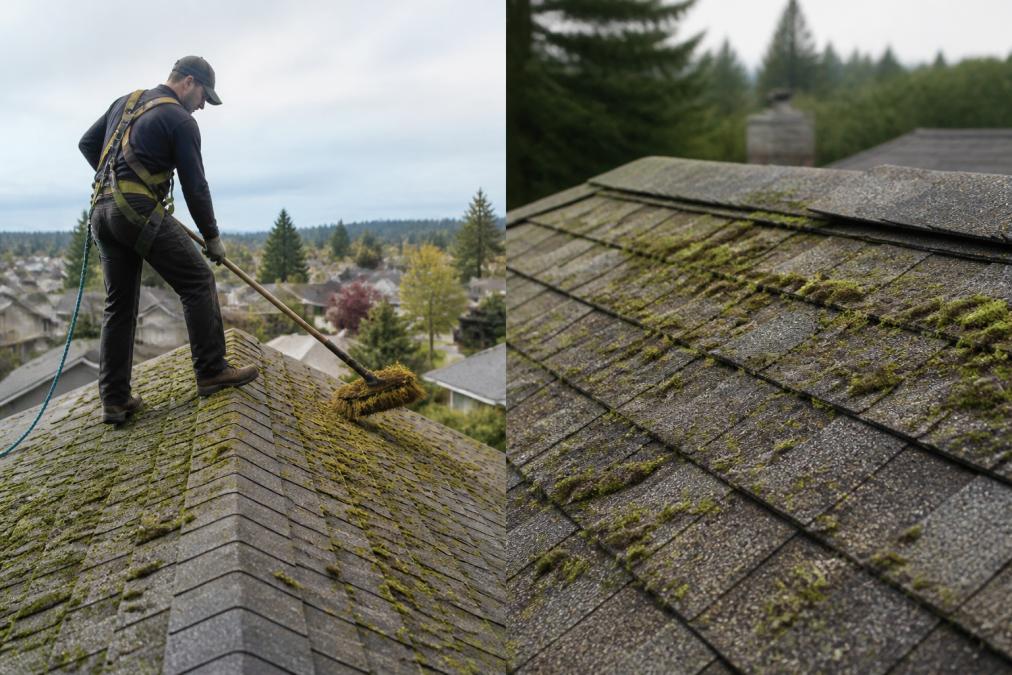
DIY Moss Removal: Real Costs, Risks, and Limits
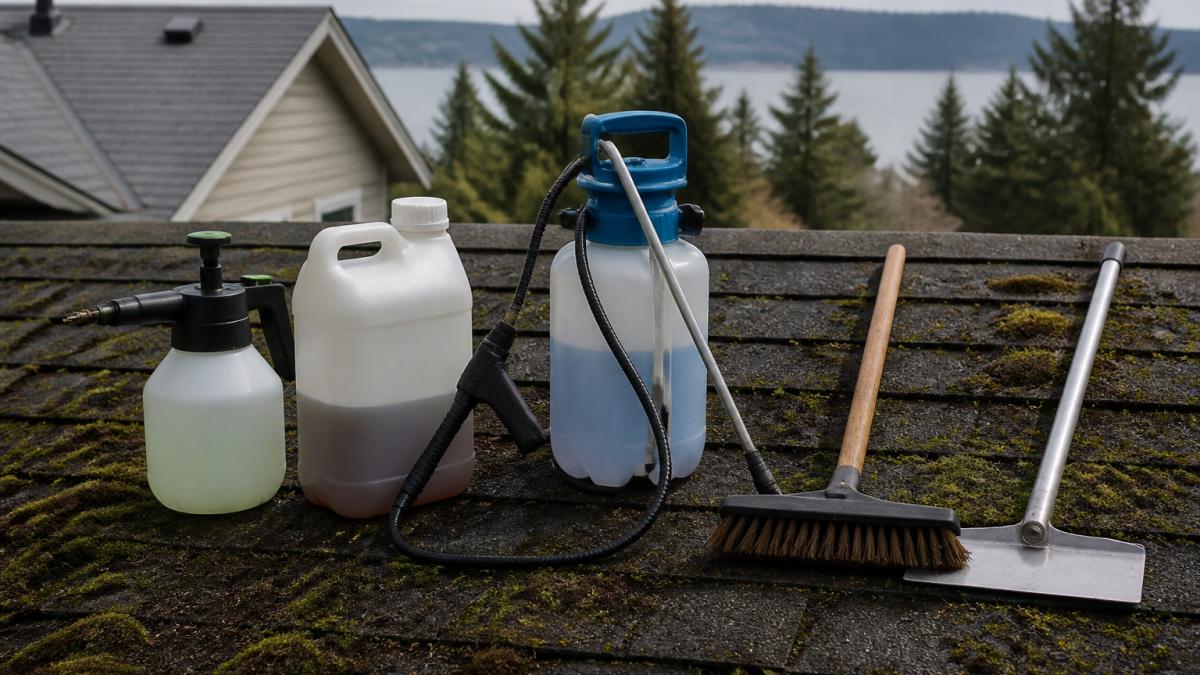
DIY moss removal saves on labor but carries costs most homeowners do not count. A realistic kit looks like this:
- A roof safety harness and anchor system: often $100-$300 for a basic homeowner-grade setup
- A soft-bristle roof brush on an extension pole: roughly $30-$80
- Oxygen-bleach or zinc-sulfate cleaning solution concentrate: about $20-$60 per application
- A pump sprayer or garden sprayer rated for the solution: $20-$50
- Disposable gloves, eye protection, and non-slip footwear: $30-$60
When Hiring a Professional Is the Only Safe Option
Hiring a professional is the only safe option in several situations:
- Steep pitch. Anything at or above a 6/12 pitch requires fall protection and training most homeowners do not have.
- Two or more stories. Ladder placement, anchor points, and rescue planning get complicated fast.
- Fragile roofing material. Tile, slate, and wood shake crack or break under foot traffic and require a specialist's touch.
- Extensive moss coverage. Heavy growth often hides underlying damage that needs to be assessed before cleaning.
- Warranty concerns. Improper DIY cleaning can void a manufacturer's roof warranty, which is a repair bill no homeowner wants to absorb alone.
The Middle Path: Spot Treatment and Preventative Maintenance
There is a middle ground between full DIY and full professional removal. Homeowners with a walkable, low-slope roof and light moss can often handle spot treatment: spray a zinc-sulfate or oxygen-bleach solution on affected areas, let it work, and repeat once or twice a season. What spot treatment cannot replace is an annual inspection. A professional can check flashing, valleys, and shingle edges a homeowner working from the ground will never see, catching early moisture damage before it reaches the roof deck.
What Most Cost Guides Miss: Long-Term Roof Health and Warranty Impact
The cheapest cleaning today can be the most expensive decision over ten years. Most cost guides stop at the invoice, skipping what moss does to the roof underneath, what that does to your warranty, and how fast it returns.
Moisture Retention, Shingle Integrity, and Roof Lifespan
Moss holds water against the roof surface long after rain stops, breaking down shingle integrity over time. Moss roots, called rhizoids, work into the gaps between shingles and lift the edges; once an edge lifts, wind-driven rain gets underneath and the asphalt mat stays wet. Wet asphalt loses the granules that shield it from ultraviolet light, and once they are gone, the shingle dries out, cracks, and curls.
Warranty Implications: What Voids Coverage and What Protects It
Roof warranties are written around proper maintenance, and improper cleaning is one of the most common reasons a claim gets denied. Most asphalt shingle manufacturers require the roof be maintained per their published guidelines, and pressure washing, metal tools, and harsh chemical treatments generally fall outside those guidelines.
Climate, Algae Growth, and Preventative Maintenance Plans
Moss regrowth rates depend heavily on climate. In humid, rainy regions, moss and algae can re-establish within a single season, making an annual treatment the practical minimum. In drier regions, a treatment every two to three years may be enough, though shaded north-facing slopes still hold moisture and regrow faster. Algae is a separate problem: the dark streaks many homeowners see on asphalt shingles are usually gloeocapsa magma, a blue-green algae that feeds on limestone filler in the shingle and spreads faster in warm, humid conditions.
How to Review a Roof Moss Removal Service Before You Sign
Reviewing a roof moss removal service comes down to five checks. Run every quote through this list before committing.
- Does the quote include a roof inspection, not just cleaning?
- Is the method low-pressure soft wash or manual removal, never pressure washing?
- Does it list the cleaning solution and how runoff is managed?
- Are the technicians certified and insured, with fall protection specified?
- Is pricing itemized with no hidden fees, and is the scope written down?
Frequently Asked Questions
How much should it cost to clean moss off a roof?
Professional roof moss removal cost depends on square footage, roof pitch, moss severity, and accessibility. Most companies price per square foot or provide a flat service quote after inspection. Steep roofs, heavy moss coverage, and multi-story homes cost more because they require additional safety equipment and labor. Sound Roof Care publishes its pricing online, so homeowners can see real numbers before booking. Get a written cost estimate that itemizes treatment, debris removal, and gutter cleaning.
Is professional roof moss removal worth the cost compared to DIY?
DIY saves on labor but carries real risks: falls, shingle damage from improper brushing, and chemical runoff that can harm landscaping. Professionals use soft wash techniques, zinc treatment, and fall protection that most homeowners don't have. A professional service also includes a roof inspection that can catch early shingle integrity problems. For roofs over 20 years old or with steep pitch, the safety and warranty benefits outweigh the savings.
What factors influence the cost of professional roof cleaning?
The biggest cost drivers are roof accessibility, roof pitch, square footage, and moss severity. Steep roof surcharges apply when fall protection is required. Labor costs rise for multi-story homes or roofs with complex valleys and dormers. The cleaning method matters too: soft wash and zinc treatment cost more than dry brushing but protect asphalt shingles. Gutter cleaning and debris removal are sometimes bundled, sometimes billed separately. Always ask what a service quote includes.
Does moss damage shingles permanently?
Moss roots work into the gaps between asphalt shingles, lifting edges and trapping moisture. Over time, that moisture retention accelerates shingle breakdown and can lead to rot in the decking beneath. If moss is caught early, soft wash removal and zinc treatment usually restore the roof without permanent harm. Left for years, moss can cause enough structural damage that repair costs approach replacement. Annual roof maintenance and inspection catch the problem before it reaches that point.
What is the best time of year to remove moss from a roof?
Late spring through early fall works best in the Pacific Northwest because shingles are dry and moss spores are less active. Removing moss in wet winter months can spread spores and leave surfaces too damp for treatment to bond. Many homeowners schedule preventative maintenance in early fall so the roof enters the rainy season clean and treated. Pairing moss removal with gutter cleaning at the same service call saves money and reduces future debris buildup.
Roof moss removal pricing varies enough that a single number rarely tells the full story. What matters is scope, method, and whether the company treats your roof's long-term health or just today's moss. Sound Roof Care brings over two decades of experience, certified technicians, and maintenance plans built for the region's wet, moss-prone climate. Get in touch today to schedule an inspection and see what your roof actually needs.