 blog
Roof Cleaning in Lacey: A 2026 Guide
Table of Contents
- Why Roof Cleaning Matters in This Climate
- Soft Wash Roof Cleaning Services vs. Pressure Washing
- Understanding Roof Moss Removal Cost
- Hiring a Roofing Contractor for Roof Cleaning
- Preventative Maintenance Programs That Actually Work
- How Professional Cleaning Extends Roof Longevity
- Frequently Asked Questions
Last Updated: September 20, 2026
Why Roof Cleaning Matters in This Climate
The Pacific Northwest's wet climate creates ideal conditions for moss, algae, and lichen growth, making roof cleaning Lacey a necessary part of home maintenance. Unlike drier regions, roof cleaning here is essential maintenance to prevent accelerated shingle degradation, moisture damage, and structural problems.
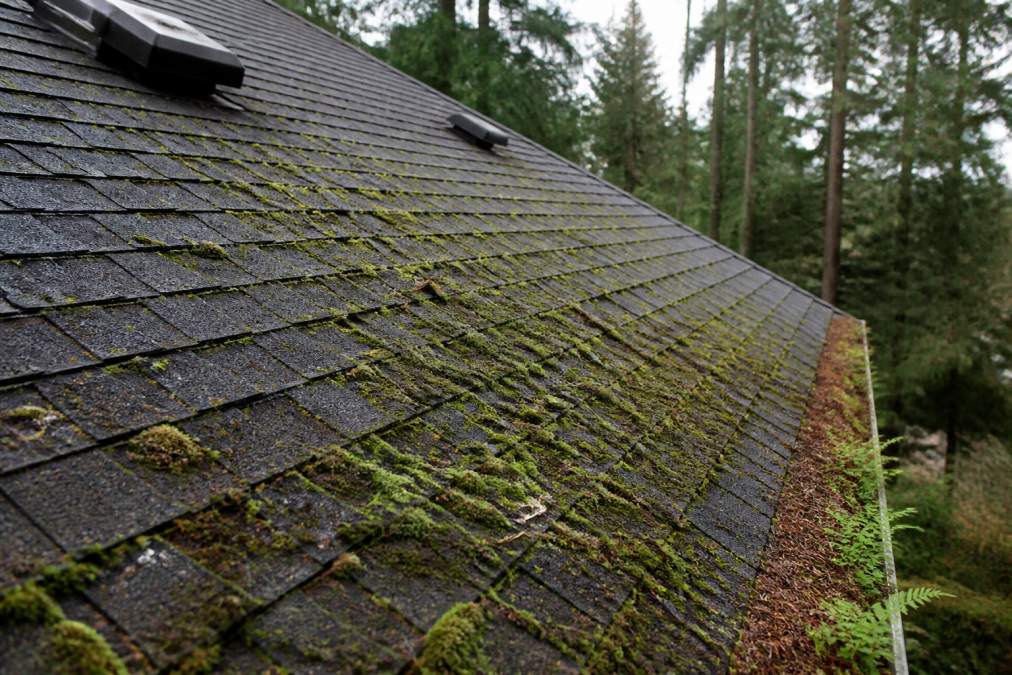
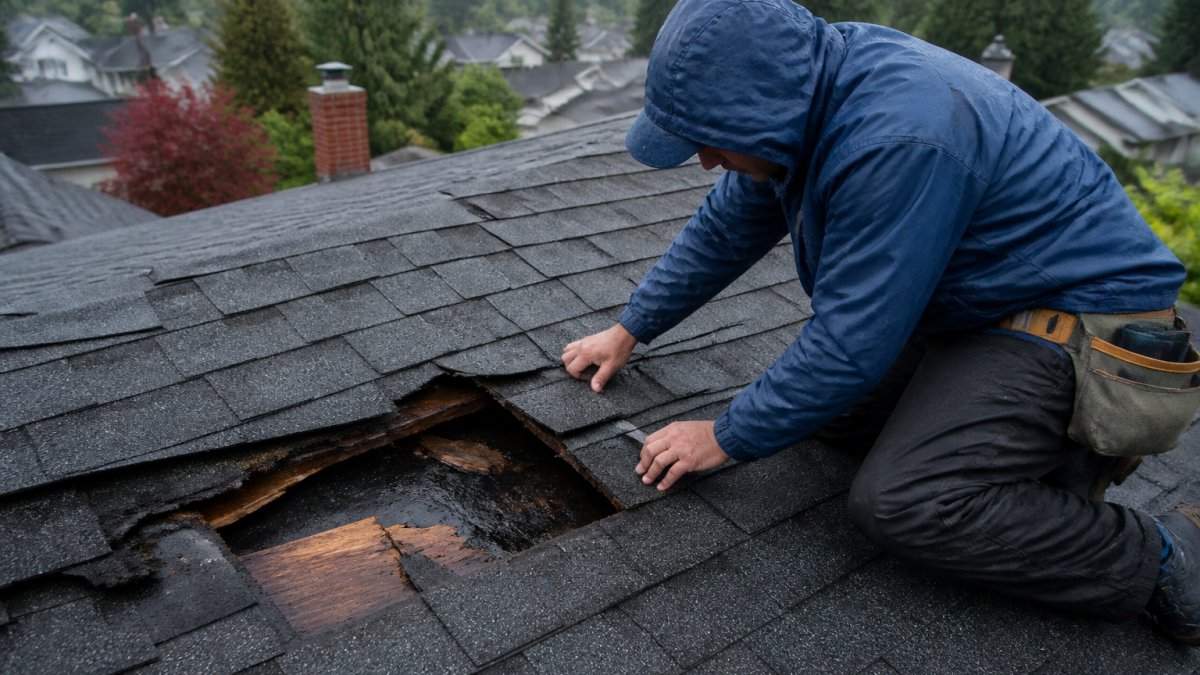
Moss thrives in shade and moisture, trapping water against shingles and penetrating granules to break down the protective coating. Left untreated, this causes leaks, interior damage, and costly roof replacement.
Algae leaves black streaks across shingles, indicating active biological growth eating away at the roof's surface. Years of algae buildup results in premature shingle failure.
Preventative roof cleaning extends your roof's lifespan by 5-10 years in this climate. It's one of the most cost-effective ways to protect your investment.
Soft Wash Roof Cleaning Services vs. Pressure Washing
Soft washing and pressure washing are fundamentally different approaches. Choosing wrong can cost thousands, and the right choice depends on your roof material.
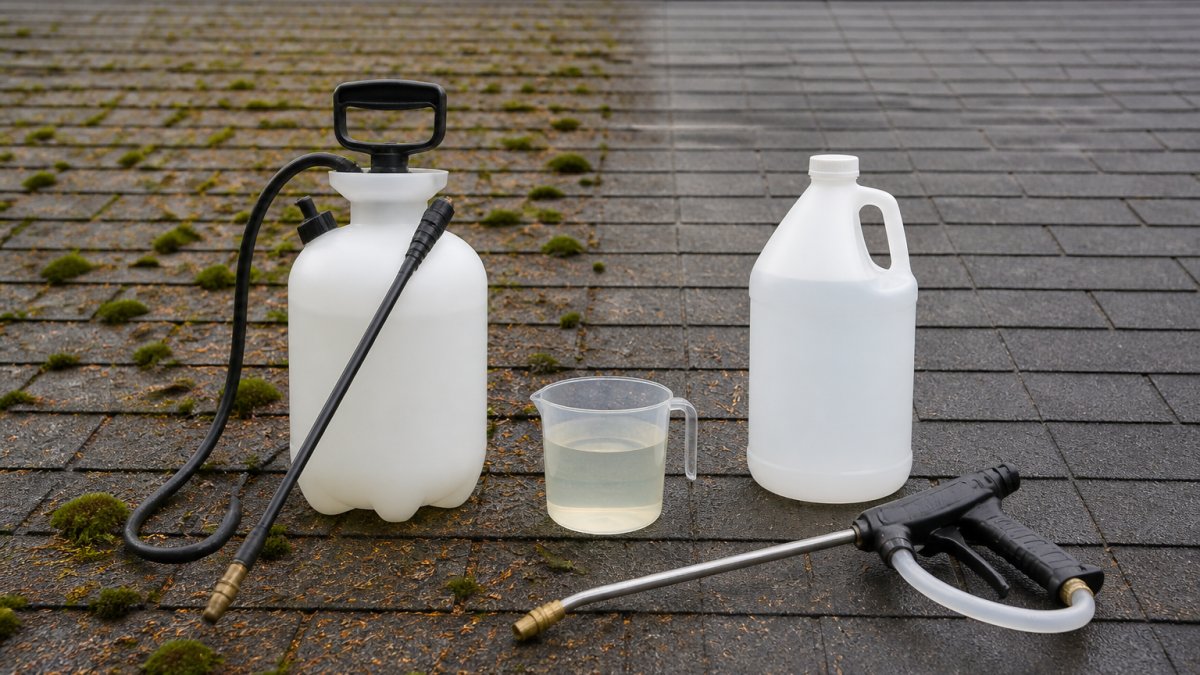
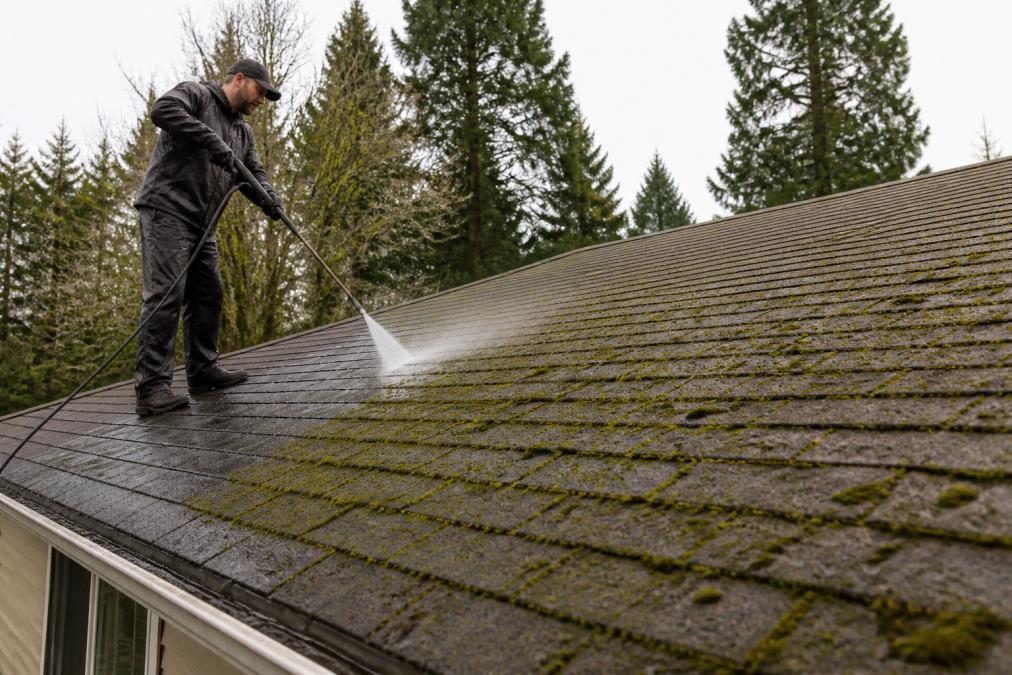
Soft washing uses low-pressure water (below 500 PSI) combined with biodegradable solutions to remove moss, algae, and lichen without damaging shingles. Pressure washing uses high-pressure jets (3,000-4,000 PSI or higher) to blast debris off surfaces quickly but aggressively.
Why Material Matters More Than Most Homeowners Realize
Asphalt shingles dominate residential roofing in this region but are vulnerable to pressure washing. The force strips protective granules, causing the asphalt to oxidize, crack, and curl. Pressure washing also forces water under shingles, causing rot and interior damage. Most manufacturers, including GAF and Owens Corning, void warranties if high-pressure washing is used.
Cedar shake and wood shingles are highly sensitive to pressure washing. Water drives deep into porous wood fibers, causing swelling, warping, rot, splitting, and splintering. Soft washing is the only appropriate method, preserving wood longevity.
Metal roofs tolerate pressure better but risk sealant damage around fasteners and seams, causing rust and leaks. Soft washing is gentler and equally effective.
Tile and slate roofs risk cracking or dislodging under pressure. Soft washing is safer and prevents mortar or sealant damage.
Why Soft Washing Works Better in This Climate
Soft washing takes 3-5 hours for a full roof but breaks down moss and algae at the source, kills spores, and prevents rapid regrowth without shingle damage, water intrusion, or warranty violations.
In the Pacific Northwest's wet climate, pressure-washed roofs may look clean initially, but damage compounds over time. Granule loss and trapped water cause rot, often requiring replacement within 2-3 years, while soft-washed roofs continue protecting your home.
Sound Roof Care uses soft washing exclusively because it protects your investment while solving the problem. Biodegradable solutions break down naturally without harming landscaping or local waterways.
Understanding Roof Moss Removal Cost
Roof moss removal cost depends on several factors specific to your home and moss severity. Understanding these helps you evaluate quotes fairly.
Roof size and pitch. Larger roofs and steeper pitches require more time and safety equipment, increasing cost. A contractor should measure your roof before quoting.
Moss severity. Light surface moss costs less than deep penetration or thick buildup, which may require multiple applications.
Accessibility. Complex roofs with dormers, skylights, or surrounding trees take longer to clean.
Treatment type. Basic soft washing costs less than soft washing plus preventative treatment, which protects against rapid regrowth over 2-3 years.
Local service area. Rural areas may include travel fees; urban and suburban areas typically have competitive pricing.
Sound Roof Care provides free estimates accounting for your specific roof conditions, moss severity, age, and material for accurate pricing.
Hiring a Roofing Contractor for Roof Cleaning
Choosing the right contractor for roof cleaning Lacey determines whether the service extends your roof's life or creates problems.
What to Look for in a Licensed Professional
A licensed roofing contractor has passed inspections, carries insurance, and understands building codes. In Washington, contractors must be licensed through the Department of Labor and Industries (Register as a Contractor).
Ask for proof of current licensing and verify it on the Washington Department of Labor and Industries website.
A contractor should carry general liability insurance and workers' compensation. Request a certificate of insurance before work begins.
Certifications from roofing manufacturers or industry associations indicate ongoing training and adherence to best practices.
Experience in your region matters. A contractor experienced with Pacific Northwest roofs understands moss prevention and local climate challenges. Sound Roof Care has served the Puget Sound region since 2009.
Ask for references from recent customers. Call them. Ask about the quality of work, whether the contractor showed up on time, and whether the roof cleaning actually solved their moss problem or if moss returned quickly.
Red Flags to Avoid
If a contractor recommends high-pressure washing for asphalt shingles, that's a red flag, they're prioritizing speed over your roof's health.
Contractors who can't explain their process or rush estimates without inspecting your roof are cutting corners.
A contractor should break down costs (labor, materials, equipment, travel). Vague single-number quotes are a warning sign.
Contractors who pressure you to decide immediately are using sales tactics, not professional approaches.
Check Google reviews, the Better Business Bureau, and local contractor directories. Consistent complaints about poor work or unresponsiveness indicate patterns.
Preventative Maintenance Programs That Actually Work
One-time roof cleaning helps, but preventative maintenance programs stop the problem from returning by applying treatment after cleaning and monitoring your roof to catch issues early.
Understanding the Moss Growth Cycle in the Pacific Northwest
Moss doesn't grow uniformly year-round. It thrives during cool, wet periods and slows during dry heat. In this region, moss grows most aggressively in fall and winter when temperatures drop and rainfall increases. Spring brings moderate growth as temperatures warm. Summer is the slowest growth period, though moss doesn't die, it just grows more slowly.
This cycle is critical to understanding when preventative treatment works best. Applying treatment before the peak growth season maximizes its effectiveness. Applying it after moss has already established is less efficient.
The Optimal Timing Strategy for This Region
Late spring (May through early June) is the ideal window for initial cleaning and preventative treatment. By this time, winter moisture has dried out, and you can see the full extent of moss growth. The roof is dry enough for safe work. Applying preventative treatment in late spring gives it 4-5 months to establish before fall rains return. The treatment inhibits moss spore germination during the critical fall and winter growth season.
Early fall (late August through September) is the second-best timing for treatment application. If you missed spring, fall treatment still provides protection during the peak growth months ahead. However, fall treatment has less time to establish before winter moisture arrives, making it slightly less effective than spring application.
Avoid winter and early spring cleaning. Wet conditions make roofs slippery and dangerous. Wet moss is harder to remove effectively. Preventative treatment applied to wet surfaces doesn't adhere properly. Winter is also when interior water damage risk is highest if cleaning isn't done perfectly.
Summer cleaning is possible but less necessary. Moss grows slowly in summer, so the urgency is lower. However, if your roof is heavily covered, summer cleaning removes the biological load before fall growth accelerates.
What a Preventative Maintenance Program Includes
The process works like this: soft wash cleaning removes existing moss and algae. Then a preventative treatment, typically a biodegradable solution, is applied to inhibit regrowth. The treatment doesn't kill new spores immediately, but it slows moss establishment significantly by creating an inhospitable surface for spore germination.
Follow-up inspections catch problems before they become expensive.
How Often Should You Retreat?
Prevention treatment effectiveness typically lasts 12-18 months in this climate. Homes in heavy shade or with significant tree coverage may need annual reapplication. Homes in sunnier locations might stretch to 18 months between treatments. A maintenance program should include annual inspections to assess whether retreatment is needed, rather than assuming a fixed schedule.
How Professional Cleaning Extends Roof Longevity
A roof's lifespan depends on how well you maintain it. Asphalt shingles typically last 15-20 years if properly maintained. Without maintenance, that drops to 10-15 years in this climate.
Frequently Asked Questions
How much does professional roof cleaning cost?
The cost of roof cleaning varies based on roof size, pitch, debris accumulation, and the cleaning method used. For current pricing and a customized estimate for your home, visit Sound Roof Care's pricing page or request a free quote. Most homeowners find professional cleaning a worthwhile investment when weighed against the cost of premature roof replacement.
Is soft washing or pressure washing better for removing moss?
Soft washing is the safer, more effective choice for moss-prone roofs. It uses low-pressure water combined with biodegradable solutions to kill moss at the root, preventing rapid regrowth. Pressure washing can damage asphalt shingles, void warranties, and dislodge protective granules. For roofs with heavy moss, soft washing delivers longer-lasting results.
How often should I have my roof cleaned to prevent moss damage?
In the wet Pacific Northwest climate, annual or bi-annual roof cleaning prevents moss and algae from compromising shingle integrity. Preventative maintenance programs keep moss from taking hold, extending roof longevity and protecting your home's structural integrity. Delaying cleaning allows moss to penetrate shingles, leading to costly damage.
Can professional roof cleaning really extend my roof's lifespan?
Yes. Moss, algae, and debris trap moisture against shingles, accelerating deterioration and reducing roof longevity. Professional cleaning removes these threats, allowing proper drainage and airflow. Combined with preventative treatments, regular cleaning can realistically extend the life of asphalt shingles by several years, delaying the need for full roof replacement.