 blog
5 Signs You Need Emergency Roof Repair: Act Now?
Last Updated: October 25, 2026
Quick Summary
You need emergency roof repair when water is actively entering your home, the ceiling is bulging or sagging, or the roof deck itself is sagging. These signs mean damage is spreading or a collapse is possible, so contain the water, stay off the wet roof, and call a roofing professional right away.
- Never climb onto a wet roof; wet shingles are slick and falls are the real danger during a storm.
- Poke a small hole in a bulging ceiling to release trapped water into a bucket and prevent a larger collapse.
- A large area of missing shingles with deck visible and rain forecast is an emergency needing a temporary tarp today.
- A sagging roof deck means the support underneath is failing and the roof can collapse.
- During an emergency roof inspection, expect exterior and attic checks, temporary protection, and a written scope with photos.
Table of Contents
- 1. Active Water Intrusion: When a Leak Becomes an Emergency Roof Repair
- What to Do When Your Roof Is Leaking: Immediate Indoor Safety Steps
- 2. Ceiling and Wall Stains, Drips, or Interior Discoloration
- 3. Missing, Cracked, or Torn Shingles and Granule Loss
- Signs of Roof Damage After a Storm: What to Inspect and Document
- 4. Sagging Roof Deck, Sagging Gutters, or Structural Movement
- 5. Mold Growth, Moisture, and Vulnerable Roof Openings
- How to Stop a Roof Leak During Rain and Temporary Roof Leak Repair Options
- Frequently Asked Questions
1. Active Water Intrusion: When a Leak Becomes an Emergency Roof Repair
Water pouring through your ceiling is the clearest sign you need emergency roof repair.
A roof leak is any point where water gets past the roofing materials and into the structure below.
Here's when a leak crosses into emergency territory:
- Water is actively dripping or streaming inside
- The ceiling is bulging or sagging under trapped water
- You can see water running down walls or light fixtures
Watch out: never ignore a leak that only shows up in heavy rain.
If water is coming in now, our guide on how to stop a roof leak during rain walks through the emergency steps.
What to Do When Your Roof Is Leaking: Immediate Indoor Safety Steps
First, protect people and belongings, not the roof. You cannot safely fix a roof leak from inside or on a wet roof. Focus on containing the water and staying safe.
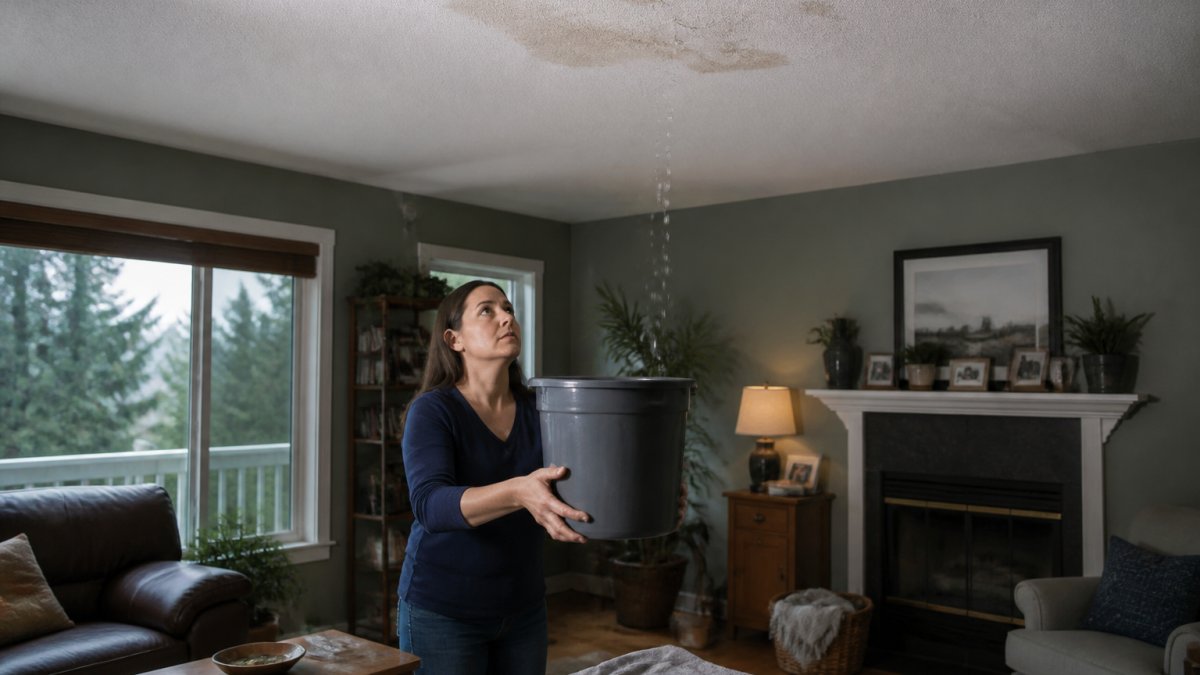
Follow these steps when your roof is leaking:
- Move furniture, electronics, and rugs away from the drip.
- Place a bucket or tub under the leak and towels around it.
- If water is near outlets, switches, or lights, shut off power to that area at the breaker.
- Poke a small hole in a bulging ceiling to release trapped water into a bucket. This prevents a larger collapse.
- Take photos and video of the damage for your insurance claim.
- Call a roofing professional for an inspection.
Do not climb onto a wet roof. Wet shingles are slick, and falls are the real danger during a storm.
2. Ceiling and Wall Stains, Drips, or Interior Discoloration
Brown rings on your ceiling or streaks on your walls mean water has been getting in for a while.
Interior discoloration shows up as:
- Brown or yellow rings on ceilings
- Dark streaks running down walls
- Bubbling or peeling paint
A stain means water traveled through the roof, insulation, and drywall before you saw it. That path is where rot and mold start.
For a deeper look at tracking the source, our attic roof leak inspection guide shows where to check.
3. Missing, Cracked, or Torn Shingles and Granule Loss
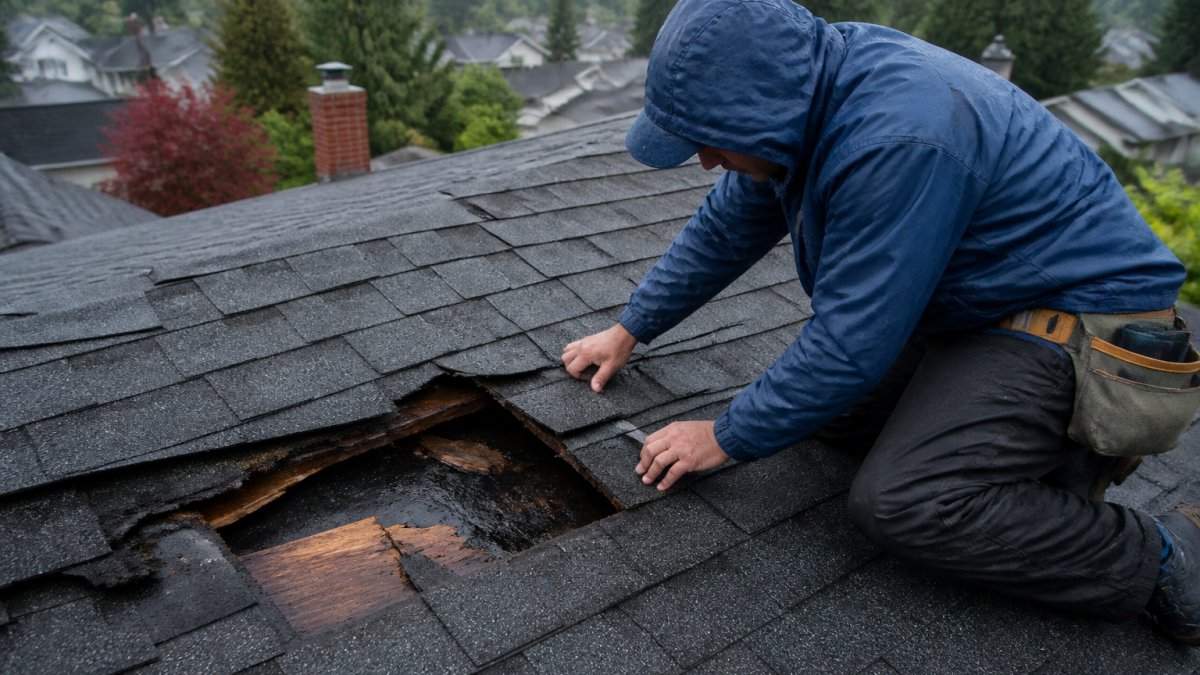
Missing or damaged shingles leave your roof deck exposed to rain. When shingles crack, tear, or blow off, water gets straight to the wood below. That is a repair you schedule, not a wait-and-see, but whether it is an emergency depends on how much deck is exposed and what the weather is about to do.
Check for these shingle problems from the ground with binoculars:
- Missing shingles after wind or debris damage
- Cracked or torn shingles
- Curling or lifting edges
Why shingles fail, and what that tells you about urgency
Asphalt shingles are a layered system: a fiberglass mat core, an asphalt coating, and a top layer of mineral granules. The granules are the sacrificial surface, they block ultraviolet light from breaking down the asphalt underneath. When granules wear away, the asphalt dries, cracks, and loses its ability to shed water. That is why granule loss is a leading indicator, not just cosmetic wear.
Emergency vs. schedule vs. plan ahead
Use this triage to decide how fast to act:
| What you see | What it usually means | Urgency |
|---|---|---|
| Large area of missing shingles with deck visible and rain in the forecast | Deck is exposed now | Emergency, temporary tarp today, permanent repair when dry |
| A few missing or torn shingles, no interior leak | Localized breach, water may be tracking under adjacent shingles | Schedule, inspection within days |
| Curling, lifting, or bald spots, no leak | Normal aging, reduced water shedding | Plan ahead, get a roof assessment and budget |
| Granules in gutters, no other signs | Wear progressing | Plan ahead, monitor and plan replacement |
Do not assume a missing shingle is harmless because the ceiling is dry. Water often enters at the breach and travels laterally along the underlayment or deck before it finds a path inside. A dry ceiling today does not mean a dry deck.
What to do right now
- Photograph the damaged area from the ground, zoom in if you can, and note the date.
- Check the attic and ceilings directly below the damage for dampness or staining.
- If deck is exposed and rain is coming, arrange temporary tarping from the ground; do not climb a wet or steep roof.
- Call a roofer for an inspection and get the scope in writing before any permanent repair.
If you are weighing a patch against a full replacement, our guide on when to repair vs. replace a roof walks through the decision.
Signs of Roof Damage After a Storm: What to Inspect and Document
After a storm, inspect from the ground with binoculars, never by climbing up. Storm damage often hides in plain sight, and a quick check now prevents a bigger repair later.
Look for these signs of roof damage after a storm:
- Missing, cracked, or torn shingles
- Dented gutters or downspouts from debris damage
- Granules washed into gutters
Document everything for your insurance claim:
- Photograph damage from the ground and inside your attic.
- Note the date of the storm and when you found the damage.
- Keep receipts for temporary repairs and any hotel stays.
- Save all correspondence with your insurer.
If the damage is serious, our guide on what insurance covers for emergency roof repair explains your options before you act.
4. Sagging Roof Deck, Sagging Gutters, or Structural Movement
A sagging roof is a structural emergency. When the roof deck dips or sags, the support underneath is failing. This is not a repair you put off, because a sagging roof can collapse.
Signs to watch for:
- A visible dip or curve in the roofline
- Sagging gutters pulling away from the fascia
- Cracks in interior walls or ceilings
Sagging areas usually mean long-term water damage has rotted the deck or framing. Call a professional right away. This is one of the warning signs that points to a possible roof replacement rather than a patch.
5. Mold Growth, Moisture, and Vulnerable Roof Openings
Mold growth in your attic means moisture has been trapped long enough to support it. Mold needs damp conditions and an organic food source, and a slow roof leak creates both. Left alone, mold spreads through insulation and wood and can affect indoor air quality, but the mold is a symptom, not the root problem. The root problem is the water path.
Where water actually gets in
Roof openings are the weak points of any roof system because they interrupt the continuous field of shingles. Check these first:
- Flashing around chimneys, skylights, and vents, step flashing and counter-flashing are the most common leak source on otherwise sound roofs
- Valleys where roof sections meet, water concentrates here, and a failed valley underlayment leaks far from the visible damage
- Pipe boots, the rubber collar around plumbing vents cracks with sun exposure and is a frequent, inexpensive-to-fix leak point
Active moisture vs. old damage
Not every stain is an active leak. A useful field test: press a clean paper towel or your hand against the stain. Dampness, a musty smell, or a stain that grows after rain points to an active path. A dry, crusty ring that has not changed in months may be old damage from a repaired or seasonal issue, but it still deserves an inspection, because the path that caused it may still be open.
A musty smell in the attic with no visible stain is still a signal. Mold often grows on the underside of the deck where you cannot see it from the hatch. A roofer or attic specialist can check with a moisture meter.
What happens during an emergency roof inspection
If you call for emergency roof repair, here is what to expect so you can plan:
- Exterior assessment, the roofer inspects from the ground and, if safe, on the roof to find the breach and check flashing, valleys, and penetrations.
- Interior and attic check, moisture meter readings on deck, rafters, and insulation; a look for mold, daylight, and water tracks.
- Temporary protection, tarping or a temporary patch to stop water intrusion until permanent repairs can be made in dry conditions.
- Written scope and photos, documentation of what was found, what was done temporarily, and what permanent repair is recommended, which you will need for an insurance claim.
- Repair plan and timing, a clear distinction between the emergency mitigation and the permanent fix, with a written estimate.
If you spot mold or a persistent musty smell, our attic mold remediation service addresses both the mold and the moisture behind it, but the roof opening should be fixed first or the mold will return.
How to Stop a Roof Leak During Rain and Temporary Roof Leak Repair Options
You can slow an active leak during rain, but you cannot permanently fix it until the roof is dry. Temporary roof leak repair buys you time and limits damage.
Safe temporary options include:
- Tarping the damaged area from the ground with proper anchors
- Applying roofing cement or sealant to small gaps, only if it is safe to reach
- Redirecting interior water into buckets
Do not attempt repairs on a wet, steep roof. The risk of a fall outweighs any temporary gain. Once the storm passes, a professional can make a lasting repair. Our roof leak repair service handles active leaks and finds the source.
A quick way to tell an emergency from a repair that can wait:
| Situation | Urgency | Action |
|---|---|---|
| Water actively entering the home | Emergency | Contain water, call a pro now |
| Growing ceiling or wall stain | Urgent | Schedule inspection within days |
| A few missing shingles, no leak | Can wait | Book a repair soon |
| Sagging roof deck | Emergency | Call a pro immediately |
| Granule loss, no active leak | Plan ahead | Get a roof assessment |
Frequently Asked Questions
How urgent is emergency roof repair?
It depends on what you're seeing. An active leak, sagging roof deck, or water pooling near electrical fixtures is urgent and warrants same-day attention. A few missing shingles with no interior water intrusion can usually wait a few days for a scheduled visit. When in doubt, call for an inspection. Sound Roof Care serves the Puget Sound region and can help you decide whether your situation needs emergency roof repair or a standard appointment.
What should I do if my roof is leaking during rain?
Move valuables away from the leak, place a bucket underneath, and puncture a sagging ceiling bulge with a small hole to release trapped water safely. Turn off power to affected ceiling fixtures at the breaker. Do not climb onto a wet roof. Call a professional for temporary roof leak repair, and document the damage with photos for your insurance claim.
Can a small roof leak become an emergency?
Yes. A small leak can soak insulation and drywall for weeks before you notice it, leading to mold growth, rotted roof decking, and structural damage. In the Pacific Northwest's wet climate, moisture problems escalate faster. If you see ceiling stains, musty odors, or granules in your gutters, treat it as a warning sign and schedule an inspection before it becomes an emergency roof repair.
Should I leave my home if the ceiling is sagging?
A sagging ceiling that holds water can collapse. If the bulge is large, spreading, or you hear creaking, leave the room and keep people and pets out. Shut off power to that area if it's safe to reach the breaker. Call for emergency roof repair right away. A sagging roof deck is one of the clearest signs of roof damage that should not wait.
A leaking roof never gets better on its own. The longer water sits, the more it costs you in rot, mold, and structural repairs. Sound Roof Care has protected homes across the Puget Sound region since 2009, with certified technicians, honest pricing, and no hidden fees. We handle emergency leak repairs, attic mold remediation, and full roof replacements built for our wet, moss-prone climate. Get started with Sound Roof Care and protect your home before a small leak becomes a major repair.