 blog
Asphalt Roof Moss Treatment vs Chemical Cleaning
Table of Contents
- Why Moss Grows on Asphalt Roofs
- How to Remove Moss from Asphalt Shingles: Manual Methods
- Chemical Roof Cleaning: Effectiveness and Risks
- How Long Does Roof Moss Treatment Take to Work
- Roof Moss Prevention: Long-Term Maintenance Strategy
- Comparing Treatment Methods: Safety, Cost, and Results
- When Professional Roof Moss Treatment Makes Sense
- Frequently Asked Questions
Last Updated: October 11, 2026
Why Moss Grows on Asphalt Roofs
Moss thrives on asphalt roofs in the Pacific Northwest due to moisture, shade, and debris accumulation in the region's wet climate.
Several factors work together to encourage moss growth:
- Moisture: Rain and morning dew keep the roof surface wet for extended periods
- Shade: Trees overhead block sunlight, which moss prefers over direct heat
- Debris: Leaves, twigs, and organic matter accumulate in gutters and valleys, trapping moisture
- Age: Older asphalt shingles develop a rougher surface where moss anchors easily
- Poor drainage: Clogged gutters prevent water from flowing away, creating stagnant pools
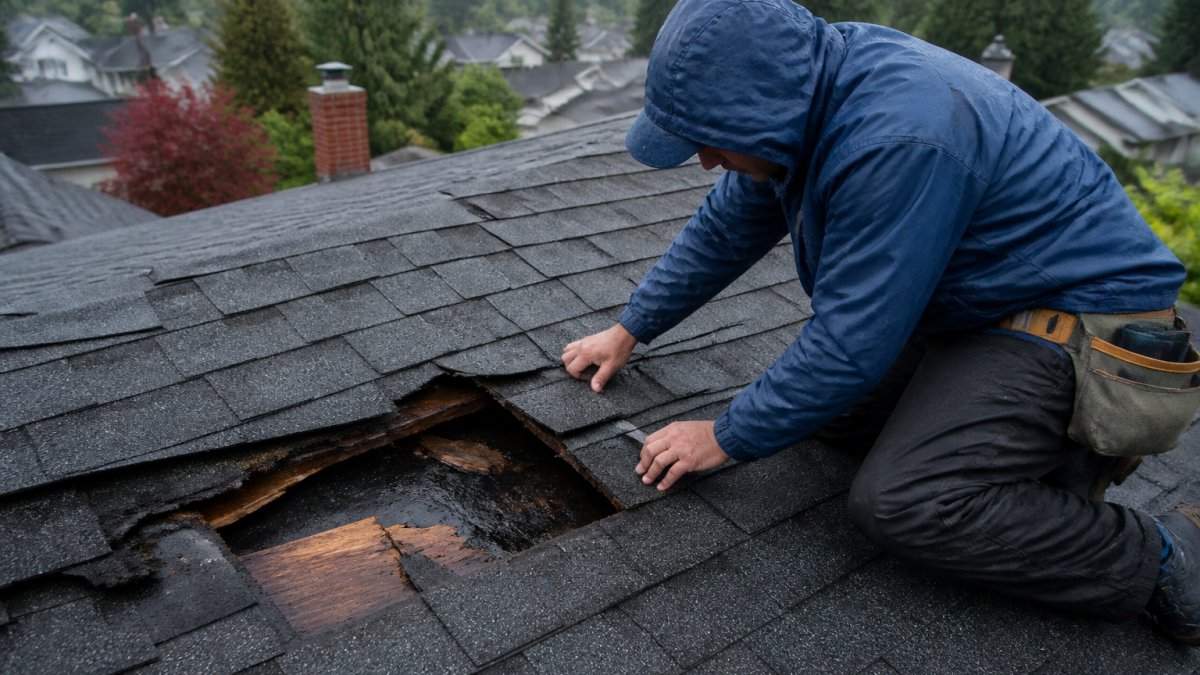
Moss problems accelerate within years on poorly maintained roofs, rooting deeper into shingles over time. Early intervention through manual removal or prevention is essential.
How to Remove Moss from Asphalt Shingles: Manual Methods
Manual removal works best for light to moderate infestations, avoiding chemical runoff while delivering reliable results.
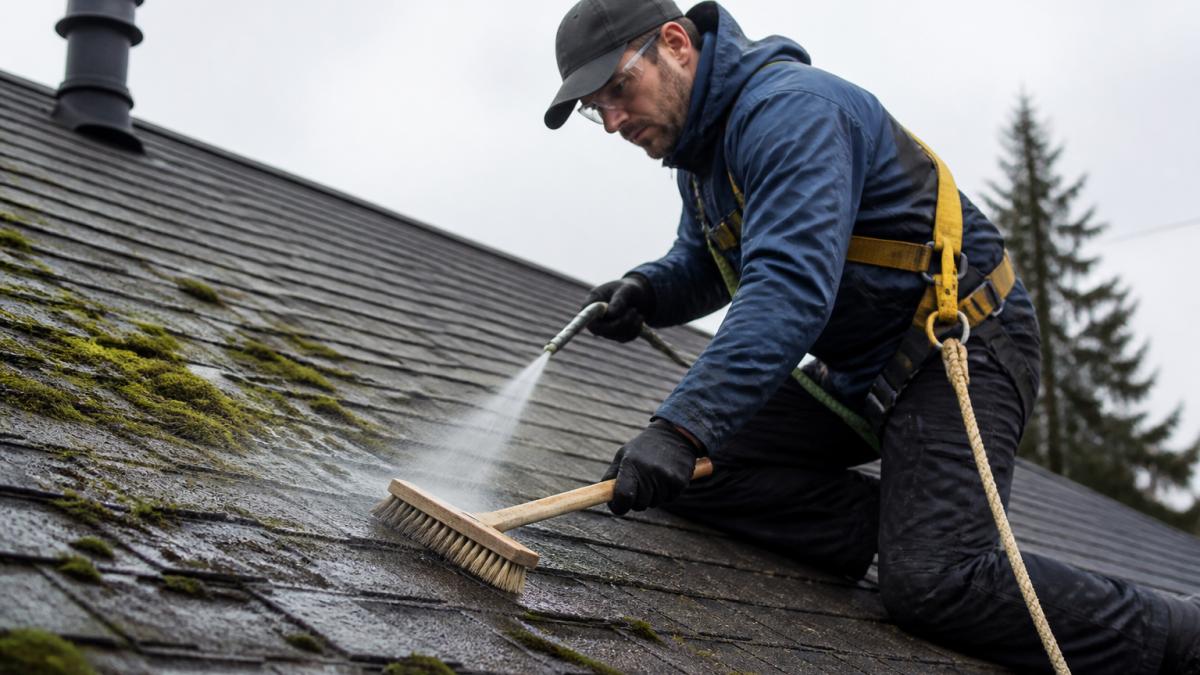
Soft Brush and Garden Hose Technique
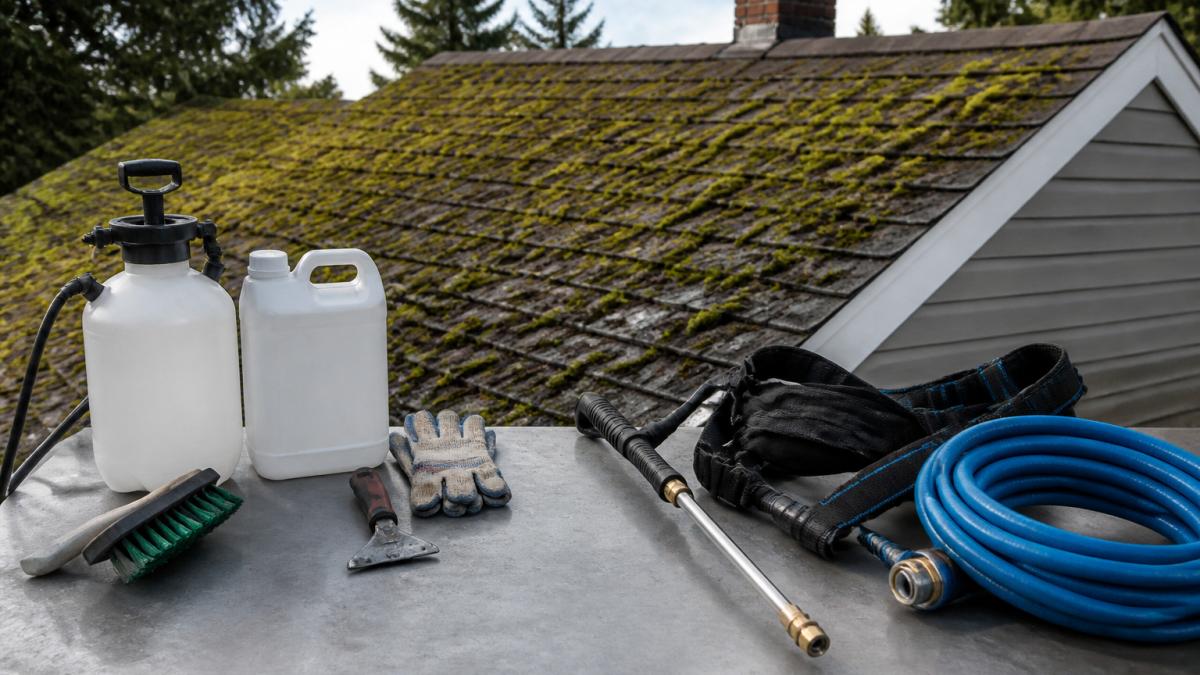
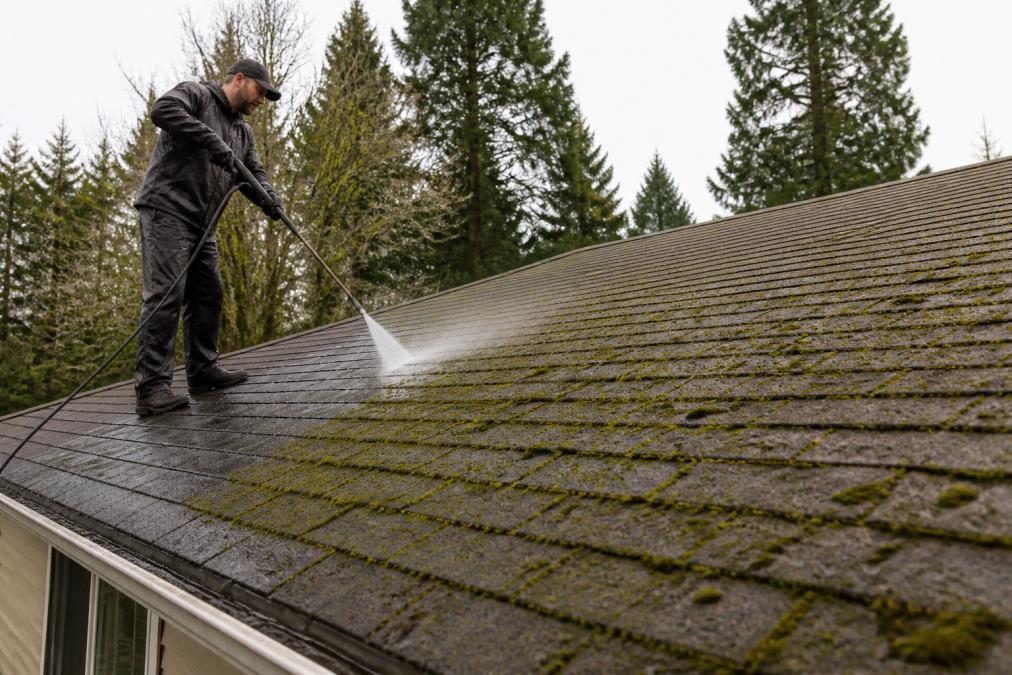
Wet the roof, gently brush in one direction with light pressure, rinse as you go, and let dry completely. Repeat in 2-3 weeks if needed. The process takes 2-4 hours. Avoid pressure washers, which damage shingles. Use proper fall protection or hire professionals for safety.
Baking Soda and Vinegar Alternatives
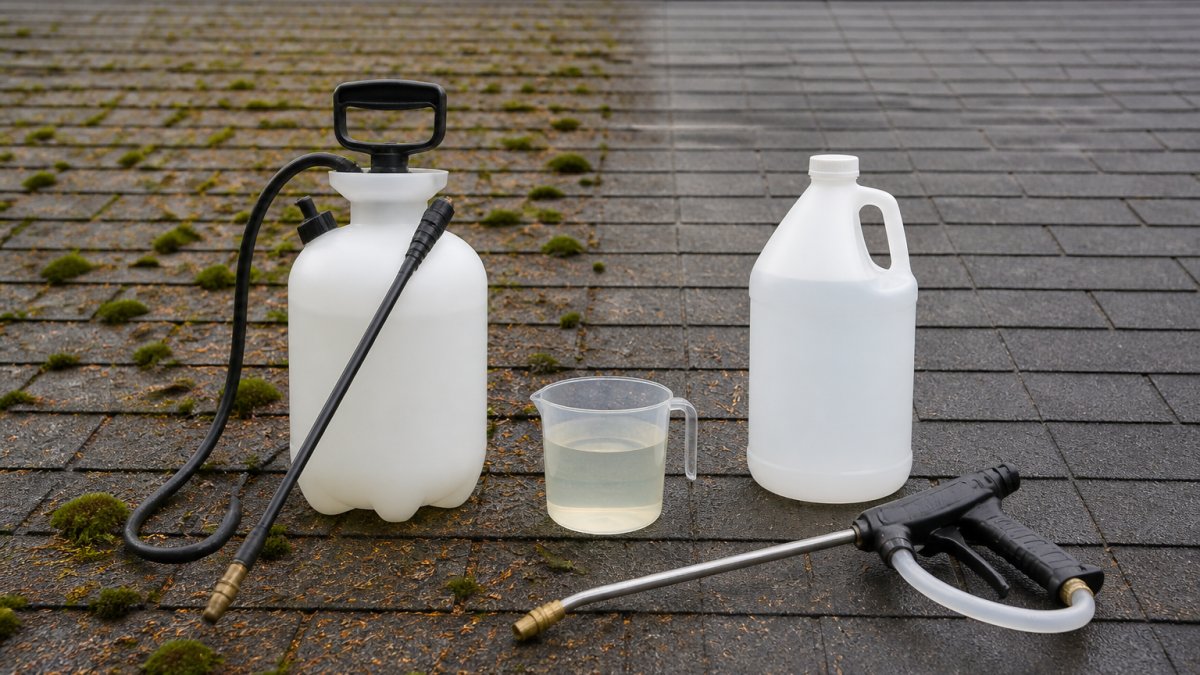
Baking soda and vinegar offer eco-friendly alternatives without toxic runoff. Mix baking soda with water into a paste, apply to moss, wait 24-48 hours, then brush and rinse. Or spray a 1:1 vinegar-water solution, wait 24 hours, then brush and rinse. Both work slowly over several weeks but eliminate environmental and health risks.
Chemical Roof Cleaning: Effectiveness and Risks
Chemical treatments kill moss in 24-72 hours and prevent regrowth for 6-12 months, but carry environmental and safety trade-offs.
How Chemical Treatments Work
Chemical killers (zinc sulfate, copper sulfate, or quaternary ammonium compounds) destroy moss cells on contact. Spray or brush directly, wait 24-72 hours, then rinse. One application prevents moss for 6-12 months. The downside: chemical runoff flows into gutters, soil, and streams, affecting landscaping and water quality.
Environmental Impact and Runoff Concerns
Chemical runoff flows through gutters into soil and streams, where zinc and copper accumulate, affecting plant growth and aquatic life. The Pacific Northwest's frequent rain accelerates this exposure. Many homeowners choose manual or natural methods to protect local waterways, especially near streams or sensitive ecosystems.
How Long Does Roof Moss Treatment Take to Work
Manual removal shows results within hours but moss regrows in 2-4 weeks without prevention. Natural alternatives take 1-3 weeks. Chemical treatments work in 24-72 hours. Prevention strategies compound over months. Combining manual removal with prevention delivers lasting results.
Roof Moss Prevention: Long-Term Maintenance Strategy
Prevention is more cost-effective than repeated removal and extends roof lifespan while reducing chemical use and professional service needs.
Gutter Cleaning and Debris Removal
Clean gutters are moss prevention's foundation. Clear debris in spring and fall (fall cleanup is critical). DIY cleaning takes 1-2 hours per season at no cost; professional cleaning costs $150-$300 per visit. Gutter guards ($500-$2,000 installed) reduce cleaning frequency and moss risk.
Improving Roof Drainage and Sunlight Exposure
Improve drainage by ensuring gutters slope toward downspouts, installing downspout extensions 4-6 feet away, adding roof vents ($300-$800), and clearing blockages. Trim overhead branches to increase sunlight; even 2-3 hours of direct daily sun significantly slows moss growth. Professional tree trimming costs $200-$1,000; roofs with good sunlight stay moss-free 2-3 times longer than shaded roofs.
Copper and Zinc Strips: Passive Prevention
Copper and zinc strips release ions that inhibit moss growth as rain washes them down the roof. They prevent new moss in 70-85% of cases over 6-12 months but don't kill existing moss. Material costs $100-$300; professional installation $200-$500; lifespan 5-10 years. They're passive, compatible with all roof types, and ideal for "set and forget" prevention when combined with manual removal.
Roof Inspections and Maintenance Intervals
Annual inspections catch problems early. Check for dark patches, water stains, gutter debris, and blocked downspouts. Have a certified roofer inspect every 3-5 years ($150-$300). Act based on coverage: under 10%, prevention alone may suffice; 10-25%, combine manual removal with prevention; over 25% or repeated returns, seek professional treatment.
Long-Term Prevention vs. Repeated Treatment: Cost Analysis
Over 10 years, prevention costs $300-$3,000 versus $2,400-$18,000 for repeated manual removal or $4,000-$8,000 for repeated chemical treatment. Prevention costs 50-75% less and extends roof lifespan 5-10 years, paying for itself within 2-3 years.
Comparing Treatment Methods: Safety, Cost, and Results
Different approaches have distinct trade-offs across effectiveness, cost, roof compatibility, and environmental risk. Choosing the right method depends on your roof material, budget, environmental priorities, and how much moss has already established.
Effectiveness, Cost, and Timeline Comparison
| Method | Speed | Material Cost | Labor/Effort | Longevity | Best For |
|---|---|---|---|---|---|
| Soft brush & hose | 2-4 hours | $0-$50 | High (DIY) | 2-4 weeks | Light moss, all roof types, eco-conscious homeowners |
| Baking soda/vinegar | 1-3 weeks | $10-$30 | Low (DIY) | 4-8 weeks | Small patches, asphalt shingles, budget-conscious |
| Citrus oil (d-limonene) | 1-2 weeks | $40-$100 | Low (DIY spray) | 6-10 weeks | Moderate moss, asphalt and tile, natural preference |
| Chemical treatment (zinc/copper) | 24-72 hours | $30-$150 | Low (spray/brush) | 6-12 months | Heavy infestations, fast results needed |
| Copper or zinc strips | 6-12 months | $100-$300 | Minimal (install once) | 5+ years | Long-term prevention, all roof types |
| Professional service | 1-2 days | $400-$1,200 | None (hired) | 12+ months | Comprehensive solution, steep/complex roofs, warranty concerns |
Roof Material Compatibility and Warranty Risks
Asphalt shingles tolerate soft brush, baking soda, vinegar, citrus oil, copper strips, and professional service; avoid high-pressure washers and check warranties before chemical use. Metal roofs: avoid pressure washing and verify chemical restrictions. Tile roofs: test chemicals first to avoid staining. Wood shakes: use manual methods only; avoid chemicals and pressure washing.
Runoff Precautions by Treatment Type
Chemical and natural treatments flow off roofs into gutters, soil, and waterways. Precautions differ by product and location.
Manual removal (soft brush & hose):
- No chemical runoff; water runoff is harmless
- Direct downspout discharge away from foundation and landscaping
- No special precautions needed for nearby plants or water bodies
- Minimal environmental impact; both are biodegradable
- Vinegar is acidic but dilutes quickly in soil and water
- No special runoff precautions required
- Safe for use near vegetable gardens and sensitive plantings
Citrus oil (d-limonene):
- Biodegradable but can harm aquatic organisms at high concentrations
- If property is near a stream or pond: Install a temporary gutter diverter or tarp to catch runoff for the first 48 hours after application
- Avoid application before heavy rain; allow 24-48 hours of dry weather
- Safe for most landscaping but test on delicate plants first
Zinc sulfate and copper sulfate treatments:
- Accumulate in soil over time; repeated applications increase risk
- Runoff pathways: Gutters → downspouts → landscaping soil → groundwater and storm drains
- Precautions:
- Install gutter guards to catch debris and slow runoff
- Direct downspouts away from vegetable gardens, flower beds, and water features
- If near a stream or wetland: Use a temporary tarp or gutter diverter to capture runoff for 48-72 hours
- Avoid application before rain; allow 48-72 hours of dry weather for the chemical to set
- Do not apply to roofs that drain directly into storm drains without filtration
- Soil impact: Zinc and copper accumulate with repeated applications; consider manual removal or prevention as alternatives if treating more than once per year
Professional chemical treatment:
- Professionals typically apply runoff precautions as standard practice
- Ask your service provider: Do they use gutter protection, downspout diversion, or soil barriers? Do they time application to avoid rain?
- Verify they use products approved for your roof material and region
Cost and Effort Reality Check
DIY manual removal is free or nearly free but demands 2-4 hours of physical labor on a ladder or roof. Fall risk is real; many homeowners hire professionals for safety reasons alone.
Natural alternatives cost $10-$100 in materials but require patience (1-3 weeks for results) and repeat applications every 4-8 weeks if moss returns. Over a year, this can equal or exceed the cost of a single professional treatment.
Chemical treatments cost $30-$150 for materials and work in 24-72 hours, but require runoff precautions and may not be compatible with your roof type or warranty. Repeat applications are needed every 6-12 months.
Professional service costs $400-$1,200 upfront but includes assessment, proper application, safety, and often a warranty on results. For roofs with heavy moss, steep pitch, or complex shape, professional service eliminates risk and guarantees quality. One professional treatment with prevention often costs less over 3 years than repeated DIY attempts.
When Professional Roof Moss Treatment Makes Sense
DIY approaches work for small patches and preventive maintenance. Professional treatment becomes necessary when moss covers significant roof area or regrows constantly.
Consider professional service when:
- Moss covers more than 25% of the roof
- You're uncomfortable working at heights
- Previous DIY attempts failed to prevent regrowth
- The roof is steep or complex in shape
- You want guaranteed results with liability protection
Professional technicians bring equipment, expertise, and safety training. They assess the roof's condition, identify underlying drainage issues, and implement solutions that last.
Sound Roof Care specializes in moss treatment for the Pacific Northwest's unique climate. Our certified technicians understand how regional weather patterns accelerate moss growth. We combine manual removal, prevention strategies, and long-term maintenance plans to protect your roof.
Professional service costs more upfront but saves money long-term. One quality treatment with proper prevention beats repeated DIY attempts that never fully solve the problem.
Moss on asphalt roofs isn't just a cosmetic issue, it traps moisture, accelerates deterioration, and shortens roof lifespan. Addressing it early prevents expensive structural damage. Sound Roof Care has protected thousands of roofs across the Puget Sound region by combining proven removal methods with prevention strategies tailored to Washington's wet climate. Our certified technicians deliver honest assessments, transparent pricing, and lasting results that extend your roof's lifespan.
Frequently Asked Questions
What is the difference between roof moss treatment and chemical cleaning?
Roof moss treatment typically refers to manual removal methods like soft brushing, garden hoses, or household alternatives such as baking soda and vinegar solutions. Chemical cleaning uses specialized biocides or herbicides to kill moss on contact. Manual methods require more labor but minimize environmental runoff, while chemical treatments work faster but may pose risks to surrounding plants, soil, and waterways if not applied carefully.
How long does roof moss treatment take to show results?
Manual removal using a soft brush or garden hose produces immediate visible results, though some moss may return within weeks or months if conditions remain favorable. Chemical treatments typically kill visible moss within 24-48 hours, but dead moss may take several days to fully shed from shingles. Prevention measures work over months and years, reducing moss regrowth frequency and severity when combined with regular maintenance.
Is it safe to use chemical cleaners on asphalt shingles?
Most commercial roof moss killers are formulated to be safe for asphalt shingles when applied according to manufacturer instructions. However, improper application, excessive pressure washing, or using wrong concentrations can damage shingles. Chemical runoff poses risks to nearby plants, soil, and waterways. Always verify product compatibility with your roof material and consider environmental impact before choosing chemical treatment over manual or household alternatives.
Can you prevent moss from growing back after treatment?
Yes. Prevent moss regrowth by keeping gutters and roof surfaces clear of debris, ensuring proper drainage, trimming overhanging tree branches to increase sunlight exposure, and maintaining regular roof inspections. Combining initial treatment (manual or chemical) with these preventive maintenance steps significantly extends the time between treatments. Professional maintenance plans can identify conditions that favor moss growth and address them before moss returns.