 blog
DIY vs Professional Roof Moss Cleaning: Costs, Safety, and Results
Table of Contents
- Why Roof Moss Becomes a Problem in Wet Climates
- DIY Roof Moss Cleaning: Methods, Risks, and Reality
- Roof Moss Removal Safety: Fall Hazards and Protective Measures
- Soft Washing vs Brushing Roof: Which Method Works Better
- How Long Does Roof Moss Treatment Take: Timeline and Results
- Roof Moss Removal Cost: DIY vs Professional Pricing
- When to Choose Professional Roof Cleaning and Prevention
- Frequently Asked Questions
Last Updated: October 6, 2026
Why Roof Moss Becomes a Problem in Wet Climates
Roof moss cleaning becomes urgent in regions with consistent moisture and mild temperatures. The Pacific Northwest creates ideal conditions: cool, damp air and minimal direct sunlight on many residential roofs.
The choice between DIY roof moss removal and professional roof cleaning services hinges on three factors: your comfort with height and safety equipment, your roof's material and age, and your timeline.
DIY Roof Moss Cleaning: Methods, Risks, and Reality
Homeowners attempting DIY roof moss removal typically choose between three approaches: manual brushing, pressure washing, or chemical treatments. Each addresses visible moss differently, but none guarantees it won't return quickly in this climate.
Brushing and Manual Removal
Brushing uses a stiff-bristled roof brush or broom to physically dislodge moss. The appeal: no chemicals, minimal equipment, and immediate visual results.
The reality is less encouraging. Brushing removes visible moss but leaves microscopic spores and root systems embedded in the roof material. Within weeks to a few months, moss typically returns because the conditions that created it remain unchanged.
Pressure Washing and Potential Damage
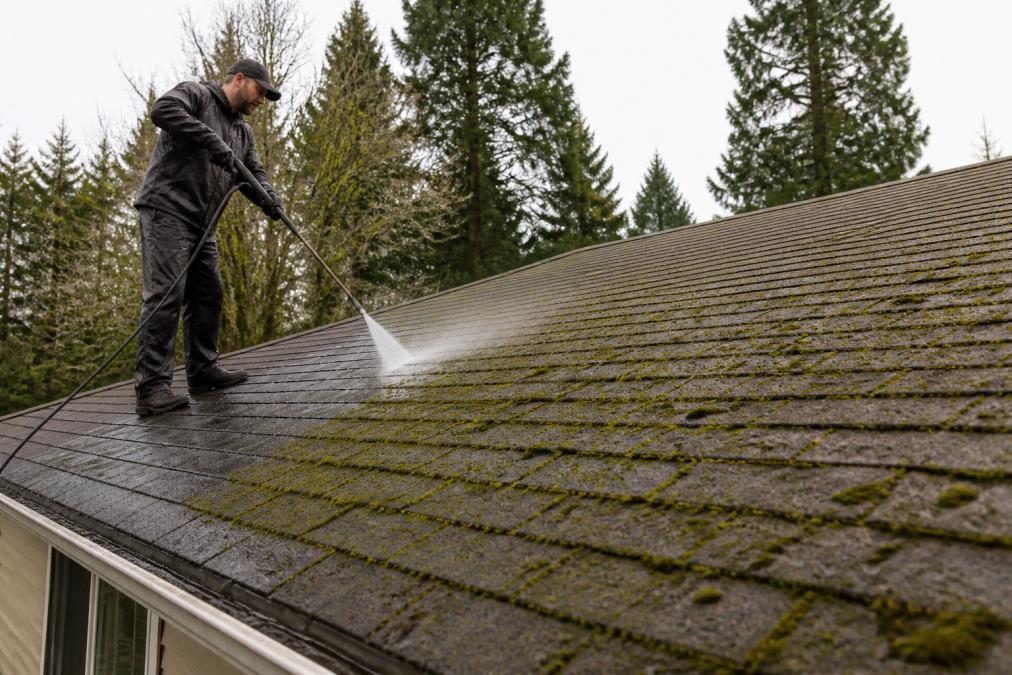
Pressure washing delivers fast, dramatic results, blasting away moss, debris, and discoloration in an afternoon.
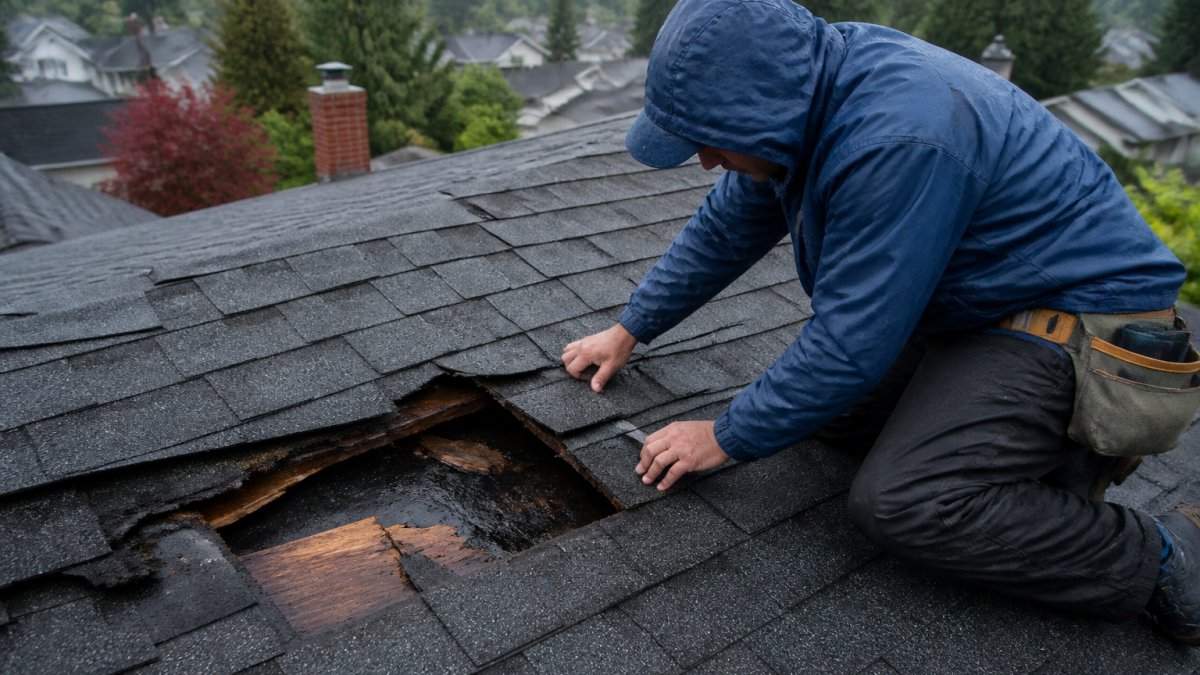
This method carries significant risks most homeowners underestimate. Pressure washing forces water into microscopic gaps between shingles and tiles, underneath flashing, and into spaces where water should never penetrate. It can dislodge granules from asphalt shingles, strip protective coatings, and create micro-holes that become entry points for water damage.
Chemical Treatments and Wet-and-Leave Products
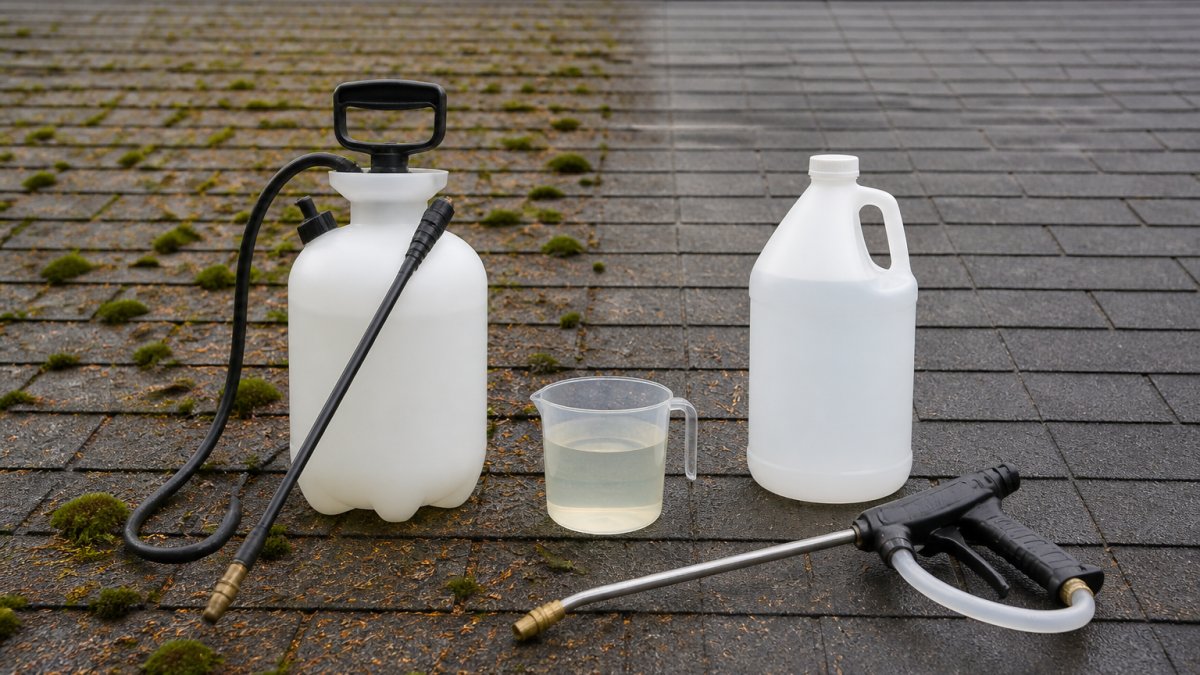
Chemical treatments, often called wet-and-leave products, kill moss at the cellular level, causing it to detach naturally over weeks as it dries and decomposes.
The advantage: wet-and-leave treatments minimize surface damage because they rely on natural detachment rather than force. The disadvantage is patience: results take 4-8 weeks to become fully visible.
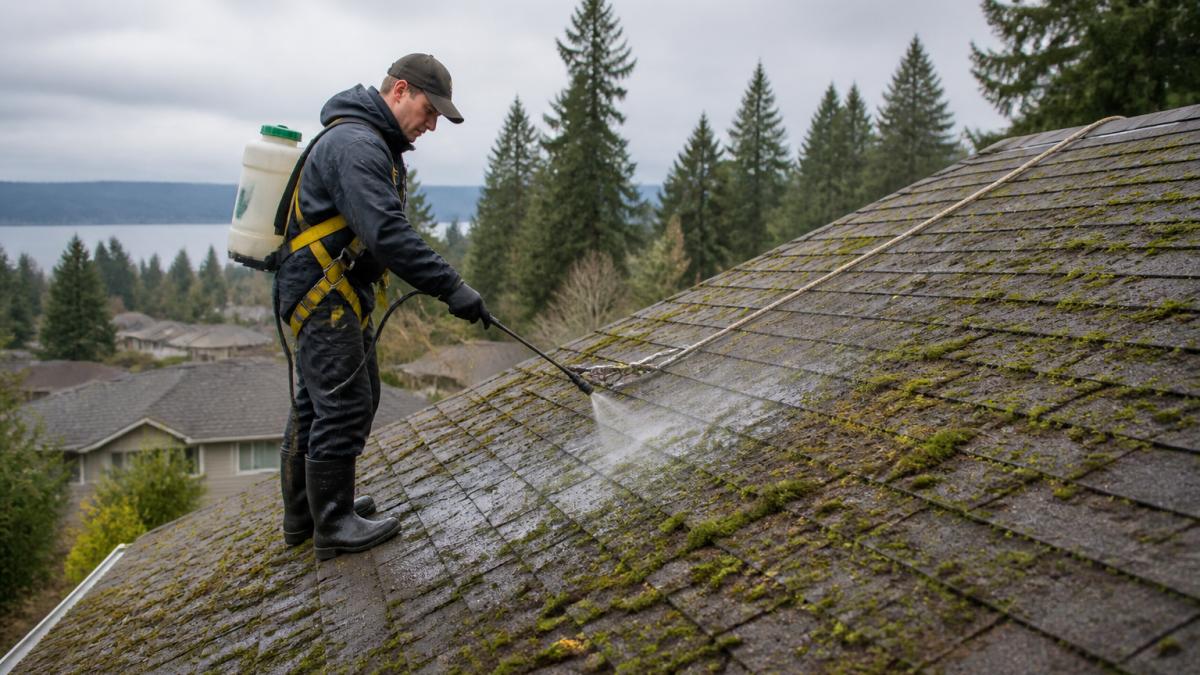
Roof Moss Removal Safety: Fall Hazards and Protective Measures
Roof moss removal safety is where DIY attempts most often go wrong. Falls remain the leading cause of unintentional injury-related death in the home, and roof work is a major contributor. If you attempt this yourself, treat the following as a checklist, not a suggestion.
Fall protection that actually works
- Harness and anchor: Use a full-body fall-arrest harness anchored to a rated anchor point. Never anchor to a gutter, vent stack, chimney cap, or satellite mount, none are engineered to hold a falling body.
- Rope and lanyard: A shock-absorbing lanyard limits arrest force. A simple rope tied off is not fall protection.
- Roof anchors: Permanent roof anchors installed by a qualified contractor are the gold standard. Temporary ridge anchors exist but must be rated and correctly installed.
Weather and surface conditions
Do not go on a roof when any of these are true:
- Rain is falling, imminent, or has fallen in the last 24 hours
- Moss or shingles are visibly wet or damp
- Wind is strong enough to affect balance or move a ladder
Dry, calm, mild conditions are the only acceptable window. Wet moss is one of the slickest surfaces you will ever stand on.
When not to access the roof at all
Some roofs should never be a DIY project. Do not attempt roof moss cleaning yourself if any of the following apply:
- Pitch steeper than about 6:12 (a 6-inch rise per 12-inch run)
- Two stories or higher, or any roof where a fall would be from more than roughly 10 feet
- Fragile or aging materials such as older clay tile, slate, or wood shake
In any of those cases, the correct safety decision is to hire a professional. That is not a sales pitch; it is the same guidance roofing safety organizations give.
What professionals do differently
Professional roof cleaners use redundant systems: a primary anchor plus a secondary backup, trained technique for moving across a pitched surface, and insurance covering both the worker and your property. They also work in short, efficient windows, reducing total exposure time.
Soft Washing vs Brushing Roof: Which Method Works Better
Soft washing and brushing represent opposite approaches to roof moss removal, and the differences matter for your roof's longevity.
Soft washing applies low-pressure water combined with biodegradable cleaning solutions designed to kill moss without damaging roof materials.
Brushing relies on mechanical force to scrape moss away immediately.
Soft washing outperforms brushing for three reasons: it addresses the biological cause, minimizes surface damage, and typically includes treatment that slows regrowth.
How Long Does Roof Moss Treatment Take: Timeline and Results
Understanding realistic timelines helps you plan maintenance.
DIY brushing produces visible results within hours, but it's temporary. Moss typically returns within 4-12 weeks, depending on weather and how aggressively you brushed.
Chemical treatments take longer but last longer. Expect 3-6 weeks for moss to fully die and detach naturally.
Professional soft washing typically shows results within 2-3 weeks, with full effectiveness by week 4.
Pressure washing shows immediate results but provides no lasting protection.
Roof Moss Removal Cost: DIY vs Professional Pricing
A real cost comparison has to be like-for-like. Most homeowners compare the price of a bottle of moss killer to a contractor's invoice and conclude DIY is cheaper, but that ignores labor, equipment, access, treatment, and the probability of repair.
What DIY roof moss cleaning really costs
- Treatment product: Wet-and-leave moss treatments sold at home improvement stores typically run $20 to $60 per concentrate bottle, and a typical single-family roof may need two to four bottles depending on square footage and moss coverage. Expect roughly $40 to $250 in product for a full-roof application.
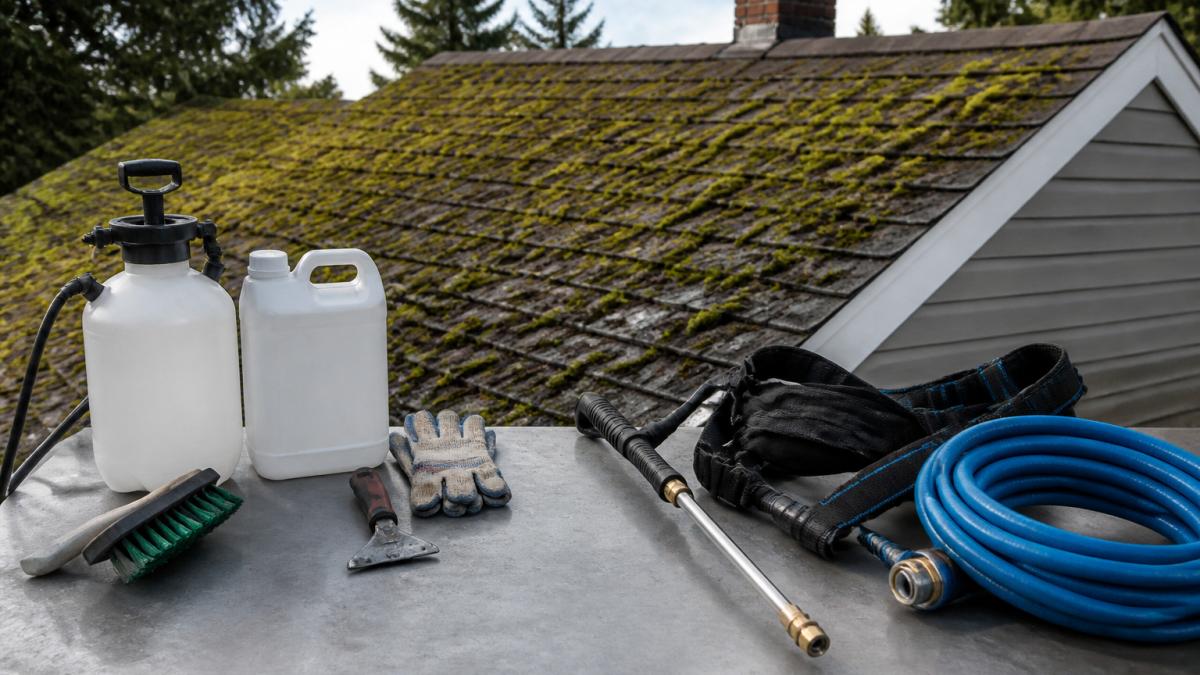
- Application equipment: A pump sprayer sized for roof work runs $40 to $120. A long-reach extension wand adds $30 to $80. A stiff-bristled roof brush is $25 to $60.
- Access and safety gear: A fall-arrest harness and anchor kit runs $150 to $400. A ladder stabilizer or standoff is $40 to $100. Non-slip roof shoes are $60 to $150. If you already own none of this, you are looking at $250 to $650 before you touch the roof.
A realistic first-year DIY total, assuming you buy everything and do the work yourself, lands somewhere between $500 and $1,500, and that figure repeats every time moss returns.
What professional roof moss cleaning costs
Professional pricing is quoted per job and varies by region, roof size, pitch, material, and moss severity. Soft-wash moss cleaning with treatment on a typical single-family home commonly falls between $400 and $1,200, with steep, tall, or heavily mossed roofs pushing higher. That quote usually bundles several things DIY does not:
- Low-pressure soft washing with a moss-killing solution
- Post-treatment to slow regrowth
- Gutter and downspout clearing of the debris the cleaning loosens
- Liability insurance and workers' compensation coverage
The five-year math
This is where the comparison flips. If DIY brushing or a weak treatment buys 8 to 12 weeks of clean roof, you're repeating the job three to four times a year. Over five years that's 15 to 20 cleaning cycles, each a fresh exposure to fall risk and surface wear.
A professional soft wash with proper treatment typically holds 18 to 36 months depending on climate and shade. Over five years, that's two to three professional visits.
The costs nobody budgets for
The two biggest hidden costs of DIY are injury and roof damage. A single ER visit for a fall, or one roof repair from pressure-washing damage, can exceed the entire cost of professional cleaning several times over. Compare quotes against the full DIY cost stack, not just the price of a bottle.
When to Choose Professional Roof Cleaning and Prevention
Professional roof cleaning becomes the logical choice when any of these apply: your roof is over 15 years old, you have a steeply pitched or complex design that makes DIY access dangerous, you've attempted DIY removal and moss returned quickly, or you want preventive maintenance rather than reactive cleaning.
Professional cleaners bring expertise that prevents damage.
At Sound Roof Care, we've served the Puget Sound region since 2009 with certified technicians trained in safety and specialized in the Pacific Northwest's moss-prone climate.
The real value of professional roof cleaning isn't just removing moss, it's protecting your home's most critical defense system and giving you peace of mind that the work was done safely.
Roof moss cleaning is a challenge that won't disappear in this climate, but it's one you can manage effectively with the right approach. If you're uncertain whether your roof needs professional attention or want a transparent assessment of your options, Sound Roof Care provides free roof inspections and cleaning quotes tailored to your specific situation.
| Approach | Time to Results | Duration of Protection | Safety Risk | Surface Damage Risk | Cost Level |
|---|---|---|---|---|---|
| Brushing | Hours | 4-12 weeks | High | Moderate-High | Low |
| Pressure washing | Hours | 2-8 weeks | High | High | Low-Moderate |
| Chemical treatment (DIY) | 3-6 weeks | 12-24 months | Moderate | Low | Low-Moderate |
| Professional soft washing | 2-3 weeks | 18-36 months | Low | Low | Moderate-High |
Frequently Asked Questions
Is it safe to remove moss from a roof yourself?
DIY roof moss removal carries significant fall and injury risks. Steep roofs, wet surfaces, and moss create slippery conditions that cause serious accidents. Without proper fall protection equipment (harnesses, anchors, safety lines), ladders, and training, you expose yourself to preventable harm. Professionals have certified safety protocols, equipment, and insurance. If you decide to attempt it, use a safety harness, secure the ladder properly, wear non-slip footwear, and work only in dry conditions, but professional removal eliminates these hazards entirely.
How long does roof moss treatment take to work?
Wet-and-leave chemical treatments typically show visible moss death within 2-4 weeks, with complete detachment taking 4-8 weeks depending on weather and moss thickness. Brushing or soft washing produces immediate visible results but doesn't prevent regrowth. Professional treatments combine removal with preventative coatings that slow regrowth for 12-24 months. Results vary by treatment method, roof material, climate conditions, and moss severity. Homeowners often see faster, longer-lasting results with professional moss treatment because technicians apply the right method for your specific roof type.
Can pressure washing damage roof shingles?
Yes. High-pressure washing (above 1500 PSI) strips protective granules from asphalt shingles, exposing the underlying material to UV damage and water penetration. It can lift shingle edges, crack tiles, and create entry points for leaks. Soft washing (low-pressure spray with chemical treatment) avoids this damage by letting the treatment kill moss while the roof surface stays intact. Professionals use soft washing specifically because it removes moss effectively without shortening roof lifespan. DIY pressure washing often causes more damage than the moss itself.
Should you clean moss from the roof or treat it?
The best approach combines both: remove visible moss physically, then apply treatment to prevent regrowth. Physical removal alone (brushing or soft washing) clears the immediate problem but moss spores and microscopic roots remain, causing rapid regrowth within months. Chemical treatment without removal takes longer to show results. Professional roof cleaning services typically use soft washing to remove visible growth, then apply preventative treatment that inhibits spore germination and slows regrowth for over a year. This two-step method protects your roof longer than either approach alone.