 how-to
Signs of Roof Leak in Attic: A Complete Inspection Guide
Table of Contents
- What You'll Need Before Inspecting Your Attic
- Signs of Roof Leak in Attic: Visual Indicators to Check
- Attic Condensation vs. Roof Leak: How to Tell the Difference
- How to Stop Roof Leak During Rain: Temporary Measures
- Step-by-Step Attic Inspection Process
- Cost to Repair Roof Leak: What to Expect
- Common Mistakes to Avoid During Attic Inspection
- When to Call a Professional Roofer
- Frequently Asked Questions
Last Updated: September 21, 2026
What You'll Need Before Inspecting Your Attic
Before you climb into your attic, gather the right tools and safety gear. A flashlight is essential, headlamps work best since they keep both hands free. Wear gloves to protect against insulation fibers and any contaminated materials. A dust mask or respirator prevents inhalation of mold spores or fiberglass particles. Sturdy boots with good grip help you navigate safely across joists and rafters.
Bring a moisture meter to measure dampness in insulation and wood. A camera or smartphone works for documenting what you find. Consider a thermal imaging camera if you suspect hidden moisture, it reveals temperature differences that indicate wet insulation.
Check your attic access point before you start. Make sure the ladder is stable and the opening is clear. Never enter an attic alone, and let someone know you're going up there.
Signs of Roof Leak in Attic: Visual Indicators to Check
The signs of roof leak in attic fall into distinct categories. Some are obvious. Others require closer inspection to spot. Learning what to look for saves time and prevents costly water damage to your home's structure.
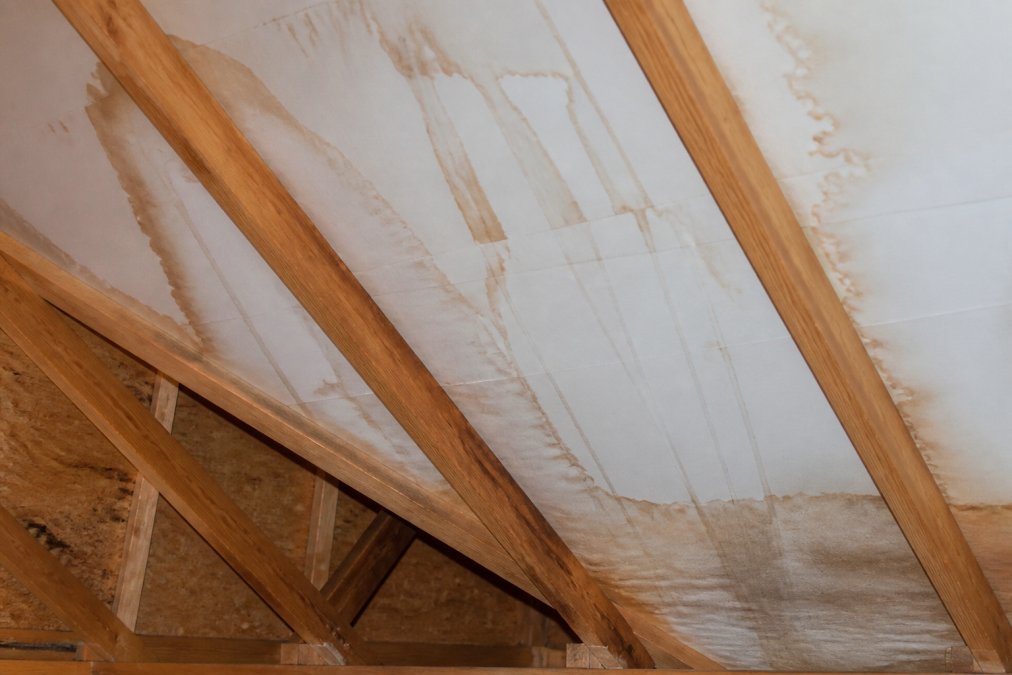
Water Stains on Rafters and Sheathing
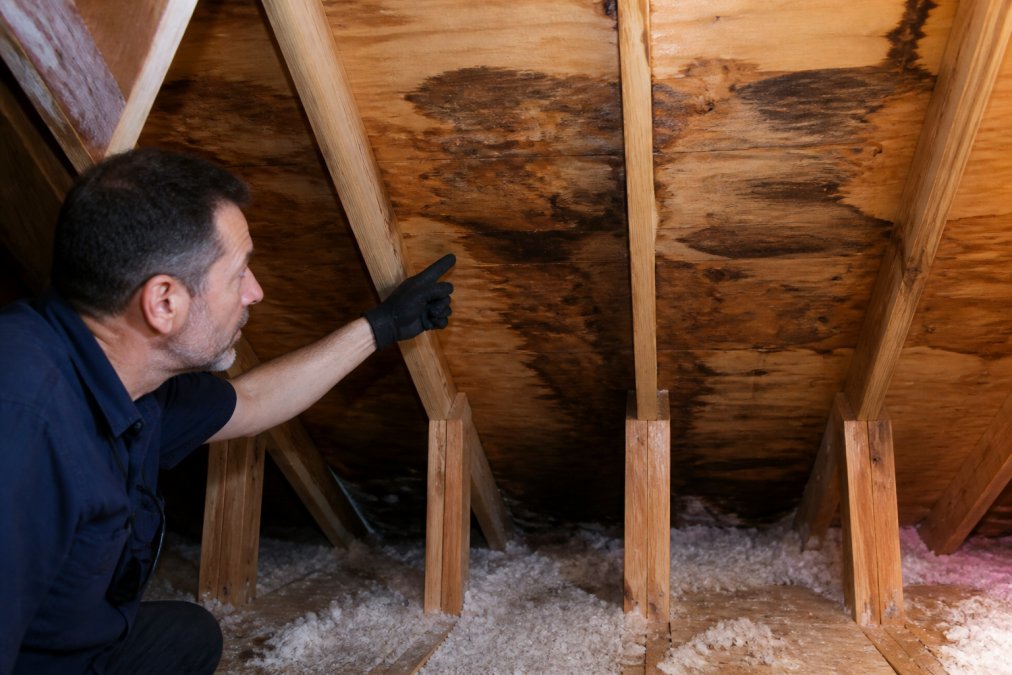
Water stains are the clearest sign of a roof leak. Look for brown, tan, or rust-colored marks on the roof sheathing and rafters. These stains often appear in patterns that follow the grain of the wood or trace along the edges of boards.
Fresh stains look wet and may still drip. Old stains appear dry but leave permanent discoloration. Pay attention to where stains cluster, they show the leak's path as water runs down the wood.
Check the underside of roof decking carefully. Stains here indicate water is actively penetrating. This is where you'll find the most reliable evidence of a real roof leak versus surface moisture.
Damp or Matted Insulation
Wet insulation loses its effectiveness and becomes a breeding ground for mold. Look for areas where insulation appears darker, heavier, or compacted. Matted insulation feels cold and damp to the touch.
Moisture often spreads sideways through insulation, so the wet area may be larger than the actual leak opening. A moisture meter reads the exact dampness level. Readings above 20% indicate saturation that requires immediate attention.
The insulation directly below roof penetrations, vents, chimneys, skylights, gets wet first. Check these zones thoroughly during your inspection.
Active Dripping or Puddling
Water actively dripping during or after rain is the most urgent sign. Look for puddles on the attic floor or visible moisture pooling on insulation. This means water is entering your attic right now and causing damage.
Dripping water may not come directly from the leak opening. It travels along rafters and can drip several feet away from where it entered. Trace the water backwards to find the actual source.
If you see active dripping, document it with photos and call a professional immediately. This situation demands fast action to prevent structural damage.
Musty Odors and Mold Growth
A musty smell in your attic signals mold growth. Mold thrives in damp conditions created by roof leaks. The smell often appears before you see visible mold.
Look for dark spots, greenish patches, or fuzzy growth on wood surfaces and insulation. Mold can spread quickly once it starts. Early detection prevents it from becoming a serious health hazard.
Mold indicates sustained moisture, not just a recent leak. This suggests the problem has existed for weeks or months. Professional mold remediation may be necessary alongside roof repair.
Soft or Spongy Wood Decking and Joists
Press your hand firmly against the roof decking and attic joists. Wood that feels soft, spongy, or crumbly has begun to rot from moisture exposure. This is advanced damage that compromises your roof's structural integrity.
Rotted wood loses strength and cannot support weight properly. It may eventually collapse under the weight of snow or rain. This requires immediate professional attention and likely roof replacement, not just repair.
Use a screwdriver to test suspect areas. If the blade sinks easily into the wood, decay has set in. This is one of the most serious signs you can find during an attic inspection.
Dark Streaks and Water Trails
Water doesn't always leave obvious puddles. Instead, look for dark streaks running down rafters or sheathing. These trails show where water has flowed repeatedly over time.
Dark streaks often appear black or charcoal-colored. They may follow nail lines or the edges of boards. These patterns reveal the leak's drainage path and help pinpoint the entry point.
Streaks that run horizontally across multiple rafters suggest water is spreading inside the attic space. This indicates a serious leak that's been active long enough to saturate a large area.
Attic Condensation vs. Roof Leak: How to Tell the Difference
Not all moisture in your attic comes from roof leaks. Condensation forms when warm, humid air meets cold surfaces. This distinction matters because the fixes are completely different.
Condensation appears as light moisture on surfaces. It forms evenly across large areas, not in concentrated spots. Condensation appears most often in winter when attic temperatures drop sharply. It typically affects insulation uniformly rather than creating localized wet patches.
Roof leaks create stains and moisture in specific locations. Leaks follow water's natural path downward and sideways along wood grain. Leak damage concentrates near roof penetrations or along valleys. The moisture appears darker and more pronounced than condensation.
Check your attic ventilation. Poor ventilation causes condensation. Ensure soffit and ridge vents are clear and unblocked. Proper airflow prevents moisture buildup that mimics leak damage.
Use a moisture meter to measure the difference. Condensation typically reads 15-20% moisture. Active roof leaks push readings above 25%. This objective measurement helps you identify the real problem.
How to Stop Roof Leak During Rain: Temporary Measures
If you discover a leak during active rain, temporary measures buy time until a professional arrives. These steps prevent additional interior damage while you arrange permanent repair.
Create a water barrier. Spread plastic sheeting or tarps across affected insulation and ceiling areas below the leak.
Step-by-Step Attic Inspection Process
A systematic approach ensures you don't miss anything during your inspection. Follow these steps to document the condition of your attic thoroughly.
Step 1: Prepare Your Safety Gear and Access Point
Put on your gloves, dust mask, and headlamp before entering the attic. Wear long sleeves to protect against insulation fibers. Test your flashlight to ensure it works properly.
Step 2: Map Roof Penetrations and Flashing
Roof penetrations include vents, chimneys, skylights, and antenna mounts. These are the most common leak sources. Flashing, the metal strips sealing these openings, often fails first.
Step 3: Examine Insulation and Roof Decking
Inspect insulation systematically, moving from one section to another. Feel the insulation for dampness. Use your moisture meter to get precise readings. Mark wet areas with flagging tape so you can find them again.
Step 4: Document Findings with Photos
Take photos of every problem area you find. Include wide shots showing the location and close-ups showing detail. Photos help your roofer understand the scope of damage without climbing into your attic.
Cost to Repair Roof Leak: What to Expect
Roof leak repair costs vary based on the problem's severity and location. A simple flashing repair might cost several hundred dollars. A roof replacement runs significantly higher.
Common Mistakes to Avoid During Attic Inspection
Don't step on insulation while moving through your attic. Stepping on fiberglass compresses it and destroys its insulating value. Walk only on joists or use boards laid across joists as a pathway.
When to Call a Professional Roofer
Call a professional if you find any of these conditions:
- Active water dripping during rain
- Soft or rotted wood
- Mold growth anywhere in the attic
- Large areas of wet insulation
- Water stains near structural elements
- Flashing that's clearly separated or damaged
Frequently Asked Questions
How do I distinguish between a roof leak and attic condensation?
Roof leaks produce water stains that follow gravity patterns downward along rafters and sheathing, often with brown or rust-colored discoloration. Condensation appears as uniform dampness on insulation and framing, typically in winter months when warm interior air meets cold roof decking. Roof leaks may drip actively or leave water trails, while condensation creates matted insulation without visible water trails. Check your attic ventilation: poor ventilation increases condensation, while flashing failures and roof penetrations cause leaks.
What is the most common location to find a roof leak in an attic?
Roof leaks typically appear near roof penetrations such as chimneys, vents, skylights, and pipes where flashing failures occur. Check valleys where two roof planes meet, as they concentrate water flow. Ice dams along eaves cause leaks in winter. Examine areas where the roof decking shows the most exposure to weather and where water naturally pools. Water stains often trail downward from these points, making them easier to trace to their source.
How much will it cost to fix a roof leak?
Repair costs depend on the leak's severity, location, and accessibility. Factors include labor time, materials needed, and whether the leak has caused secondary damage to framing or insulation. Contact a certified roofer for a detailed inspection and quote based on your specific situation and the extent of damage found. You can find more information on pricing on our website.
Can you have a roof leak and not know it?
Yes. Small leaks may not cause visible dripping or puddles immediately. Water can travel along rafters, sheathing, or insulation before appearing as ceiling stains indoors. Leaks in hidden areas of the attic may go unnoticed for months until they cause mold growth, musty odors, or structural damage. Regular attic inspections, especially after heavy rain or seasonal weather changes, help catch slow leaks early. Moisture meters and thermal imaging can detect hidden moisture before visible damage appears.
Roof leaks cause thousands of dollars in damage when left unrepaired. Sound Roof Care identifies problems early and stops them before they spread. Our certified technicians provide honest assessments, transparent pricing, and reliable repairs that extend your roof's lifespan. Get in touch today for a free inspection and learn exactly what your roof needs.