 how-to
Clean Asphalt Shingles Without Damaging Granules
Table of Contents
- Why Asphalt Shingles Need Gentle Cleaning
- What You'll Need Before You Start
- How to Remove Moss from Asphalt Shingles
- Soft Wash Roof Cleaning: The Preferred Method
- Can You Pressure Wash Asphalt Shingles?
- Choosing the Right Roof Cleaning Solution for Asphalt Shingles
- Step-by-Step Cleaning Process
- Common Mistakes to Avoid
- Frequently Asked Questions
Last Updated: October 17, 2026
Why Asphalt Shingles Need Gentle Cleaning
Asphalt shingles are built to last, but they're more fragile than most homeowners realize, which is why knowing how to clean asphalt shingles properly is essential. Their protective layer of ceramic-coated granules reflects UV rays, sheds water, and protects the asphalt underneath from breaking down.
When you clean asphalt shingles, the wrong method can damage that coating. Lose those granules and your roof ages faster, water penetrates deeper, and leaks form years earlier than they should.
Understanding shingle granules and their role
Shingle granules are small ceramic stones embedded in the asphalt layer that provide UV protection, water shedding, and weather resistance. Without them, asphalt oxidizes rapidly and becomes brittle.
Most homeowners don't notice granule loss until they see colored pebbles in their gutters. A few granules washing away over decades is normal; losing them all at once means your roof's lifespan just got cut short.
The risks of pressure washing and high-pressure water
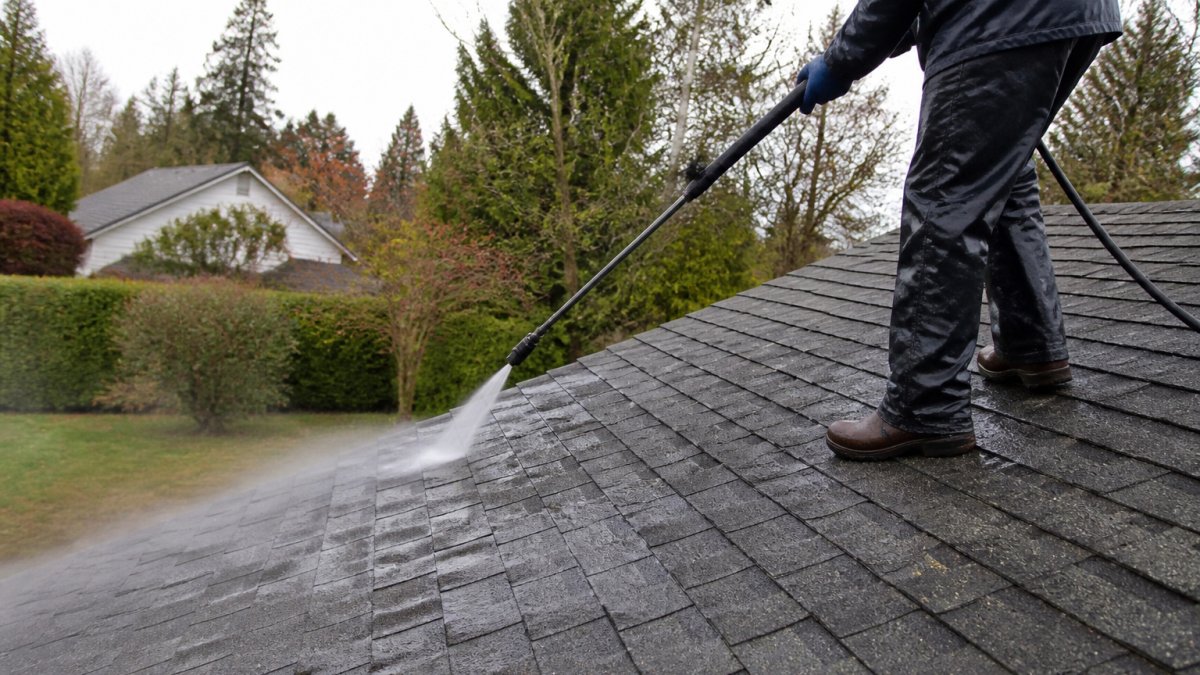
High-pressure water is the enemy of shingle granules. Pressure washers shoot water at 1,500 PSI or higher, strong enough to strip granules right off the surface, and once they're gone, they don't grow back.
Pressure washing also forces water under the shingles, lifting edges and creating gaps where moisture seeps in, causing roof decking rot and attic mold.
Many homeowners think they're saving money by pressure washing themselves, then pay thousands more in repairs later.
What You'll Need Before You Start
Safety equipment and fall prevention
Working on a roof is dangerous, falls are the leading cause of serious home injuries. Gather the right gear first.
You'll need:
- Roof harness or safety rope rated for your weight
- Non-slip shoes with good grip
- Work gloves to protect your hands
- Eye protection (cleaning solution can splash)
- Long sleeves and pants
- A sturdy ladder with someone holding it below
The most important decision is whether to get on the roof at all. If your roof is steep, wet, or over 20 feet high, hire a professional. Sound Roof Care's certified technicians have the equipment and training to work safely at any height or angle.
Cleaning tools and materials
Gather these items before you start:
- Soft-bristle brush or broom (never wire brushes)
- Low-pressure sprayer (garden sprayer works fine)
- Bucket for mixing solution
- Garden hose with adjustable nozzle
- Leaf blower or air blower for debris removal
- Tarp or drop cloth to catch runoff
- Cleaning solution designed for roofs
Never use a pressure washer or wire brush. These tools damage your shingles and void your warranty.
How to Remove Moss from Asphalt Shingles
Identifying moss, algae, lichen, and ordinary debris
Not all roof discoloration is the same. Identify what you're dealing with before you clean.
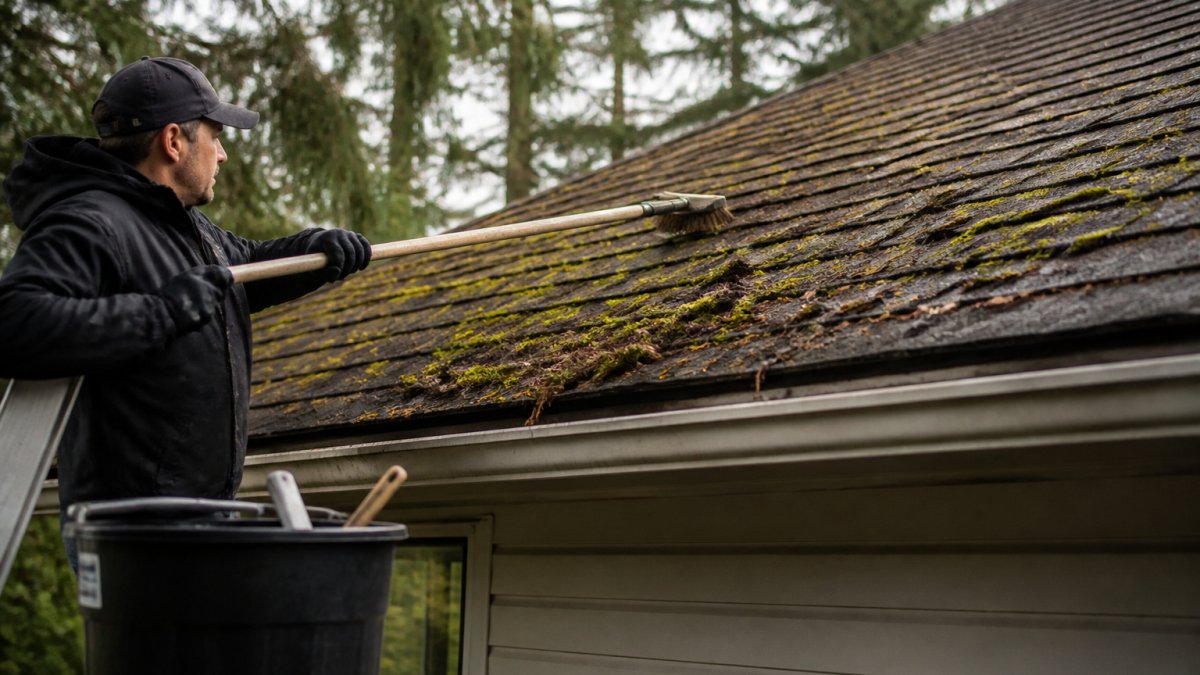
Moss appears as fuzzy green or brown patches in shaded areas and loves the Pacific Northwest's wet climate.
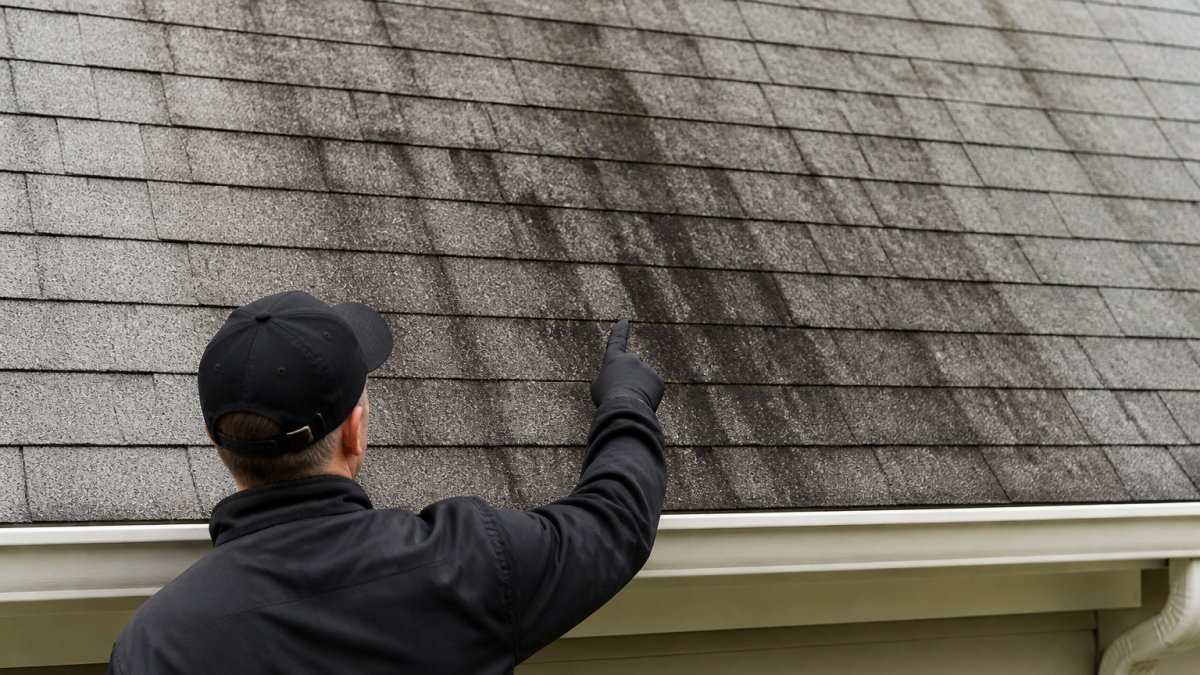
Algae looks like dark streaks running down the roof, common on north-facing slopes.
Lichen appears as gray or white crusty patches. It's a combination of fungus and algae.
Ordinary debris includes leaves, twigs, dirt, and dust. This doesn't damage shingles but can trap moisture and feed moss growth.
Step-by-step moss removal process
Start by removing loose debris with an air blower or soft broom. Don't scrub yet, just clear the surface.
Next, apply a roof-safe cleaning solution to affected areas and let it sit for 15-20 minutes.
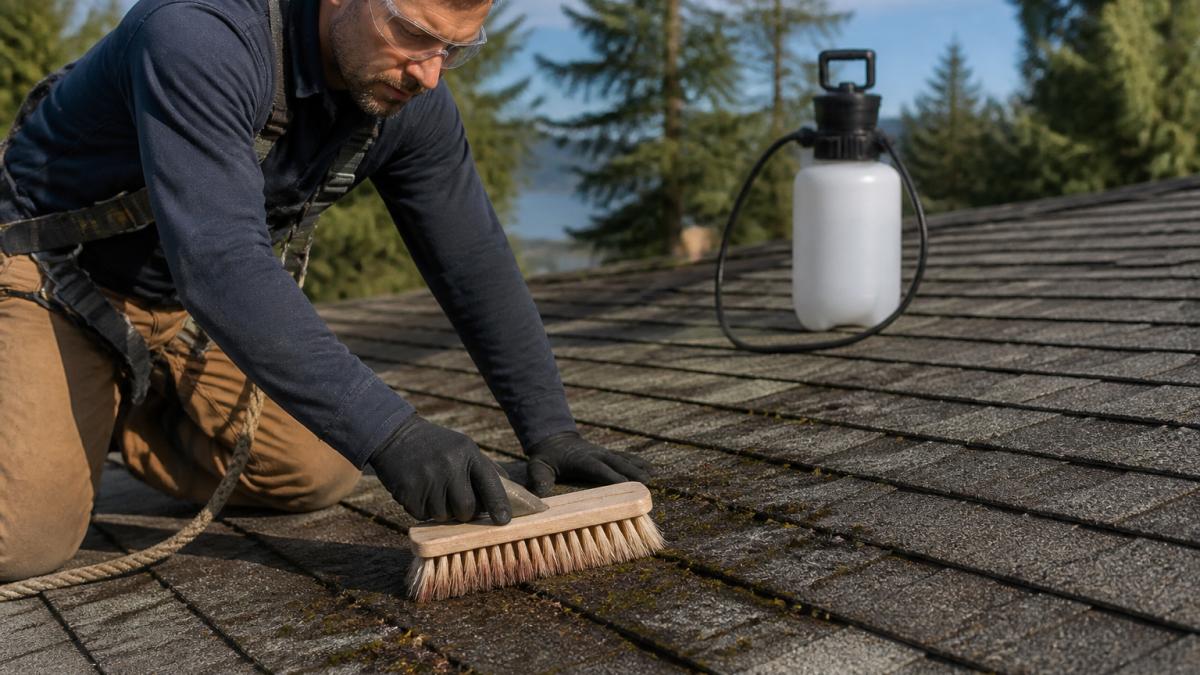
After the dwell time, gently scrub with a soft-bristle brush using light pressure, brushing, not scrubbing.
Rinse thoroughly with low-pressure water from a garden hose on a gentle setting, never a pressure washer, until the water runs clear and no soap remains.
Soft Wash Roof Cleaning: The Preferred Method
How soft washing protects shingle granules
Soft washing uses low-pressure water combined with biodegradable cleaning solutions. It's gentler on shingles and more effective at removing organic growth than pressure washing.
The solution does most of the work, killing moss, algae, and lichen at the root level, and low-pressure water rinses away the dead material without forcing it under the shingles or stripping granules.
This method takes longer than pressure washing, but the results last longer too. Soft washing removes the organism completely, not just the surface.
Using a low-pressure sprayer and soft-bristle brush
A low-pressure sprayer delivers water at 40-80 PSI. That's about 1/20th the force of a pressure washer.
Fill your sprayer with roof-safe cleaning solution and spray affected areas evenly, working from top to bottom so solution flows downward naturally.
After dwell time, use a soft-bristle brush to gently agitate the surface. Apply light pressure only.
Rinse with the low-pressure sprayer, working from top to bottom. Keep the spray angle shallow so water flows off the roof rather than pooling.
Can You Pressure Wash Asphalt Shingles?
No. Pressure washing damages asphalt shingles and voids most manufacturer warranties.
Pressure washers operate at 1,500-4,000 PSI, far too much force for shingle surfaces.
Manufacturer warranties typically exclude damage from pressure washing. If your roof fails after pressure washing, you're paying out of pocket for repairs or replacement.
Pressure washing is fast and cheap, but it's a false economy. Soft washing takes longer and costs more upfront, but it protects your investment and extends your roof's lifespan.
At Sound Roof Care, we never recommend pressure washing for asphalt shingles. We use soft washing methods that clean effectively without damage.
Choosing the Right Roof Cleaning Solution for Asphalt Shingles
Safe chemical concentrations and dwell time
Not all roof-cleaning solutions are safe for asphalt shingles. Some are too strong and damage the granule coating.
Look for solutions specifically labeled for asphalt shingles. They should contain biodegradable surfactants and biocides that kill moss and algae without harming the shingle material.
Concentration matters. Follow the manufacturer's instructions exactly. Dilute the solution to the recommended ratio. Too much active ingredient can damage shingles. Too little won't clean effectively.
Dwell time is how long the solution sits before rinsing.
Water runoff control and environmental considerations
Roof-cleaning solution runs off into your gutters, downspouts, and yard. You need to manage this runoff responsibly.
Place tarps or drop cloths around the foundation to catch runoff, keeping solution out of landscaping and storm drains.
Avoid cleaning on windy days. Wind can blow solution onto neighboring properties or into nearby plants. It can also cause uneven drying, leading to streaking or spotting on the roof.
Never allow runoff to flow directly into storm drains. Many communities have regulations about what can enter the stormwater system.
Step-by-Step Cleaning Process
Step 1: Clear loose leaves and debris
Before applying any cleaning solution, remove all loose material from the roof surface.
Use an air blower to push leaves, twigs, and dirt off the roof, working from the peak downward. This takes 15-30 minutes depending on roof size and debris volume.
Don't use a broom or brush yet. You're just clearing the surface so you can see what you're actually cleaning. Debris traps moisture and feeds moss growth, so removing it first improves your results.
Step 2: Apply cleaning solution evenly
Fill your low-pressure sprayer with roof-cleaning solution diluted to the manufacturer's recommended ratio.
Start at the peak and work downward. Apply solution in overlapping passes to ensure even coverage. You want the entire affected area saturated but not pooling with excess liquid.
Pay extra attention to shaded areas where moss thrives. North-facing slopes and areas under tree cover need more thorough coverage.
Step 3: Scrub gently with soft-bristle brush or broom
After the solution has sat for 15-20 minutes, use a soft-bristle brush to gently agitate the surface.
Apply light pressure only, brushing, not scrubbing. Move the brush in the direction of the roof slope, following the shingle lines. Let the solution do the work; the brush just helps it along.
Avoid aggressive scrubbing. Heavy pressure strips granules and damages the shingle surface. Gentle, consistent pressure is more effective and safer.
Step 4: Rinse thoroughly with low-pressure water
Attach your garden hose to a low-pressure nozzle. Set it to a gentle spray, not a jet.
Start at the peak and work downward. Rinse until all soap is gone and the water runs clear. This usually takes 10-15 minutes for a typical roof.
Keep the spray angle shallow so water flows off the roof rather than pooling. Never spray directly at shingle edges or gaps, this forces water underneath where it can cause damage.
Step 5: Inspect shingles for granule loss
After rinsing, inspect the roof for signs of granule loss or damage.
Look for bare spots where the dark asphalt shows through. Check gutters for excessive granule debris. A few granules in the gutters is normal.
If you see significant granule loss, stop cleaning and call a professional. Continuing could cause more damage.
Common Mistakes to Avoid
Aggressive scrubbing and excessive pressure
The biggest mistake homeowners make is treating roof cleaning like scrubbing a deck, using stiff brushes and heavy pressure, thinking harder work means better results.
It doesn't. Aggressive scrubbing strips granules and damages the shingle surface. Excessive pressure forces water under the shingles and creates gaps where moisture seeps in. Both lead to premature roof failure.
Use light pressure. Use soft brushes. Let the cleaning solution do the work. Patience pays off in a roof that lasts longer.
Ignoring manufacturer instructions and warranty terms
Your shingle manufacturer provides cleaning guidelines for a reason. Following them keeps your warranty valid. Ignoring them voids coverage.
Most manufacturers recommend soft washing with low-pressure water and biodegradable solutions. They explicitly warn against pressure washing. They specify maximum water pressure and safe cleaning chemicals.
Before you clean, check your shingle documentation. If you've lost it, contact the manufacturer or check their website. Sound Roof Care can help you understand your warranty terms and ensure your cleaning method protects your coverage.
Cleaning during extreme weather or when roof is wet
Never clean a wet roof. Wet surfaces are slippery and dangerous. Water also prevents cleaning solutions from working effectively.
Avoid cleaning during rain, high winds, or extreme heat. Rain washes away your cleaning solution before it can work. Wind causes uneven drying and streaking.
Choose a calm, dry day with mild temperatures. Early morning or late afternoon is ideal. This gives the solution time to work and allows thorough rinsing before nightfall.
Keeping your roof clean extends its lifespan and prevents costly interior damage from leaks. The right cleaning method, soft washing with low-pressure water and gentle tools, protects your shingle granules and maintains your manufacturer warranty.
Frequently Asked Questions
What is the safest way to clean asphalt shingles?
Soft washing is the safest method for cleaning asphalt shingles. Use a low-pressure sprayer (under 50 PSI), a soft-bristle brush or broom, and a manufacturer-approved cleaning solution. Apply solution evenly, allow appropriate dwell time, scrub gently without aggressive pressure, and rinse thoroughly with low-pressure water. This approach protects ceramic-coated granules while effectively removing moss, algae, and debris.
How often should asphalt shingles be cleaned?
In the Pacific Northwest's moist climate, inspect your roof twice yearly, spring and fall. Clean when you notice visible moss, algae, or lichen growth. Most homeowners find annual or biennial professional cleaning sufficient for preventative maintenance. Regular cleaning extends roof lifespan and prevents granule loss that can lead to water damage and reduced protection.
Can you pressure wash asphalt shingles?
High-pressure washing is not recommended for asphalt shingles. Pressure above 50 PSI can strip protective ceramic-coated granules, accelerate deterioration, void manufacturer warranties, and allow water to penetrate beneath shingles. Soft washing with low-pressure application is the industry standard. If you must pressure wash, use under 50 PSI with extreme caution, maintain distance from the roof surface, and follow your shingle manufacturer's specific guidelines.
What cleaning solution is safe for asphalt shingles?
Use cleaning solutions specifically formulated for asphalt shingles, typically diluted sodium hypochlorite or oxygen-based cleaners. Follow the manufacturer's recommended concentration (usually 1:10 or 1:20 ratio with water), apply evenly, and allow proper dwell time (typically 15-30 minutes). Avoid bleach concentrations above 5%, never mix chemicals, and ensure runoff doesn't damage landscaping or nearby structures. Always verify compatibility with your shingle type before application.