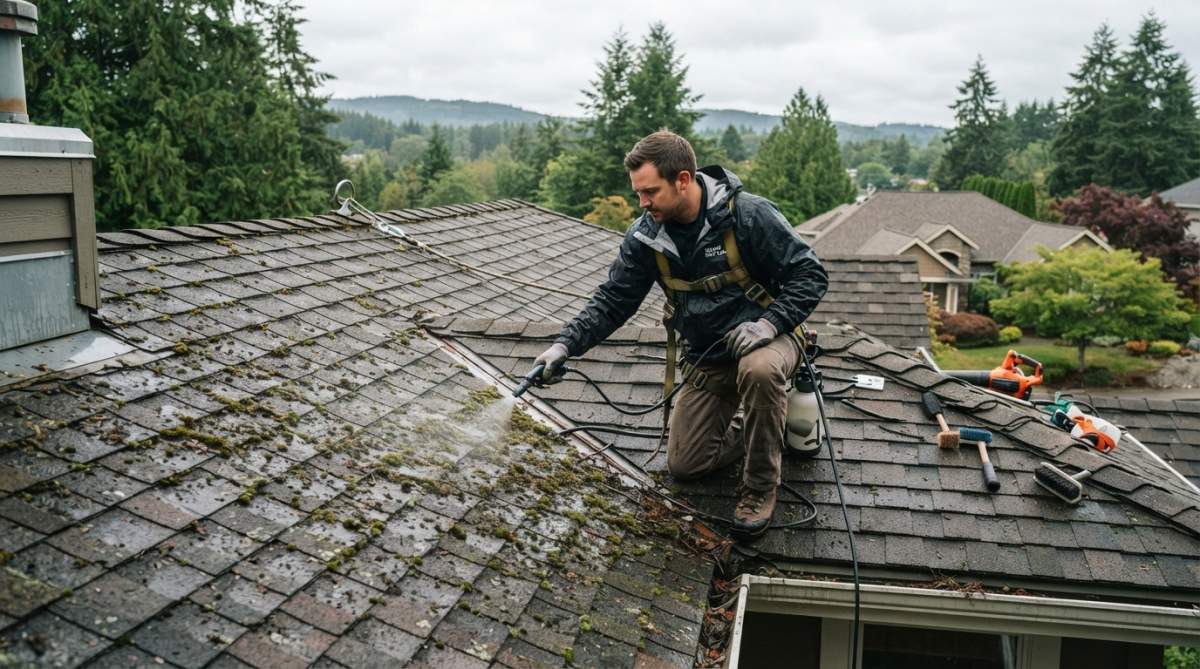
 ultimate-guide
Roof Maintenance for Pacific Northwest: Complete Guide
Table of Contents
- Why Roof Maintenance Matters in the Pacific Northwest
- How to Prevent Roof Leaks During Winter
- Moss Growth and Algae Accumulation: Prevention and Treatment
- Roof Inspection Checklist for Homeowners
- Seasonal Maintenance Schedule for Year-Round Protection
- Roof Moss Removal Cost and Professional Treatment Options
- Roof Repair vs. Replacement: When to Choose Each
- Frequently Asked Questions
Last Updated: September 23, 2026
Why Roof Maintenance Matters in the Pacific Northwest
Roof maintenance for pacific northwest homes isn't optional, it's essential. The region's wet climate, frequent moss growth, and heavy rainfall create conditions that age roofing materials faster. Without proper care, a roof that should last 20-30 years can fail in half that time (Resources).
The Pacific Northwest's combination of moisture, shade from dense forests, and mild temperatures creates a perfect storm for roof deterioration. Moss accumulates rapidly. Algae stains appear within months. Debris from pine trees collects in gutters and valleys. Water intrusion becomes inevitable without preventative care.
At Sound Roof Care, we've spent over two decades protecting homes across the Puget Sound region from these exact challenges. We've seen what happens when homeowners delay maintenance, and what happens when they don't. The difference is dramatic. A roof that receives seasonal cleaning and inspection can last a full lifespan. A neglected roof develops leaks, structural damage, and mold in the attic that costs tens of thousands to remediate.
This guide covers everything you need to know about roof maintenance for pacific northwest properties: how to prevent leaks during winter, when to treat moss, what to inspect, and when repair becomes replacement. We'll walk through the seasonal schedule that actually works in this climate, explain the real costs involved, and help you decide whether to maintain your current roof or replace it.
How to Prevent Roof Leaks During Winter
Winter is when most roof leaks develop. The combination of heavy rain, ice dams, and water pooling in valleys creates pressure on every seam and flashing joint. Prevention starts months earlier, in late fall.
Clear your gutters completely before November. Leaves, pine needles, and debris block water flow and cause it to back up under shingles. This is the single most common cause of winter leaks we see. Water that should drain off the roof instead sits against the shingle edge, finds gaps, and enters the attic. A gutter cleaning takes a few hours and prevents thousands in damage.
Inspect your flashing, the metal strips that seal valleys, roof penetrations, and edges where different roof planes meet. Flashing is where 80% of roof leaks originate. Look for gaps, rust, or separation from the roof. If you see daylight under a flashing edge or rust spots forming, have it sealed or replaced before winter arrives.
Check your attic ventilation. Proper ventilation prevents ice dams by keeping the roof cold and uniform. If warm air from your home heats the roof unevenly, snow melts in patches, water runs down, refreezes at the eave, and backs up under shingles. Ensure soffit vents aren't blocked by insulation and that ridge vents are clear.
Trim tree branches hanging over your roof. Branches create shade that prevents snow from melting naturally and drop debris that traps moisture. Removing overhanging branches improves air circulation and reduces the debris load on your roof.
Moss Growth and Algae Accumulation: Prevention and Treatment
Moss thrives in the Pacific Northwest. The combination of moisture, shade, and mild temperatures creates ideal conditions for growth year-round. Unlike southern climates where moss dies in summer heat, it grows here almost continuously.
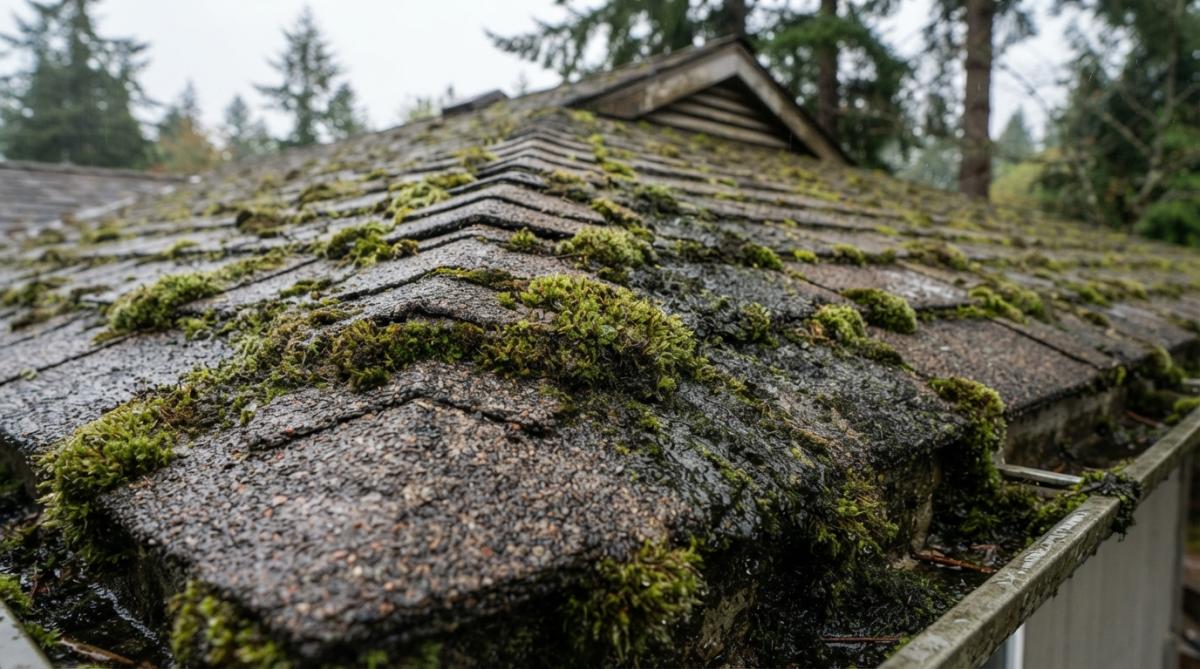
Prevention is far more cost-effective than treatment. Moss prevention starts with reducing the conditions it needs: moisture, shade, and organic debris.
Remove pine needles and leaves regularly. These trap moisture against shingles and provide organic material moss feeds on. Clear your roof twice yearly, spring and fall, or hire professionals to do it.
Roof Inspection Checklist for Homeowners
A proper roof inspection catches problems before they become expensive repairs. You can perform a basic visual inspection from the ground or with binoculars. For anything requiring close examination, hire professionals.
Ground-level inspection (safe for anyone):
- Look for missing, curled, or lifted shingles
- Check for dark stains or discoloration (algae or moss)
- Scan for debris accumulation in valleys or gutters
- Note areas where shingles appear thinner (granule loss)
- Look for flashing that's separated, rusted, or missing sealant
From a ladder (use extreme caution):
- Inspect shingle edges for granule loss (indicates aging)
- Check flashing seams for gaps or deterioration
- Look for soft spots or spongy areas (wood rot)
- Examine valleys where two roof planes meet for debris or damage
- Check for holes or punctures from branches or debris
Interior inspection (attic):
- Look for water stains on rafters or sheathing
- Check for mold or mildew (indicates moisture intrusion)
- Inspect insulation for moisture damage or compression
- Look for daylight coming through roof boards
- Check for pest damage or nesting
| Inspection Item | Frequency | What to Look For |
|---|---|---|
| Shingle condition | Annually | Missing, curled, or lifted shingles |
| Flashing seals | Twice yearly | Gaps, rust, or separated sealant |
| Gutters and valleys | Twice yearly | Debris accumulation and blockage |
| Attic moisture | Annually | Water stains, mold, or soft spots |
| Granule loss | Annually | Visible thinning or bare spots |
Seasonal Maintenance Schedule for Year-Round Protection
A consistent seasonal schedule prevents most roof problems. This isn't random maintenance, it's targeted work that addresses what each season brings.
Roof Moss Removal Cost and Professional Treatment Options
Professional moss removal costs vary based on roof size, moss severity, and treatment method. The Pacific Northwest climate means moss returns regularly, so understanding treatment options helps you choose the best long-term approach.
Roof Repair vs. Replacement: When to Choose Each
Choose repair when:
- Your roof is under 15 years old
- Damage is localized (a few shingles, isolated flashing issues)
- The rest of the roof is in good condition
- You're addressing a specific problem (leak, storm damage)
Repairs extend roof life by 5-10 years.
Choose replacement when:
- Your roof is over 20 years old (asphalt shingles typically last 20-25 years) (Resources)
- Damage is widespread (multiple areas leaking, extensive granule loss)
- You're repeatedly repairing the same problems
- Professional inspection reveals structural damage or rot
Professional inspection clarifies which option makes sense for your situation. Sound Roof Care provides honest assessments without pressure to oversell. We explain what's happening, what your options are, and what we recommend based on your roof's actual condition. If repair solves the problem, we'll tell you that. If replacement is necessary, we'll explain why and help you plan the investment.
Frequently Asked Questions
How often should I have my roof inspected in the Pacific Northwest?
Annual roof inspections are recommended, with additional checks after heavy storms or winter weather. The Pacific Northwest's wet climate accelerates moss growth and moisture damage, making regular inspections critical. Spring and fall are ideal times to assess winter damage and prepare for seasonal changes. Professional inspections catch early signs of water intrusion, shingle granule loss, and structural issues before they become costly repairs.
What is included in a roof inspection checklist?
A thorough roof inspection checklist covers shingle condition and granule loss, flashing integrity around vents and chimneys, gutter cleanliness and drainage, signs of moss or algae growth, water stains in the attic, roof ventilation function, and structural sagging. For Pacific Northwest homes, inspectors also evaluate moisture damage, dry rot risk, and roof drainage patterns. Documentation of findings helps track deterioration over time and informs maintenance decisions.
How much does professional roof moss removal cost?
Roof moss removal cost varies based on roof size, moss severity, and treatment method. Rather than one-time removal, ongoing maintenance plans often provide better long-term value. Contact Sound Roof Care for a free inspection and transparent quote tailored to your home's specific needs.
Can regular maintenance actually extend my roof's lifespan by 5-10 years?
Yes, consistent maintenance can meaningfully extend roof lifespan. Preventing moss accumulation, addressing minor leaks promptly, maintaining proper ventilation, and clearing debris reduces moisture damage and fungal growth that accelerate deterioration. Homes with proactive maintenance schedules experience fewer emergency repairs and delayed replacement timelines. However, results depend on roof age, material condition, and climate exposure. A professional assessment determines realistic expectations for your specific roof.
What causes roof leaks during winter in wet climates?
Winter roof leaks result from ice dam formation, heavy rain saturation, and freeze-thaw cycles that damage shingles and flashing. Moss and algae trap moisture against the roof surface, accelerating water intrusion. Poor attic ventilation prevents moisture escape, creating conditions for dry rot and structural damage. Clogged gutters force water under shingles. Preventative steps include ensuring proper roof ventilation, clearing debris, and addressing flashing vulnerabilities before winter arrives.
Is it safe to clean moss off my roof myself?
DIY roof cleaning carries significant safety risks, especially on steep, wet surfaces common in the Pacific Northwest. Falls from height cause serious injury; wet moss and algae create extremely slippery conditions. Pressure washing can damage shingles and drive water under roofing materials. Improper chemical use may harm landscaping or contaminate groundwater. Professional technicians have safety equipment, training, and knowledge of appropriate cleaning methods that protect both the roof and surrounding property. For steep or complex roofs, professional cleaning is the safer choice.
How does roof ventilation impact maintenance needs?
Proper roof ventilation removes moisture from the attic, preventing mold growth, dry rot, and premature shingle deterioration. Poor ventilation traps humid air, creating ideal conditions for fungal growth and structural damage. In the Pacific Northwest's wet climate, adequate airflow is essential for roof longevity. Ventilation also regulates attic temperature, reducing ice dam formation in winter. During inspections, technicians evaluate soffit vents, ridge vents, and attic airflow to identify ventilation problems that accelerate maintenance needs.