 Ultimate guide
Architectural Shingle Lifespan: How Long They Last in the PNW
Last Updated: November 15, 2026
Quick Summary
The average architectural shingle lifespan in PNW conditions runs 18 to 22 years, not the 30 years printed on most manufacturer labels. Shade, moisture, and moss cut years off the label rating, and a shaded roof can lose five or more years compared with one in full sun.
- Three-tab shingles last 12 to 16 years in the PNW, while architectural shingles reach 18 to 22.
- A roof under 60 percent or more shade never gets the UV bake that dries shingles after rain.
- Clear debris, treat moss with a roof-safe product, and never use a pressure washer.
- Insurers often move roofs around 15 to 20 years old to actual cash value coverage.
- Most practitioners find deck repair, not shingle choice, is the biggest budget surprise.
Table of Contents
- What the Label Says vs. What the PNW Delivers
- Three-Tab vs. Architectural Shingles Lifespan: Why the Gap Widens Here
- How PNW Weather, Shade, and Tree Canopy Cut Roof Longevity
- Signs of Roof Failure in Wet Climates
- Roof Maintenance Tips for Moss Prevention That Actually Work
- What Replacement Really Costs and How Insurance Fits In
- Book a Roof Inspection Before the Next Wet Season
- Frequently Asked Questions
What the Label Says vs. What the PNW Delivers
The average architectural shingle lifespan in PNW conditions runs 18 to 22 years, not the 30 years printed on most manufacturer labels. That gap is the single most important fact for any homeowner budgeting a roof in the Puget Sound region, and it surprises almost everyone.
Why the shortfall? Manufacturer ratings come from controlled testing, not from a hillside in Pierce County under a canopy of Douglas fir. The Asphalt Roofing Manufacturers Association sets the testing standards, and those tests assume sun, drainage, and airflow that many western Washington roofs never get.
Below, we break down what actually shortens architectural shingle lifespan here, how to spot failure early, and what maintenance genuinely buys you in years.
Three-Tab vs. Architectural Shingles Lifespan: Why the Gap Widens Here
The standard comparison says three-tab shingles last 15 to 20 years and architectural shingles last 25 to 30. In the PNW, that gap compresses and shifts.
Three-tab shingles are flat, thin, and single-layer. Architectural shingles, also called dimensional or composite shingles, are built from multiple laminated layers with a heavier granule coating. That extra mass resists granule loss and UV exposure better, and it holds up longer against thermal cycling, the daily expansion and contraction that cracks thinner mats.
| Shingle Type | Label Lifespan | Realistic PNW Lifespan | Main Weakness Here |
|---|---|---|---|
| Three-tab | 15-20 years | 12-16 years | Thin mat, fast granule loss |
| Architectural | 25-30 years | 18-22 years | Moss at shaded edges, flashing wear |
| Premium architectural | 30-40 years | 22-28 years | Higher upfront cost |
Label Lifespan
What most guides miss: the gap between the two narrows in heavy shade. Both types grow moss, and moss does not care how thick the shingle is. On a tree-covered lot, an architectural roof may only outlast a three-tab by a few years unless someone treats it.
How PNW Weather, Shade, and Tree Canopy Cut Roof Longevity
Three forces drive shingle degradation in western Washington, and none of them is sun.
Moisture accumulation tops the list. Months of drizzle keep shingles damp, and any spot that stays wet grows moss and algae. Tree canopy compounds it: shade slows drying, drops debris that traps water, and seeds the moss in the first place. Thermal cycling does the rest, working at seams and flashing every time the temperature swings.
Micro-Climates: Why Two Roofs a Mile Apart Age Differently
A roof in a windy, open subdivision dries fast. A roof a mile away, tucked under firs on a north-facing slope, may stay damp for days after rain. Same shingles, same installer, very different service life. For a closer look at how local conditions shape roof life, see our roof maintenance guide for the Pacific Northwest.
Tree Canopy Coverage: The Shade Penalty Nobody Prices In
Evergreen canopy is the most under-discussed variable in roof lifespan. A roof under 60 percent or more shade never gets the UV bake that dries shingles after rain, so the deck stays damp for days. Debris, needles, twigs, cones, piles in valleys and behind chimneys, wicks water under shingle tabs, and seeds moss in the same motion. The practical effect: a shaded architectural roof can lose five or more years of service life compared with an identical roof in full sun, and no manufacturer warranty covers shade-related failure. Trimming back limbs that overhang the roof by more than a few feet restores airflow and is often the cheapest lifespan extension a homeowner can buy.
Attic Ventilation and Moisture Accumulation
Poor attic ventilation traps warm, moist air against the roof deck, where it condenses and rots the structure from the inside. Adequate intake and exhaust vents keep the deck dry and shingles cooler.
The mechanism matters more than the slogan. In a cold, damp climate, warm interior air rises into the attic and hits a cold roof deck. It condenses on the underside of the sheathing, and that moisture feeds mold, softens the deck, and pushes shingle temperatures up in summer because the attic cannot shed heat. The federal U.S.
Watch out: adding ridge vents without clearing blocked soffit intake turns the ridge vent into a short-circuit that pulls air from the attic instead of the eaves, which makes condensation worse, not better. Insulation baffles that keep blown insulation off the soffit vents are a small fix that most older homes here are missing.
Signs of Roof Failure in Wet Climates
The warning signs of roof failure in wet climates show up earlier than most homeowners expect, and they look different from the sun-baked examples in generic guides. Watch for:
- Moss growth spreading across shaded slopes and valleys
- Curling shingles at edges and ridges
- Granule loss collecting in gutters as gritty sediment
- Flashing that is lifted, rusted, or sealed with old caulk
- Ceiling stains or damp attic sheathing
Any one of these deserves a professional look before the next wet season. Our team put together a fuller checklist of roof replacement warning signs if you want to judge your own roof against a longer list.
Roof Maintenance Tips for Moss Prevention That Actually Work
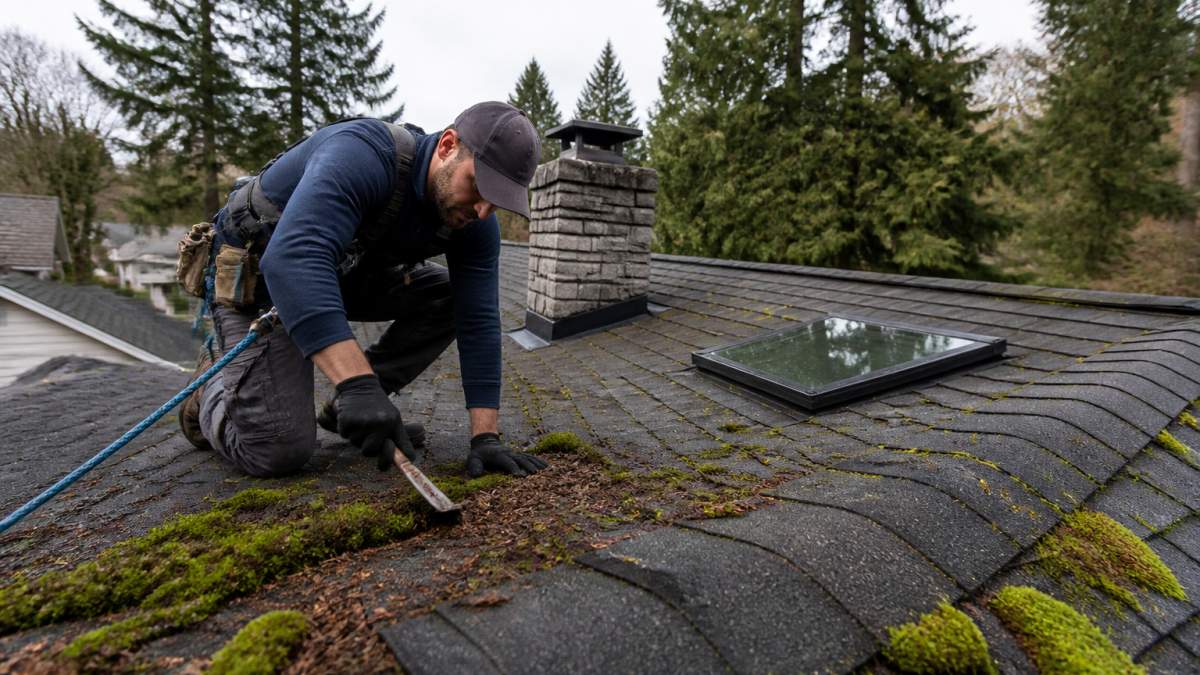
Moss prevention is the highest-use maintenance task on a PNW roof, and most DIY attempts fail for the same reason: they kill the moss but leave the conditions that brought it back.
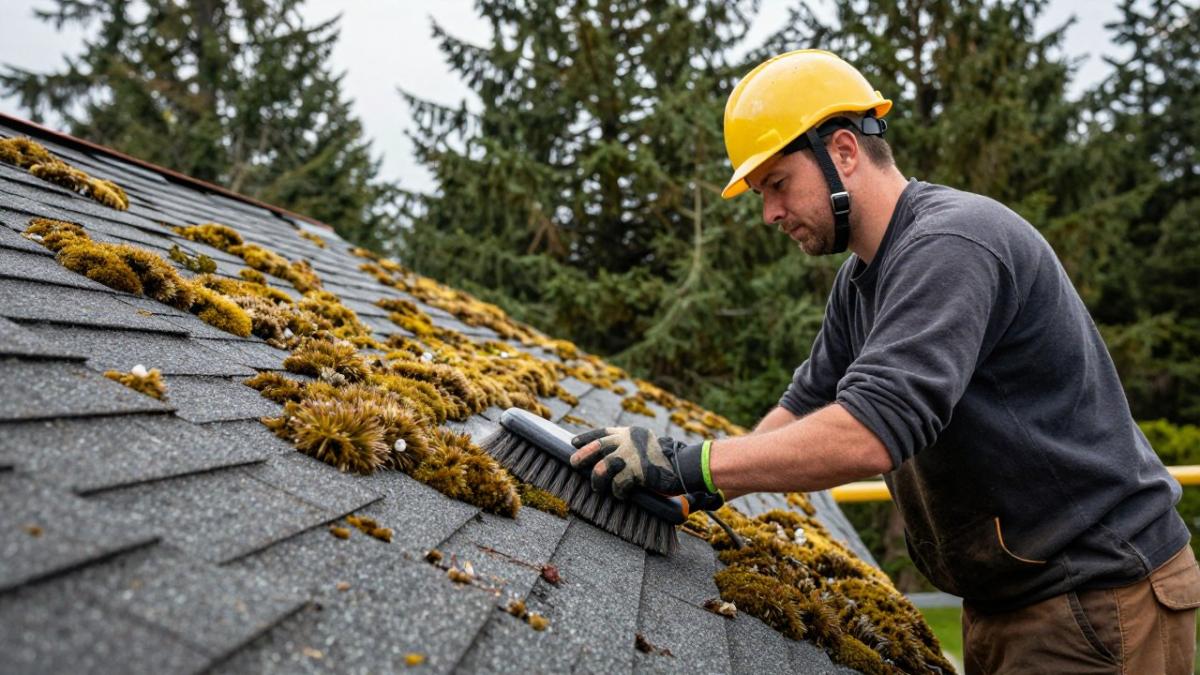
Here is the routine that holds up:
- Clear debris from valleys, gutters, and behind chimneys so water drains.
- Treat moss with a roof-safe product, never a pressure washer, which strips granules.
- Trim overhanging branches to restore airflow and sunlight.
- Inspect flashing at every penetration and re-seal where needed.
- Repeat treatment on a schedule matched to your shade level.
The thing nobody tells you about moss: it returns from spores carried on the wind, so prevention is ongoing, not one-and-done. Our guide on preventing moss on asphalt shingles walks through the full process.
What Replacement Really Costs and How Insurance Fits In
Replacement cost depends on roof size, pitch, material grade, and how much deck repair the tear-off reveals. For current prices or a quote for your home, visit the Sound Roof Care pricing page. What we can do is show you the cost drivers and the insurance rules that decide who pays.
What Drives the Price
Four variables move the number more than anything else:
- Roof size and pitch. A steep, cut-up roof takes more labor, more waste, and more safety setup than a simple gable.
- Material grade. Architectural shingles sit above three-tab; premium architectural lines sit above standard architectural.
- Deck condition. Soft sheathing, rot around penetrations, and failed flashing discovered at tear-off add line items no one can see from the ground.
- Layers and tear-off. A second layer of shingles has to come off before the new roof goes on, and that disposal and labor is a real cost.
Most practitioners find that the biggest budget surprise on an older PNW roof is deck repair, not shingle choice. A roof that looks sound from the driveway can reveal soft sheathing along the eaves and valleys once the old material is off.
How Roof Age Changes Your Insurance
The insurance question is where roof age really bites, and it is the part most guides skip. Insurers price roof risk by age and condition, and the rules tighten as a roof approaches the end of its realistic service life. A common pattern in this region:
- Under roughly 15 years old, most carriers offer replacement-cost coverage on the roof with little friction.
- Around 15 to 20 years, carriers increasingly move the roof to actual cash value, meaning a claim pays depreciated value, not the cost of a new roof, or require an inspection before renewal.
- Past 20 years, many carriers require a roof certification or decline to renew until the roof is replaced.
That timeline matters because the realistic lifespan of an architectural roof here is 18 to 22 years. A roof that is fine today can become an insurance problem at the next renewal, and homeowners often learn that only after a claim is denied or a policy is non-renewed. If your roof is in that 15-to-20-year window, ask your carrier how the roof is scheduled before you need a claim.
What Insurance Covers, and What It Doesn't
Homeowners insurance may cover sudden damage from wind, hail, or fallen limbs, but it typically excludes wear, age, and long-term moss damage. The Insurance Information Institute explains how policies separate sudden damage from maintenance neglect, and that distinction decides most claims. Moss that has been growing for years reads as maintenance neglect to an adjuster, which is why treatment records and inspection photos are worth keeping. Before you plan for cost, read our breakdown of whether homeowners insurance covers roof replacement.
Watch out: filing a claim for damage an adjuster attributes to age or neglect can count against you at renewal even when the claim is denied, so get an inspection opinion before you call the carrier.
Book a Roof Inspection Before the Next Wet Season
A roof that is 18 years old with moss in the valleys will not improve over winter. The honest answer to "can maintenance buy me more years?" is sometimes yes and sometimes no, and an inspection is the only way to know which applies to your home. Sound Roof Care has served the Puget Sound region since 2009 as a family-owned company, with certified technicians.
If your roof is showing its age, do not wait for a leak to force the decision. Sound Roof Care offers professional inspections, moss treatment, and full roof replacement, backed by honest pricing and technicians who specialize in Washington's wet, moss-prone climate. Get started with Sound Roof Care and book your roof inspection before the rains settle in.
Frequently Asked Questions
Does a 30-year architectural shingle really last 30 years in the Pacific Northwest?
Usually not. The 30-year figure is a manufacturer rating based on ideal conditions, and it functions more as a warranty benchmark than a prediction. In the Pacific Northwest, constant moisture, moss growth, and heavy shade push real service life closer to 20-25 years for many roofs. Installation quality, roof pitch, and attic ventilation also shift the number. Treat the rating as a ceiling, not a guarantee, and plan on inspections every couple of years to catch shingle degradation early.
Can moss growth significantly shorten the life of my roof?
Yes. Moss holds water against the shingle surface, keeping granules and asphalt saturated long after rain stops. That trapped moisture speeds granule loss and curling shingles, and moss roots work under shingle edges. On shaded, north-facing slopes, an untreated moss problem can shave several years off an architectural shingle lifespan. Annual cleaning and treatment, plus trimming overhanging branches, keeps moss from re-establishing as quickly.
Is a 20-year-old architectural roof considered at the end of its life?
It depends on how it has been maintained and where it sits. A 20-year-old roof in full sun with regular maintenance may still have years left. The same roof under heavy tree canopy with moss and poor attic ventilation could be near replacement. Look for curling shingles, granule loss in gutters, and interior moisture before assuming either way. A professional roof inspection gives you a clearer read than age alone.
Can maintenance and moss treatment realistically buy another 5-10 years before replacement?
Sometimes, yes, if the roof is caught early enough. Cleaning moss, clearing debris, and addressing attic ventilation slow the conditions that drive shingle degradation. A roof with intact shingles and no active leaks is a good candidate for extending service life through maintenance. A roof already showing widespread curling, granule loss, or flashing failures is past the point where maintenance changes the timeline. An inspection tells you which situation you are in.