 ultimate-guide
Roof Replacement Financing Options for Homeowners
Last Updated: October 30, 2026
Quick Summary
Roof replacement financing lets you spread the cost of a new roof over months or years instead of paying the full invoice at once. Common options include personal loans, home equity loans, HELOCs, contractor financing, and 0% promotional credit cards. Compare total repayment cost, not the monthly payment, because a longer term lowers the payment but usually raises total interest.
- Secured debt like a home equity loan prices lower because the lender can take the house if you default.
- A 7% loan with a 5% fee can cost more than an 8% loan with no fee.
- Stretching a $15,000 balance from 5 years to 20 years can roughly double the total interest you pay.
- Deferred interest retroactively charges interest on the entire original balance if you carry any balance past the promo expiration.
- Get a written scope and cash price from the contractor before you talk to any lender.
Table of Contents
- How Roof Replacement Financing Options Compare at a Glance
- What Drives Your Roof Replacement Cost
- Personal Loans for Roof Replacement
- A Home Equity Loan for Roof Replacement
- Roofing Company Financing and Contractor Payment Plans
- Credit Cards, Promotional APR Offers, and Deferred Interest Traps
- Insurance Claims, Grants, and Rebates That Cut the Balance You Finance
- Which Financing Option Fits Your Situation
- Frequently Asked Questions
How Roof Replacement Financing Options Compare at a Glance
Roof replacement financing is the set of borrowing tools that lets a homeowner spread the cost of a new roof over months or years instead of paying the full invoice at once.
Most guides stop at a list of options, but two loans with the same monthly payment can differ by thousands in total cost. The table below adds the columns that decide the matter: representative APR range, typical term, up-front fees, and total cost on the same $15,000 roof. APR ranges are representative of what lenders advertise for borrowers with good credit; your quoted rate depends on your credit profile, equity position, and the lender's underwriting.
| Option | Typical Speed | Secured? | Representative APR Range | Typical Term | Up-Front Fees | Total Cost on a $15,000 Roof* | Best For | Main Risk |
|---|---|---|---|---|---|---|---|---|
| Personal loan | Days | No | Roughly 7%-20% | 3-7 years | Origination fee of roughly 0%-8% of the amount borrowed | Roughly $16,800-$19,500 | Fast funding, mid-size jobs | Higher APR than secured debt |
| Home equity loan | Weeks | Yes | Roughly 6%-11% | 5-20 years | Closing costs of roughly 2%-5% of the loan | Roughly $16,000-$19,000 (longer term lowers payment, raises total interest) | Large jobs, fixed budget | Foreclosure risk if unpaid |
| HELOC | Weeks to open | Yes | Variable, often prime plus a margin | 10-year draw, 20-year repayment is common | Closing costs, sometimes waived | Varies with rate movement; interest-only draw period keeps early payments low | Phased or uncertain scope | Variable rate moves with market |
| Contractor financing | Same day | No | Often 0%-9.99% promotional, then a higher go-to rate | 12-120 months | Dealer fee may be built into the contract price | Promotional rate can be cheap if paid on schedule; go-to rate can exceed a personal loan | Convenience at signing | Dealer fees, limited lender choice |
| Credit card / 0% promo | Immediate | No | 0% promotional, then standard card APR | 6-21 months promo | None, but a balance transfer fee may apply | $0 interest only if paid in full before the promo ends; deferred interest can retrocharge the full original balance | Small repairs, short float | Deferred interest retrocharges |
*Illustrative only. Total cost assumes the loan is held to term and the rate stays at the midpoint of the range; it excludes any contractor price difference and any tax deductibility.
Keep reading, because the details behind those rows, deferred interest, variable-rate resets, dealer fees, and the insurance and incentive money that shrinks the balance, are where homeowners get burned.
What Drives Your Roof Replacement Cost
Roof replacement cost is a stack of variables: the square footage of your roof deck, the pitch and how many layers need tearing off, the material you choose, the condition of the sheathing underneath, and whether flashing, vents, or fascia need replacement.
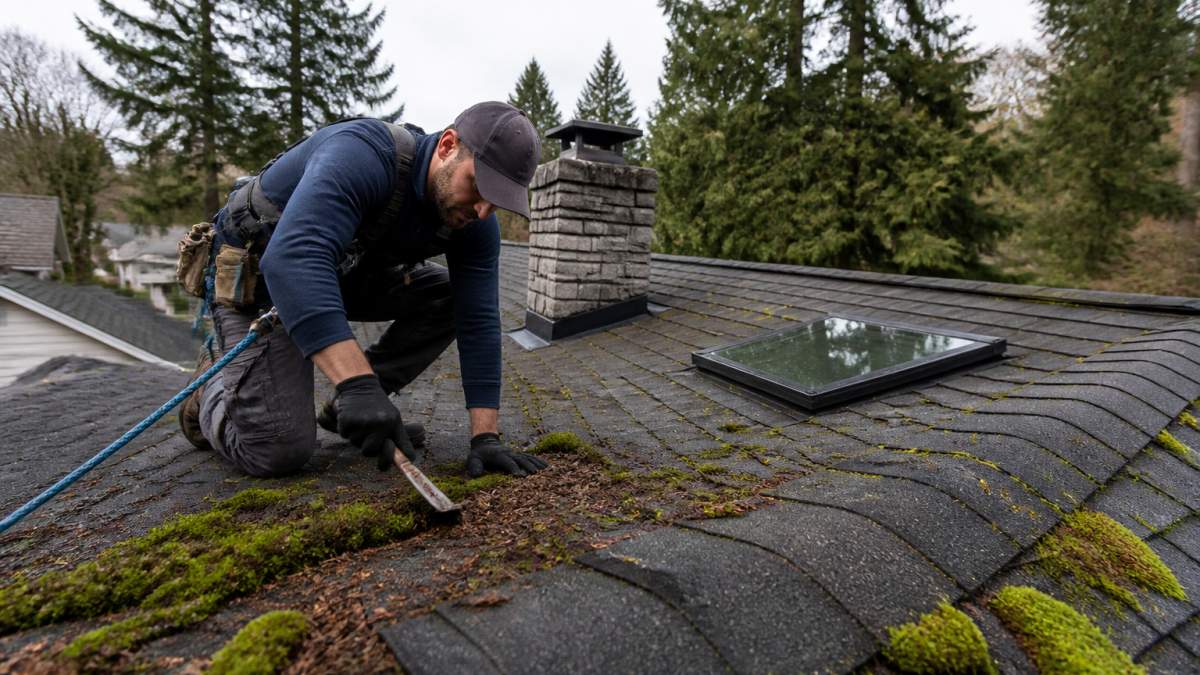
In the Pacific Northwest, moss growth and chronic moisture add a wrinkle. Learn how to spot hidden costs in roof replacement before you set a financing amount.
Before you finance anything, get a real breakdown of what your project involves.
Personal Loans for Roof Replacement
A personal loan for roof replacement is an unsecured installment loan: you borrow a lump sum, repay it on a fixed schedule, and no lien goes against your house. That last point matters. If something goes wrong financially, your home isn't collateral.
Where personal loans help: approval is fast, often same-day, and the money lands without a contractor's involvement. Where they cost you: because the lender takes on more risk, the APR runs higher than secured options, and the term is usually shorter, meaning a bigger monthly payment.
Where Personal Loans Help and Where They Cost You
- Help: You need the roof done now, you don't want a second mortgage, and you can handle a fixed payment for three to seven years.
- Cost: A higher APR compounds over the life of the loan, and origination fees quietly shrink what you receive.
- Watch out: Some lenders advertise a low teaser rate that only applies to the shortest term. Read the full APR, not the headline.
A Home Equity Loan for Roof Replacement
A home equity loan for roof replacement is a second mortgage that pays out a lump sum at a fixed rate, secured by your property. Because it's collateralized, the rate is typically lower than a personal loan, and the term can stretch longer, lowering the monthly payment.
The trade-off is real: you're putting your house on the line. Miss enough payments and the lender can foreclose (What is a home equity loan?).
HELOCs and HELOANs: Two Ways to Tap Equity
A home equity line of credit, or HELOC, works like a credit card tied to your home's value. You draw what you need, when you need it, and pay interest only on the outstanding balance during the draw period.
A home equity loan, sometimes called a HELOAN, is the fixed-rate lump sum described above. Choose the HELOC if your scope might grow once the decking is exposed. Choose the HELOAN if you want a payment that never changes.
Roofing Company Financing and Contractor Payment Plans
Contractor financing is a payment plan arranged through a roofing company, often via a third-party lender the contractor partners with. It's convenient: you sign at the kitchen table and the work gets scheduled.
Official guidance on home improvement financing is published by the Consumer Financial Protection Bureau and the Federal Trade Commission, and is worth reviewing before you sign anything.
Read the Disclosure Before You Sign
Ask three questions before agreeing to contractor financing:
- Who is the actual lender, and is it a bank, a finance company, or the contractor itself?
- What is the full APR, including any dealer fee baked into the price?
- What happens if the work is delayed or defective, and can you withhold payment?
If a contractor won't answer these plainly, that's your answer. See our guide on how to choose a roofing contractor for replacement. The payment plan should be as transparent as the scope of work.
Credit Cards, Promotional APR Offers, and Deferred Interest Traps
A credit card with a 0% promotional offer can be a smart bridge for a small repair, but it's a trap for a full replacement. A true 0% APR promotion charges no interest during the promo period (How to understand special promotional financing offers on credit cards). Deferred interest is different: if you carry any balance past the promo expiration, the lender retroactively charges interest on the entire original amount, not just what's left (How to understand special promotional financing offers on credit cards).
On a large balance, that retroactive charge can be brutal. A common mistake is treating a deferred-interest card like a 0% loan and paying it down slowly. Pay it in full before the deadline or don't use it.
Insurance Claims, Grants, and Rebates That Cut the Balance You Finance
Before you finance the full invoice, find out what insurance will cover. Storm damage, hail, and wind events are often covered, and your policy may pay for the replacement minus your deductible, the portion you actually need to finance.
Beyond insurance, look for energy-efficiency rebates and local assistance programs; these reduce the principal you borrow, which cuts your total interest.
Which Financing Option Fits Your Situation
Match the tool to the job, and match the job to your balance sheet. The four questions below help narrow the decision before you compare rates.
Start With Four Questions
- How urgent is the replacement? An active leak or storm damage that insurance is covering needs speed. A roof at the end of its service life but not yet failing gives you weeks to shop rates and close on equity.
- How much equity do you hold? Lenders typically let you borrow against a portion of your home's value, and the amount shrinks if you have a first mortgage or a low appraisal. If equity is thin, secured options may not be on the table.
- What is your credit profile? The best advertised APRs go to borrowers with strong credit. If your score is mid-tier, expect personal loan rates at the higher end and consider whether a co-borrower or secured option improves your pricing.
- How long will you stay in the home? Financing a roof over 20 years makes sense if you plan to stay and want the lowest payment. If you expect to sell in a few years, a shorter personal loan or a promotional card paid in full avoids paying long-term interest on a roof the next owner will enjoy.
Match the Option to the Circumstance
- Strong equity, fixed scope, staying put: A home equity loan gives you the lowest rate and a payment that never changes. Borrow only the project amount, and keep a separate emergency fund so a surprise repair doesn't put the house at risk.
- Strong equity, uncertain scope, staying put: A HELOC fits because you draw as the work progresses and pay interest only on what's outstanding. Budget for the variable rate to rise; ask the lender for the margin and the cap.
- Need speed, no lien, mid-tier credit: A personal loan is the practical choice despite the higher APR. Compare the origination fee as carefully as the rate, and check for a prepayment penalty.
A Simple Decision Sequence
- Get a written scope and a cash price from the contractor before you talk to any lender.
- Find out what insurance will pay and what your deductible is; finance only the uncovered balance.
- Check for energy-efficiency rebates and assistance programs that reduce the principal.
- Compare at least two options using total repayment cost, not the monthly figure.
- Read the disclosure for fees, variable-rate terms, prepayment penalties, and, for contractor financing, who the actual lender is and what happens if the work is defective.

For current prices or a quote, visit the Sound Roof Care website.
Frequently Asked Questions
What is the 25% rule for roofing, and how does it affect financing?
The 25% rule is a common rule of thumb: if repairs cost more than about 25% of the price of a full replacement, replacement usually makes more financial sense. It is not a code requirement, just a decision shortcut. The rule matters for financing because it tells you how much you need to borrow. A repair you can cover with savings may only need a short-term payment plan, while a full replacement often pushes homeowners toward personal loans, home equity products, or contractor financing.
Is it hard to get financing for a roof replacement?
Approval depends more on your credit and income than on the roof itself. Personal loans and credit cards typically have the strictest credit requirements, while home equity loans and HELOCs also require sufficient equity and a fresh appraisal in many cases. Roofing company financing often uses softer checks, but rates can run higher. Before applying anywhere, pull your credit reports, check for errors, and get a written roof replacement cost estimate so you know exactly how much to request.
Is a personal loan or home equity loan better for roof replacement?
A home equity loan for roof replacement usually carries a lower fixed interest rate because it is secured by your house, and the interest may be tax deductible if the loan is used to substantially improve the home. The tradeoff is that your home backs the debt and closing costs can apply. Personal loans for roof replacement fund faster and leave your home unsecured, but rates are higher. Choose home equity if you have equity and time to close; choose a personal loan if speed and simplicity matter more.
Can homeowners insurance pay for a roof replacement?
Insurance typically covers sudden damage such as hail, wind, or a fallen tree, not wear and tear or age. If a storm claim is approved, you still pay your deductible, and the insurer pays the covered amount minus that deductible. Any gap between the claim payout and the final roof replacement cost is what you finance. Document damage with photos before repairs start, and ask your adjuster for the claim summary in writing so you can size the loan accurately.
What credit score do you need to finance a roof replacement?
There is no single cutoff, but personal loans generally favor scores in the mid-600s and up, with the best annual percentage rates reserved for higher scores. Home equity lenders often look for similar scores plus enough equity, and credit card promotional offers usually require good credit. Contractor financing varies widely and sometimes approves lower scores at higher cost. A lower score does not mean no options, but compare the APR, fees, and repayment term rather than the monthly payment alone.
What should homeowners compare before accepting a roofing company's financing offer?
Compare the annual percentage rate, not just the monthly payment. Ask whether the rate is fixed or variable, the exact repayment term, and whether any dealer fee is baked into the price. Check for prepayment penalties and confirm what happens if a promotional period expires. Get the roof replacement cost in writing separately from the financing terms so you can see whether the plan is really cheaper or just stretched out. A second quote from another lender keeps the comparison honest.
Financing a roof is easier when you know exactly what you're paying for. Sound Roof Care is family-owned and has served the Puget Sound region since 2009, with honest pricing and no hidden fees, certified safety-focused technicians, and maintenance plans built for this wet, moss-prone climate. Get started with Sound Roof Care and protect your home with a roof built to last.