 How-to
7 Winter Roof Replacement Realities You Must Know
Last Updated: November 19, 2026
Quick Summary
Yes, you can replace a roof in winter, but only inside a narrow weather window. A winter roof replacement works because asphalt shingles stay workable above roughly 40°F, and crews can hand-seal tabs when the air runs colder. Installs are scheduled around short clear stretches rather than full weeks.
- Most asphalt shingle manufacturers set the practical installation floor near 40°F.
- Below 20°F, installation is typically postponed because shingles can crack and adhesives fail.
- Roof deck temperature matters, not the temperature at ground level.
- Cold-weather crews hand-seal each tab with approved roof cement to replace the adhesive strip.
- A dry deck and a closed roof by dark matter more than a fast start.
Table of Contents
- Can You Replace a Roof in Winter? The Short Answer
- What Temperature Is Too Cold to Put on a Roof?
- Can Shingles Be Installed in Cold Weather?
- The Go/No-Go Weather Checklist Before Your Crew Arrives
- Winter Roof Replacement Cost: What Changes in the Cold
- The Best Time to Replace Roof Shingles (and When Winter Wins)
- What to Expect on Installation Day in the Cold
- Schedule Your Winter Roof Assessment Before the Next Storm
- Frequently Asked Questions
Can You Replace a Roof in Winter? The Short Answer
Yes, you can replace a roof in winter, but only inside a narrow weather window. The work is possible because asphalt shingles stay workable above roughly 40°F, and crews can warm sealant strips by hand when the air runs colder.
The catch most guides skip: winter roof replacement is less about whether it can be done and more about whether it should be done on your specific roof, on your specific forecast.
What Temperature Is Too Cold to Put on a Roof?
Most asphalt shingle manufacturers set the practical floor near 40°F, and many stop warrantying installation below that unless the contractor follows cold-weather procedures. The asphalt shingle installation guidance from the Asphalt Roofing Manufacturers Association treats cold-weather application as a documented process, not a workaround.
Here is the short version of what temperature is too cold to put on a roof:
- Above 50°F: normal installation, sealant strips bond on their own.
- 40°F to 50°F: workable, but crews watch for brittle shingles and may hand-seal.
- Below 40°F: possible only with manufacturer-approved cold-weather methods and extra labor.
Watch out: the air temperature on your weather app is not the roof surface temperature. A dark shingle deck in direct sun can run warmer than the forecast, and a shaded north slope can run colder.
Can Shingles Be Installed in Cold Weather?
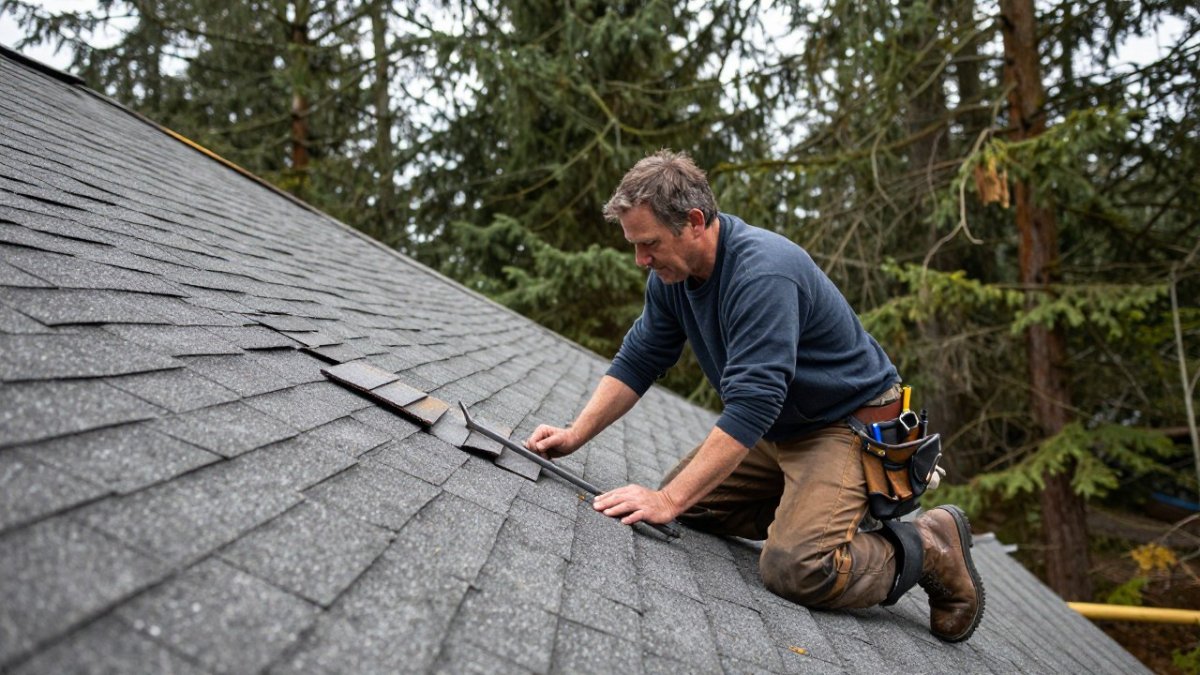
Yes, shingles can be installed in cold weather, but the material behaves differently. Asphalt shingles stiffen as temperatures drop, so they resist bending over ridges and hips and are more likely to crack when nailed.
That is why cold-weather crews change their technique:
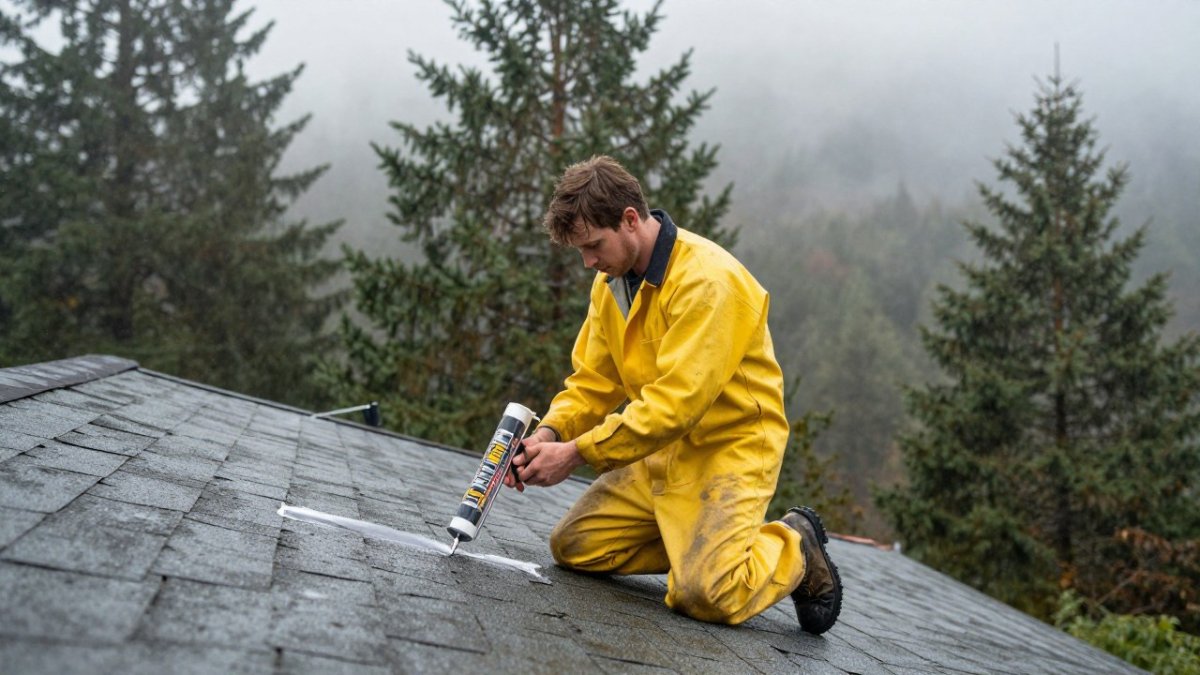
- Hand-sealing: a dab of approved roof cement under each tab replaces the heat-activated strip.
- Warmer storage: bundles kept off cold ground and out of wind stay more flexible.
- Nailing adjustments: higher nail placement and careful pressure prevent overdriving through brittle shingles.
The shingle installation instructions published by GAF spell out cold-weather limits per product line, and those instructions govern your warranty. Ask your contractor which product they are using and read the cold-weather section before the crew arrives.
The Go/No-Go Weather Checklist Before Your Crew Arrives
A winter roof replacement lives or dies on the forecast, so we run a checklist the morning of every cold-weather job. Skipping it can leave a crew tearing off a roof and then working on an open deck in the rain.
| Check | Go | No-Go |
|---|---|---|
| Air and deck temperature | Above 40°F, rising | Below 40°F, falling |
| Precipitation | Dry 24 hours before and after | Rain, snow, or ice in window |
| Wind | Under 20 mph | Gusts over 25 mph |
| Deck condition | Dry, no frost | Frost, standing water, soft sheathing |
| Daylight | Full tear-off and dry-in same day | Not enough light to close the roof |
| Crew and material | Full crew, dry bundles on site | Short crew or wet materials |
If any row lands in the No-Go column, rescheduling is the safer choice. For steps you can take on your own roof while you wait, see our guide on 7 ways to prevent roof leaks during winter.
Winter Roof Replacement Cost: What Changes in the Cold
Winter roof replacement cost can differ from spring pricing, because the line items shift. Labor can climb because cold-weather methods take longer, while seasonal demand can soften the base price when crews have open slots.
What typically moves the number:
- Extra labor time for hand-sealing, warming materials, and slower tear-off.
- Temporary protection such as tarps if weather interrupts the job.
- Seasonal demand discounts when contractors are booking winter work.
Ask for a full written scope up front, including any cold-weather labor, so you know what is included before work begins. For a detailed breakdown of what a full replacement involves, our cost of replacing an asphalt roof guide walks through materials, tear-off, and disposal line by line.
The cost angle most guides miss: warranty and insurance
A winter replacement can cost you more later if the paperwork does not line up with the product's installation requirements. Most asphalt shingle manufacturers condition their warranty on installation following the published instructions, including cold-weather procedures.
Before you sign, ask for:
- The product data sheet and cold-weather section for the specific shingle or panel going on your roof, and confirmation in writing that the crew will follow it.
- A warranty document that names the manufacturer and the coverage terms, not just the contractor's workmanship promise.
- A written record of weather delays, dates, temperatures, and what work was paused, so there is a paper trail if a defect claim arises later.
If your replacement is tied to storm damage, your homeowner's insurance policy may cover part of the cost, but the claim process has its own timing rules. Because ice and sleet can complicate the damage record during a cold snap, this guide can help you recognize what to document before the roof is repaired.
Watch out: a bid that is noticeably cheaper than the others in winter is often cheaper because the crew is skipping cold-weather steps, hand-sealing, deck temperature checks, or dry-in, and those shortcuts are exactly what a future warranty claim will hinge on.
The Best Time to Replace Roof Shingles (and When Winter Wins)
The best time to replace roof shingles is generally late spring through early fall, when temperatures sit in the 50s and 70s and sealant strips bond without help.
Winter can make sense in three situations:
- An active leak that patching cannot hold until spring.
- A roof at the end of its life where another storm season risks interior damage.
- A scheduling gap where a reputable crew has an opening and the forecast cooperates.
The trade-off is real. Spring offers easier installation and fewer weather delays; winter offers availability and sometimes better pricing, at the cost of tighter scheduling and more cold-weather precautions. If your roof is 20 years or older, an assessment can show which side of that line you are on.
What to Expect on Installation Day in the Cold
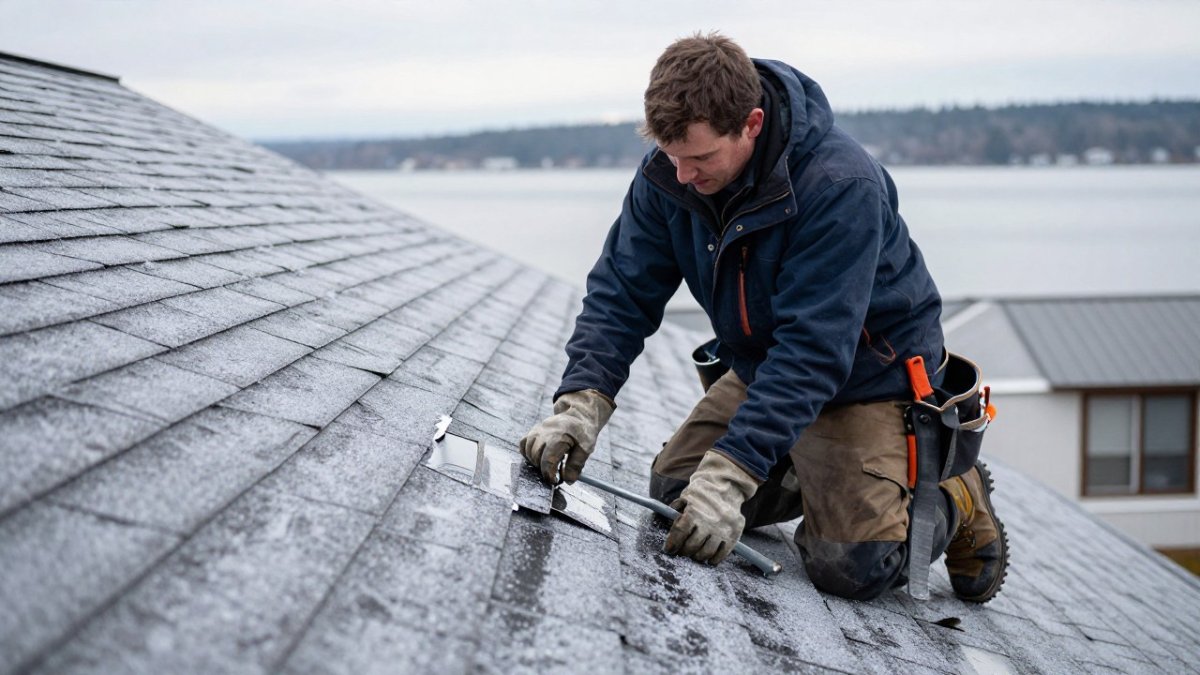
Installation day in winter starts earlier and moves faster than a summer job, because daylight is the constraint. Winter crews typically arrive at first light, stage materials off the cold ground, and aim to have the roof torn off and dried in before dark.
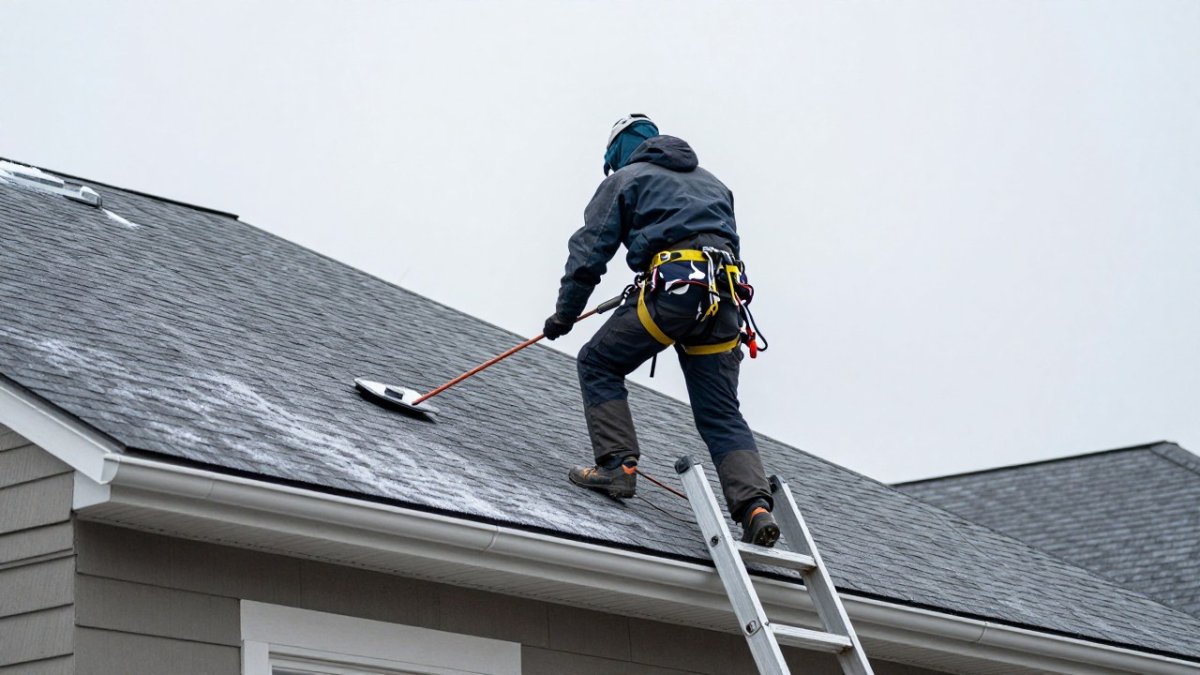
Before the crew arrives
A winter install compresses the schedule, so anything you can clear in advance saves daylight. Contractors commonly ask homeowners to:
- Clear the driveway and access path so the dumpster and material delivery truck can get close. Snow, ice, or parked cars that block access can push the start time back an hour or more.
- Move vehicles out of the garage if the crew needs to stage materials there, and keep the garage door open for bundle storage out of wind and precipitation.
- Secure pets and children indoors. Tear-off is loud, and an open deck with exposed fasteners is not a place for anyone without a harness.
- Protect the attic and interior by covering stored items below the roof line. Dust and small debris find their way through gaps around can lights and vents during tear-off.
How material choice changes the day
Asphalt shingles, metal roofing, and synthetic or tile systems each carry their own cold-weather instructions, and those instructions, not the crew's habit, should drive the day's sequence. Ask your contractor to show you the manufacturer's cold-weather section for the specific product going on your roof. A common pattern is that asphalt shingles require hand-sealing below a stated temperature, metal panels need gaskets and fasteners rated for thermal movement, and some synthetic underlayments become slippery or brittle when cold.
The day-of sequence
- Morning setup: tarps down, materials staged off cold ground, deck temperature checked with an infrared thermometer, not a phone app.
- Tear-off and inspection: old shingles removed, deck and flashing inspected for rot, soft sheathing marked for replacement before dry-in.
- Dry-in: underlayment rolled out the same day to protect the deck overnight. On a winter job, dry-in is non-negotiable, an open deck overnight in a cold rain can soak sheathing and force a delay.
- Installation: shingles or panels laid per the manufacturer's cold-weather method, with hand-sealing where temperatures require it and nail placement adjusted to avoid overdriving brittle material.
- Quality check: the crew lead should walk the roof for lifted tabs, missed hand-seals, and flashing details before cleanup.
- Cleanup and walkthrough: gutters cleared, magnets run twice, and the job reviewed with you, including any areas the crew flagged for follow-up.
If the forecast turns mid-job, it helps to have a dry-in plan and a reschedule trigger agreed on before tear-off begins. Ask about both before work starts. Our roof replacement timeline guide breaks down each stage so you know what a normal day looks like, cold or not.
Questions to ask before the crew starts
A contractor's answers tell you whether they have real cold-weather experience:
- Will you hand-seal, and can you show me where the product instructions require it?
- What is your dry-in plan if precipitation arrives early?
- How will you verify deck temperature, and at what point do you stop installation?
- Who inspects the finished roof, and what does that checklist include?
If the answers are vague, the crew is likely improvising, and winter is the wrong season to improvise on a roof.
Schedule Your Winter Roof Assessment Before the Next Storm
The real risk in winter is waiting too long.
Sound Roof Care has served the Puget Sound region since 2009, and our certified technicians understand how this climate treats a roof in the wet months.
When you are ready to move, you can book a roof replacement or contact us for a quote.
Winter does not have to mean a leaking roof and a panicked call after the first big storm.
Frequently Asked Questions
What temperature is too cold to replace a roof?
Most asphalt shingle manufacturers require temperatures of at least 40°F for installation, and some specify 45°F or higher. Below that threshold, shingle flexibility drops and the adhesive strip may not activate without hand-sealing. Metal and tile have their own limits set by product specifications. A winter roof replacement is only safe when the forecast holds above the manufacturer's stated minimum for the full installation window, not just at the start of the day.
Is it cheaper to replace a roof in winter?
Winter roof replacement cost can run lower in some markets because roofing crews have more open slots during the slower season, and some contractors pass on scheduling flexibility. That said, cold-weather precautions, hand-sealing, and potential weather delays can offset the savings. Ask for a written quote that separates labor, materials, and any cold-weather allowances so you can compare fairly. Pricing depends on roof size, material, and access, so check Sound Roof Care's website for current rates.
Can shingles be installed in cold weather without problems?
Yes, if the crew follows the manufacturer's cold-weather instructions. That usually means storing shingles in a warm space until use, hand-sealing adhesive strips with roofing cement, and avoiding installation when frost, ice, or rain is present on the roof deck. Nailing also needs extra care because cold shingles crack more easily. Skipping these steps can void the warranty and lead to wind lift or leaks later, so confirm your contractor's cold-weather process before work begins.
What happens if winter weather delays my roof replacement?
Delays are common in winter, so plan for them. If a leak is active and the full replacement must wait, a temporary tarp or emergency repair can protect the roof deck and interior until conditions improve. Ask your contractor how they handle rescheduling, whether temporary protection is included, and what documentation they provide for insurance or warranty purposes. A written schedule with a weather contingency keeps the project moving without leaving your home exposed.