 How-to
How Long Does a Roof Replacement Take? 7 Timeline Stages
Last Updated: November 17, 2026
Quick Summary
A roof replacement typically takes one to three days of on-site work for an average-sized home, while the full timeline from signed contract to final inspection often runs two to four weeks. For a 2,000 square foot house, plan on two to three days of on-site work. The rest of the schedule goes to permits, material delivery, and inspections.
- The full roof replacement timeline includes inspection, estimate, material delivery, permit filing, and scheduling before the crew arrives.
- Roof complexity, such as valleys, dormers, and steep pitch, drives extra days more than raw square footage.
- Metal roofing takes three to five on-site days, while tile or slate takes four to seven.
- Permits and inspections add calendar time, not workdays, and can add a week or more.
- Ask for a written schedule with named phases and an allowance for weather or deck repairs.
Table of Contents
- On-Site Work Time vs. the Full Roof Replacement Timeline
- How Long Does It Take to Roof a 2,000 Sq Ft House?
- A Step-by-Step Schedule for Each Workday
- Timeline Estimates by Roofing Material and Project Type
- Factors That Affect Roof Replacement Time
- Should I Stay Home During Roof Replacement?
- How to Evaluate a Contractor's Timeline Estimate
- Scheduling Your Roof Replacement Inspection
- Frequently Asked Questions
On-Site Work Time vs. the Full Roof Replacement Timeline
Most homeowners asking how long does a roof replacement take get a simple answer: one to three days of on-site work for an average-sized home. That number is real, but it only covers the part you can watch from your driveway. The full roof replacement timeline runs longer than the on-site work, often two to four weeks from signed contract to final inspection.
The gap between those two numbers confuses people, so let's separate them clearly.
What Counts as On-Site Work Time
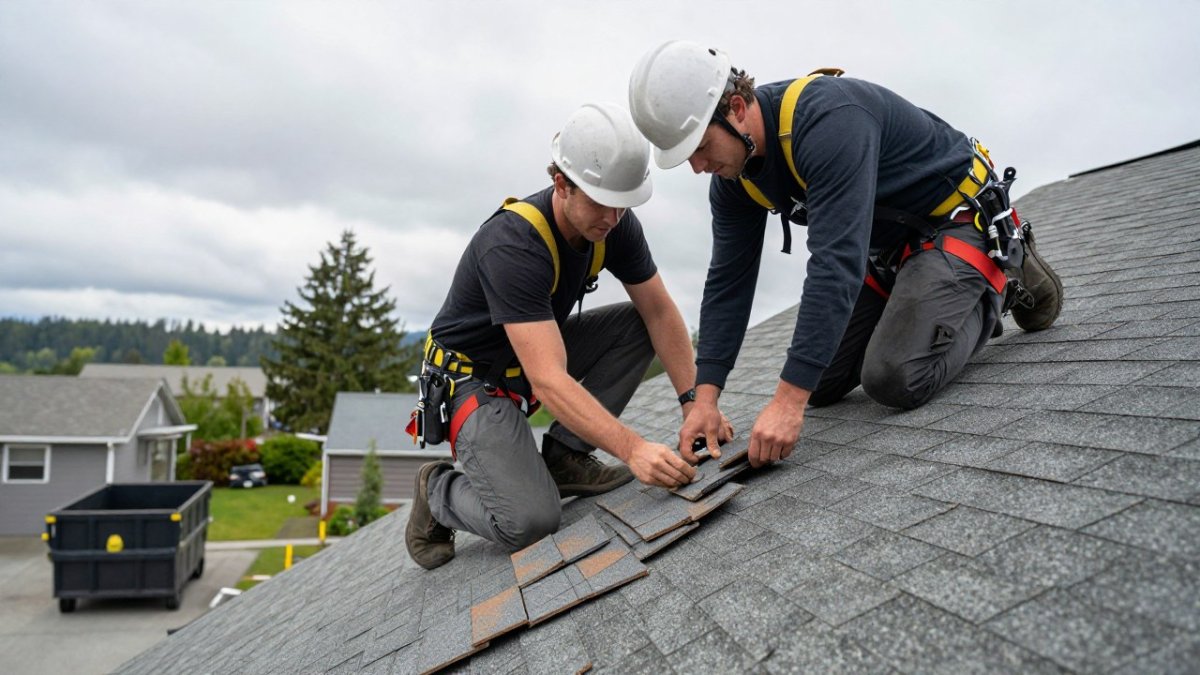
On-site work time is the days a crew is physically on your roof. It includes tear-off, deck inspection, underlayment, flashing, shingle installation, ridge caps, and cleanup. For a typical single-family home with a straightforward roof pitch, this is usually one to three workdays. Crew size and weather conditions shift that window, but the core installation time stays short.
What Happens Before and After the Crew Arrives
The full project duration includes everything around those workdays:
- Before: inspection, written estimate, material delivery, permit filing, and scheduling
- After: final inspection, any punch-list fixes, and warranty paperwork
Material delivery alone can add days to your schedule if your chosen roofing material is backordered. Permits and inspections are the other quiet time-killers. A roofing project is a sequence, and the crew's days on site are only one link in it.
How Long Does It Take to Roof a 2,000 Sq Ft House?
For a 2,000 square foot house, plan on two to three days of on-site work. That's the honest range for a standard gable roof with asphalt shingles and no structural surprises.
Here's the short version of the roof replacement timeline for that size home:
- Tear-off and deck check: one day
- Underlayment, flashing, and shingles: one to two days
- Ridge caps, cleanup, and inspection: part of the final day**
Roof complexity matters more than raw square footage. A simple gable roof with few penetrations moves fast, while a roof with multiple valleys, dormers, or a steep pitch slows the crew down. The NRCA roofing industry guidance notes that installation time depends heavily on roof design and material choice, not size alone.
A Step-by-Step Schedule for Each Workday
Here's what a typical three-day schedule looks like in practice. Every project differs, but this pattern holds for most homes we work on.
| Day | Main Work | Typical Hours | What You'll Notice |
|---|---|---|---|
| Day 1 | Tear-off, deck inspection, repairs | 6-8 | Noise, dumpster filling, decking exposed |
| Day 2 | Underlayment, flashing, shingle install | 8-10 | Hammering, material staging, roof taking shape |
| Day 3 | Ridge caps, cleanup, final inspection | 4-6 | Magnet sweep, walkthrough, sign-off |
Typical Hours
Day One: Tear-Off and Deck Inspection
The first day is loud. Crews strip the old roof down to the deck, then inspect the decking for rot or damage. Any soft spots get repaired before new material goes down. Structural repairs found at this stage are the most common reason a schedule stretches.
Day Two: Underlayment, Flashing, and Shingles
Underlayment goes down first, then flashing around chimneys and vents, then the shingles. This is the longest workday. A larger crew can finish shingle installation in one pass; a smaller crew may carry over into the next morning.
Final Day: Ridge Caps, Cleanup, and Inspection
Ridge caps finish the roofline. Then comes cleanup: nail sweeps, gutter checks, and hauling away debris. A final inspection closes the job. Expect a walkthrough so you can see the finished work and ask questions.
Timeline Estimates by Roofing Material and Project Type
Material choice changes the roof replacement timeline more than most homeowners expect. The table below gives on-site day ranges for a typical 2,000 square foot home, but the notes explain the mechanism behind each range so you can judge your own project.
| Material | On-Site Days | What Drives the Time |
|---|---|---|
| Asphalt shingles | 1-3 | Fastest common option; large crews can lay 100+ squares per day on simple roofs. Time goes to tear-off, deck repair, and detailing around penetrations. |
| Metal roofing | 3-5 | Panel layout, fastening, and trim work add time. Standing-seam panels require precise alignment and often a manufacturer-specific clip system. Exposed fasteners go faster than concealed systems. |
| Tile or slate | 4-7 | Heavy material slows handling and requires extra structural checks. |
| Flat roof | 2-4 | Depends on membrane system. Single-ply membranes go down quickly; built-up roofing and modified bitumen need multiple layers and curing time between them. |
Project type matters as much as material. A full tear-off to the deck runs longer than an overlay, where new material goes over the existing roof. Overlays are faster but add dead load and hide deck problems, so many contractors avoid them on older homes. If you are weighing materials, our comparison of asphalt shingles vs metal roofing breaks down how each option affects the project.
Factors That Affect Roof Replacement Time
Several variables can stretch a one-week project into two. Here are the ones that matter most.
Roof Size, Pitch, and Complexity
Bigger roofs take longer, but steep pitch and complexity slow crews more. A steep roof generally requires more safety rigging and slower movement. Valleys, dormers, and skylights add detail work. Roof complexity is often the single biggest driver of extra days.
Weather Delays and Temporary Protection
Rain and high wind stop shingle installation cold. Wind is the other common rain delay trigger.
Permits, Inspections, and Local Requirements
Permits and inspections add calendar time, not workdays. Filing, waiting for approval, and scheduling the final inspection can add a week or more. Requirements vary by county, so confirm the process with your local building department before work begins.
Should I Stay Home During Roof Replacement?
You don't need to stay home, but plan to be reachable. Crews need access to your driveway and yard, and they may need to ask about power outlets or pets.
A few practical tips:
- Move cars out of the driveway before the crew arrives
- Keep children and pets inside during tear-off
- Expect noise, especially on day one
- Ask the crew lead how to reach them
If you have questions about access, scheduling, or what to expect, our roofing FAQs cover the practical details homeowners ask about most.
How to Evaluate a Contractor's Timeline Estimate
A timeline estimate is only as good as the contractor behind it. Ask for a written schedule with named phases, not a vague "about a week." A contractor who explains tear-off, inspection, and weather contingency separately is showing you they've thought it through.
Watch out: the most common mistake is accepting a timeline with no allowance for weather or deck repairs. That estimate looks fast on paper and falls apart in week one.
Before signing, read our guide on how to choose a roofing contractor for replacement, and check our breakdown of avoiding hidden costs in roof replacement so a schedule surprise doesn't become a budget surprise.
Scheduling Your Roof Replacement Inspection
The best way to get a real timeline for your home is a professional inspection. A contractor can measure your roof, check the deck, and give you a schedule based on your actual roof, not a generic average.
At Sound Roof Care, we've protected homes across the Puget Sound region since 2009. Our certified technicians inspect your roof, and we aim to provide honest, transparent service. We specialize in Washington's wet, moss-prone climate.
Ready to get a clear schedule? Request a roof replacement inspection to discuss your project.
A roof replacement takes days on site but weeks from contract to inspection. If you're planning a replacement and want a timeline built around your roof, not a guess, Sound Roof Care can help. We offer honest pricing, certified technicians, and maintenance plans that extend your roof's lifespan. Get started with Sound Roof Care and get a schedule you can plan around.
Frequently Asked Questions
How long does it take to remove and install a new roof?
Removal and installation together usually take one to three days for an average single-family home. Tear-off of the old roof and deck inspection typically fill the first day, underlayment and shingle installation the second, and ridge caps, flashing details, and cleanup the third. Larger homes, steep roof pitch, multiple layers of old shingles, or a switch to metal roofing can push the on-site portion to four or five days. The roof replacement timeline from signed contract to final inspection is longer once permits, material delivery, and scheduling are counted.
How long does it take to roof a 2,000 sq ft house?
A 2,000 sq ft single-family home typically takes two to three days of on-site work with a full crew. The roof surface area is usually larger than the floor plan once pitch and overhangs are factored in. A simple gable roof with one layer of asphalt shingles sits at the fast end, while a hip roof with dormers, valleys, or a second layer to tear off takes longer. Material choice matters too, since metal or tile installation runs slower than asphalt shingles.
Can a roof replacement be completed in one day?
Small, simple roofs sometimes finish in a single day, especially a one-story home with a plain gable, a single layer of old shingles, and a large experienced crew. Most average-sized homes need two to three days. Ask how many workers will be on site and what happens if the deck needs repairs once the old roof is off.
What factors can delay a roof replacement?
Rain, high wind, and freezing temperatures are the most common delays, since shingles seal poorly and crews cannot work safely on a wet or icy roof. Hidden damage is the second big one: rotted decking, failed flashing, or structural repairs found after tear-off can add a day or more. Permit approval and inspection scheduling also stretch the roof replacement timeline, and material delivery backorders can push the start date. A contractor who builds weather contingency days into the schedule is usually giving you a more honest estimate.