 How-to
Can You Repair a Roof in the Rain? What Homeowners Should Know
Last Updated: November 14, 2026
Quick Summary
No, you cannot safely complete a permanent roof repair in the rain, because sealants and adhesives need dry surfaces to bond. The short answer to can you repair a roof in the rain is no for permanent fixes, yes for temporary containment. In active rain, your goal shifts from fixing the roof to limiting the damage.
- Stay off the ladder during the storm and stop active leaks from inside the house.
- A tarp is temporary protection, not a repair, and may buy days or weeks, not months.
- Most crews stop work in steady rain and many stop in light rain too.
- A roof typically needs 24 to 48 hours of dry, breezy weather before most repairs proceed.
- Call a professional for anything on the roof during or right after rain.
Table of Contents
- Can You Repair a Roof in the Rain? The Short Answer
- How to Stop a Roof Leak During Rain Without Getting on the Roof
- How to Tarp a Roof Leak: Emergency Protection Done Right
- Can Roofers Work in Light Rain? What Crews Actually Decide
- How Long Does a Roof Take to Dry After Rain?
- Repair or Replace? A Decision Tree for a Leaking Roof
- When to Call a Professional vs. DIY in Wet Conditions
- Schedule a Professional Roof Inspection With Sound Roof Care
- Frequently Asked Questions
Can You Repair a Roof in the Rain? The Short Answer
No, you cannot safely complete a permanent roof repair in the rain. Roof repairs require dry surfaces for sealants and adhesives to bond. In active rain, your goal shifts from fixing the roof to limiting the damage.
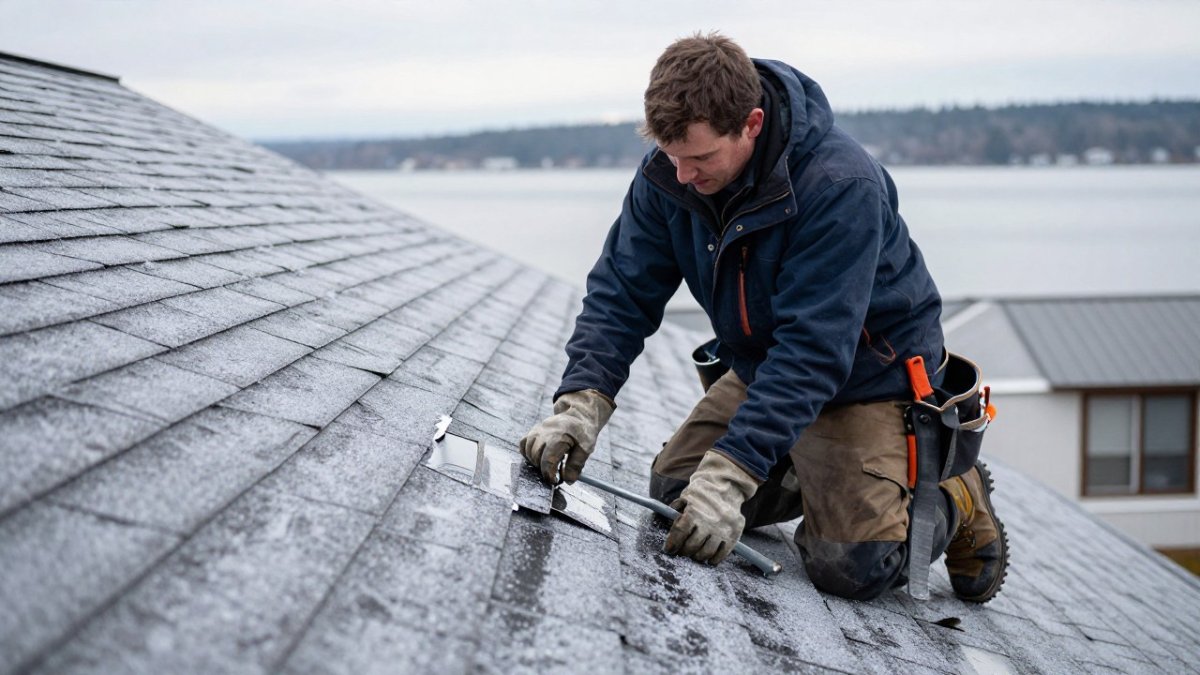
Wet shingles are slippery. Sealants won't cure. And every minute a crew spends on a soaked roof raises the risk of a fall.
So what can you actually do while it pours?
What Can Safely Be Done in Active Rain
- Place buckets and towels under active drips
- Move furniture and electronics away from wet areas
- Poke a small drain hole in a bulging ceiling (more on this below)
What Should Wait for Dry Conditions
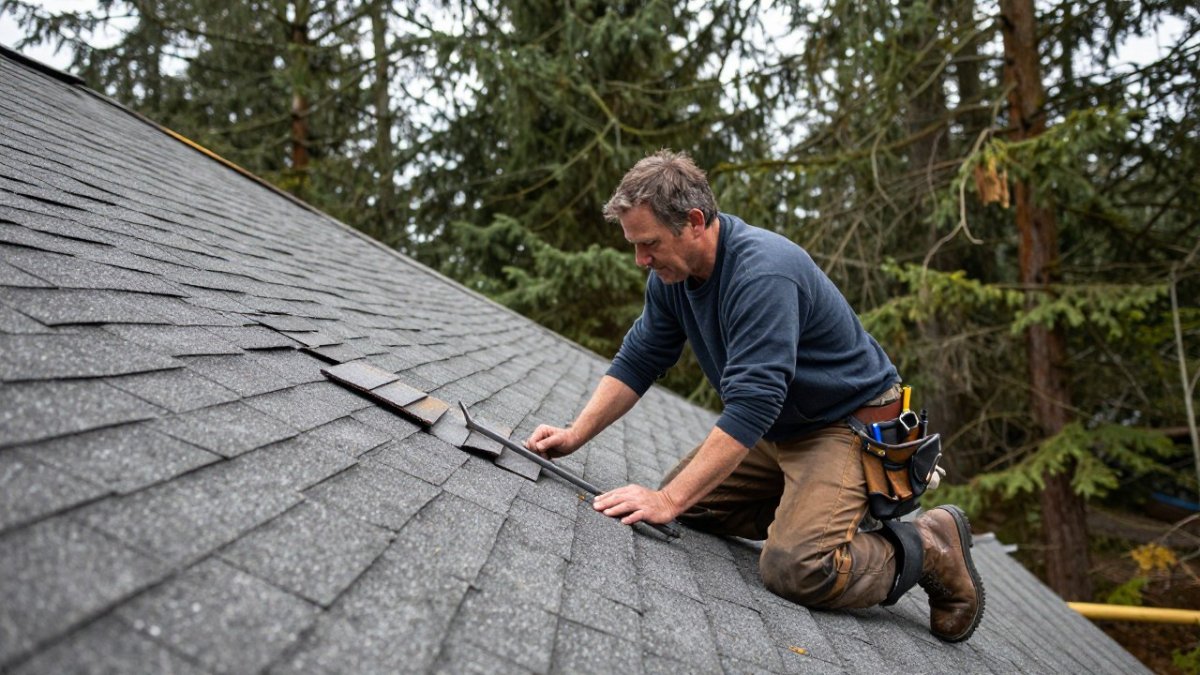
- Patching shingles or flashing
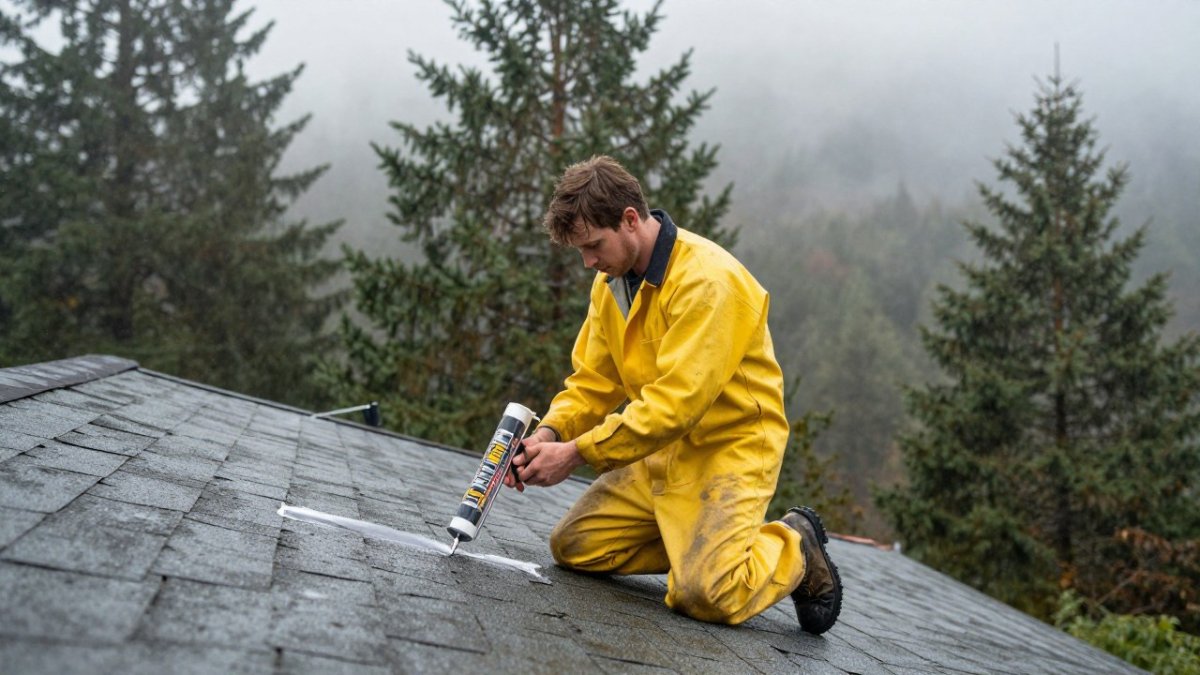
- Applying sealant or roof cement
- Replacing damaged shingles
The short answer to "can you repair a roof in the rain" is no for permanent fixes, yes for temporary containment.
How to Stop a Roof Leak During Rain Without Getting on the Roof
You stop an active leak from inside the house, not from the roof. Stay off the ladder during the storm. Focus on containing water and protecting your belongings until conditions improve.
Here's a step-by-step approach homeowners can follow:
- Find the drip. Follow the water trail to its source on the ceiling.
- Set up containment. Buckets, towels, and a plastic sheet under the drip.
- Relieve trapped water. If the ceiling bulges, pierce the bubble with a small nail and a bucket underneath. This prevents a full collapse.
- Move valuables. Shift furniture, electronics, and rugs out of the wet zone.
- Document everything. Photos and video of every stain, drip, and damaged item.
- Call for help. A pro can assess the roof safely once the weather breaks.
For a fuller walkthrough of emergency containment, see our guide on how to stop a roof leak during rain.
Watch out: never climb onto a wet roof to "just take a quick look." Wet shingles and moss are slick, and falls from height are the leading cause of serious injury in roofing work.
How to Tarp a Roof Leak: Emergency Protection Done Right
Tarping is the one outdoor task that can sometimes happen between rain bands, and only when the roof is safe to walk. A tarp is temporary protection, not a repair.
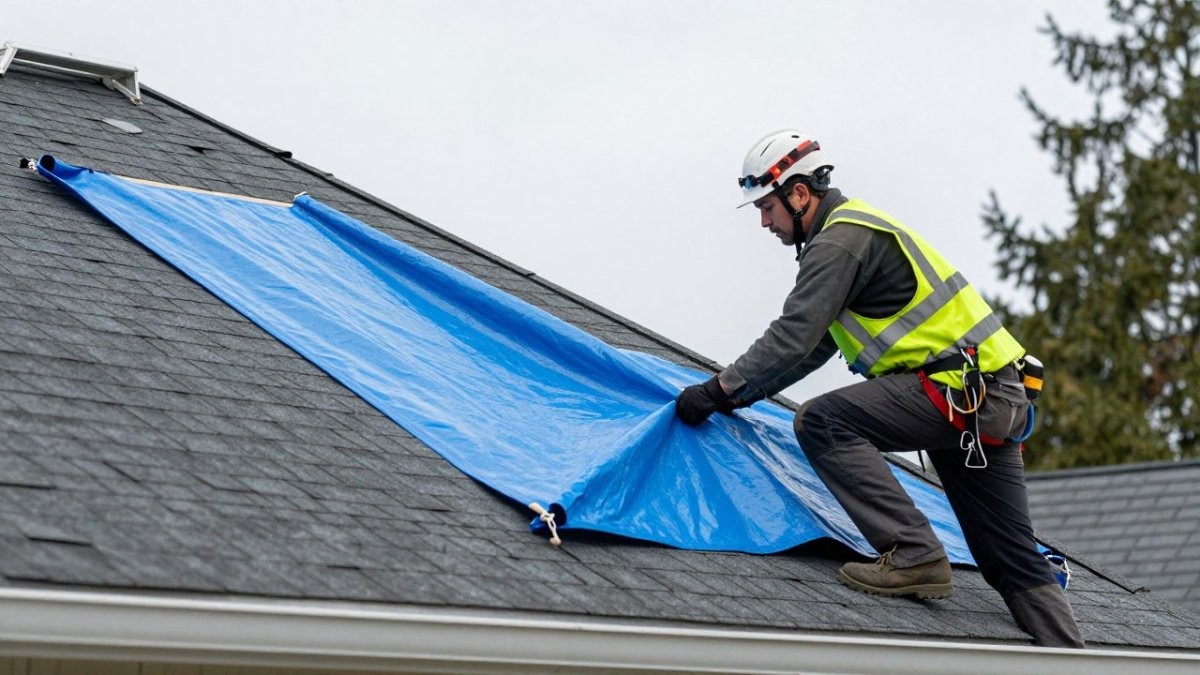
How to tarp a roof leak properly:
- Wait for a break in the weather. Check the forecast and work only on a dry, calm window.
- Choose the right tarp. Heavy-duty polyethylene with reinforced grommets holds up best.
- Overlap the ridge. Run the tarp up and over the peak so water sheds away from the leak.
You can follow the same general steps in our guide to patching a roof leak temporarily. If you're still choosing materials, this comparison of the best temporary roof patch materials covers tarps, peel-and-stick patches, and roof cement.
Can Roofers Work in Light Rain? What Crews Actually Decide
Most crews stop work in steady rain, and many stop in light rain too. The decision comes down to surface moisture, not the size of the drops.
Here's what actually drives a work stoppage:
- Wet decking. An exposed roof deck absorbs water fast. Once it's soaked, shingles won't seal and underlayment can trap moisture.
- Material limits. Most shingle manufacturers require dry installation for warranties to hold. Installing on a wet surface can void coverage.
- Safety. A slippery roof is a fall risk no schedule is worth.
Light drizzle with a dry deck might let a crew finish a small task. Steady rain, fog, or a wet surface means they pack up. A reputable roofing contractor will tell you this upfront rather than rush a job that won't last.
How Long Does a Roof Take to Dry After Rain?
A roof typically needs 24 to 48 hours of dry, breezy weather before most repairs can proceed, but that range is a starting point, not a guarantee.
Here is how the main roof types behave after rain:
- Asphalt shingles. The granules and mat shed water quickly, but the sealant strip on each shingle needs a dry, warm surface to bond. A shingle roof in direct sun and a light breeze can be ready in a day; a shaded slope with heavy moss may need two or three.
- Flat roofs and low-slope membranes. TPO and EPDM membranes bead water and dry fast on top, but seams and ponding areas hold moisture underneath. A flat roof with standing water needs that water cleared and the seam area probed before any patch is trusted.
- Metal roofs. Panels dry quickly, but fasteners and lap seams trap water. A metal roof can look dry while the sealant washer under a screw is still wet.
- Tile roofs. Tile sheds water well, but the underlayment beneath it stays damp far longer. A tile roof that looks dry on top can hide wet underlayment for days.
Three factors stretch the timeline beyond the basic range:
- Humidity. A humid day slows evaporation even when the sun is out. A dry, breezy day does more drying than a warm, muggy one.
- Shade and pitch. North-facing slopes and steep shaded sections hold moisture longer than sun-exposed, well-pitched areas.
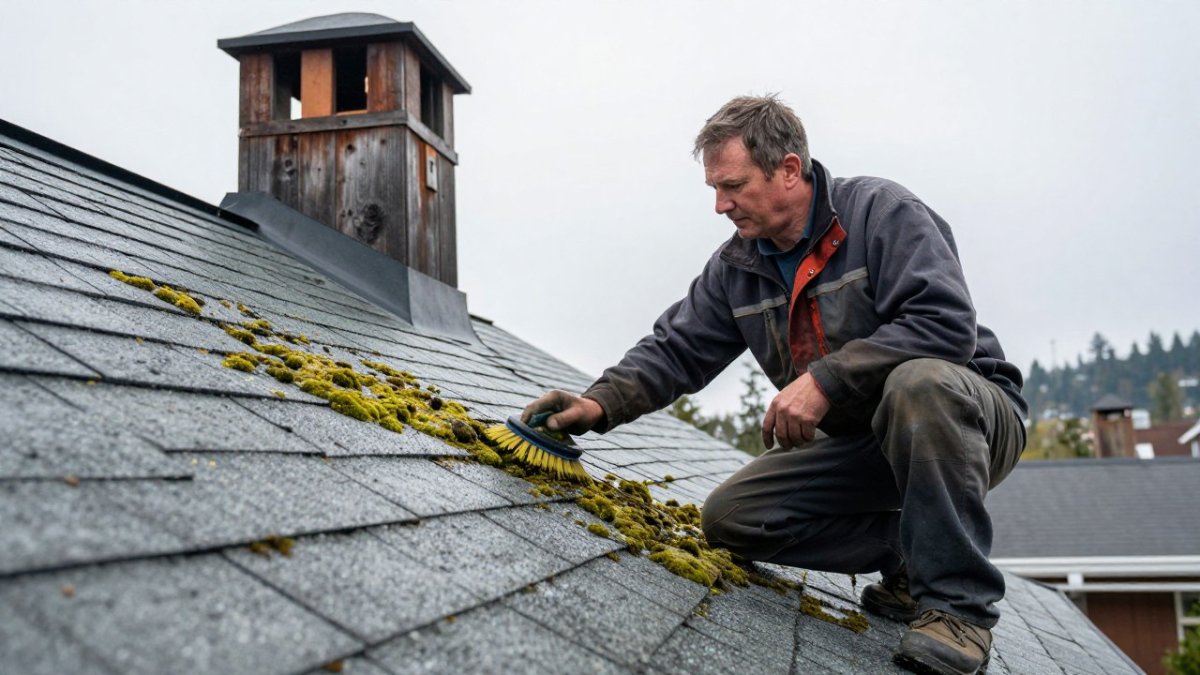
- Moss and debris. Moss acts like a sponge, and debris in valleys and behind chimneys keeps the deck wet long after the surface looks dry.
How long a roof takes to dry matters for more than scheduling. Trapped moisture under new shingles can lead to rot, mold, and mildew in the attic.
Drying time varies by roof type, so here is how each one typically behaves after rain.
| Roof type | Drying behavior | Note |
|---|---|---|
| Asphalt shingles | Shed water quickly; sealant strip needs dry, warm surface | Sun and breeze can ready it in a day |
| Flat roofs and low-slope membranes | TPO and EPDM bead water and dry fast on top | Seams and ponding areas hold moisture underneath |
| Metal roofs | Panels dry quickly | Fasteners and lap seams trap water |
| Tile roofs | Tile sheds water well | Underlayment beneath stays damp far longer |
| Wood shakes | Absorb water like a sponge | Can take several dry days to release it |
Repair or Replace? A Decision Tree for a Leaking Roof
Most decision trees jump straight to repair versus replace, but during or right after a storm the first question is urgency, not cost. Use this three-tier framework to sort the situation before you commit to anything.
Tier 1: Emergency containment (active leak, storm still going).
- Water is entering the home now.
- The roof is wet and unsafe to walk.
- Action: interior containment only. Buckets, towels, plastic sheeting, move valuables, document damage, and call a contractor to schedule the first dry-weather visit. No one goes on the roof.
Tier 2: Small repair (leak located, weather window open).
- One isolated leak around a vent, flashing, or chimney.
- The deck feels solid and the surface is dry.
- Roof age is under 15 years and there is one layer of shingles.
- Action: a targeted repair is usually the right call. A pro confirms the source, replaces the failed flashing or shingle, and checks the deck around the repair.
Tier 3: Replacement (leaks spreading or deck compromised).
- Multiple leaks across the roof, or leaks that return after repair.
- Roof age over 20 years, or two or more layers of shingles.
- Soft, spongy, or rotted decking in the attic.
- Action: replacement is often the better long-term value, because the deck needs work anyway and patching a failing roof only postpones the cost.
Roof type changes the answer inside each tier:
- Asphalt shingle roofs. Small repairs are common and reliable when the deck is dry. Multiple leaks on an aging shingle roof usually point to replacement.
- Flat roofs and membranes. A single seam or puncture can often be patched, but ponding water and repeated seam failures usually mean the membrane is at the end of its life.
- Metal roofs. Fastener and washer failures are repairable; widespread rust or loose panels lean toward replacement.
- Tile roofs. Cracked tiles are repairable, but a tile roof leaking in several places often has failed underlayment, which is a larger job than replacing a few tiles.
How to Assess Damage After Rain Reaches an Exposed Roof
Water that reaches an exposed deck does real damage fast. Check for soft spots in the attic sheathing, stains on rafters, and damp insulation.
Document everything with photos and dates. Before you commit to a big repair, it helps to know what insurance covers for emergency roof repair.
Watch out: a leak that appears far from the actual roof damage can mislead you into repairing the wrong spot, so trace the water path in the attic before authorizing work.
When to Call a Professional vs. DIY in Wet Conditions
Call a professional for anything on the roof during or right after rain. DIY is fine for interior containment and cleanup. The line is simple: if it requires a ladder and a wet surface, it's a pro job.
DIY-safe tasks:
- Buckets, towels, and plastic sheeting
- Moving belongings out of harm's way
- Photographing damage
- Clearing gutters from the ground with a tool
Pro-only tasks:
- Walking the roof in any wet conditions
- Tarping and temporary patching
- Diagnosing the leak source
- Any repair involving sealant or shingles
Professional crews should have the fall protection, training, and insurance needed to work safely. When in doubt, call. Our roof leak repair service is one option for addressing a leak.
Schedule a Professional Roof Inspection With Sound Roof Care
Storm season in the Puget Sound region doesn't let up, and neither should your roof's protection. Sound Roof Care has helped thousands of homeowners protect their roofs since 2009.
Here's what you can expect when you contact us:
- Honest pricing with no hidden fees
- Certified technicians who put safety first on every roof
- Maintenance plans that can help extend your roof's lifespan
Don't wait for the next storm to find the weak spot. Get started with Sound Roof Care and schedule a professional roof inspection today.
The next storm is already in the forecast.
Frequently Asked Questions
Can roofers work in light rain?
Sometimes, but it depends on the material and the task. Light rain usually stops shingle installation and any work that exposes the roof deck, because wet surfaces prevent proper sealing and adhesion. Quick emergency fixes, such as securing a tarp or patching a small leak, can often proceed in light rain when crews follow safety precautions. Most roofing contractors pause full installations until conditions dry out.
What should you do if your roof leaks during a storm?
Move valuables away from the leak, place a bucket underneath, and use towels to contain water. If you can safely reach the attic, position a container under the drip and document the damage with photos. Do not climb onto a wet roof. Call a roofing contractor for emergency repair, and ask whether they can tarp the area until conditions improve.
How long does a roof need to dry after rain before repairs?
Drying time depends on humidity, shade, and roof material, so there is no single fixed window before repairs. Flat roofs and shaded sections hold moisture longer than sun-exposed shingles. A contractor will typically check for a wet surface before starting work, since moisture trapped under new materials can lead to rot and mold.
Is it safe to climb on a wet roof?
No. A wet roof is slippery, and falls are the leading cause of roofing injuries. Even experienced technicians avoid walking on wet shingles unless absolutely necessary, and they use harnesses and roof anchors when they do. Homeowners should never attempt to climb a wet roof to inspect or patch a leak. Stay on the ground and call a professional.