 How-to
How Do You Prepare Your Roof for Heavy Rain?
Last Updated: November 8, 2026
Quick Summary
To prepare roof for heavy rain, inspect it from the ground for missing shingles, damaged flashing, and worn seams, then clean gutters and downspouts so water drains away. Clear roof debris, trim tree branches, and reseal gaps around chimneys, skylights, and vents before the rainy season starts.
- Clean gutters and downspouts 2-3 weeks before storm season to prevent overflow and water backup.
- Stay on the ground during inspection and use binoculars or your phone camera zoom.
- Reseal small gaps with roofing sealant rated for wet climates.
- Never climb onto a wet roof during a storm because shingles, tile, and metal are slick.
- Photograph each issue so you can compare conditions before and after the storm.
Table of Contents
- Why Storm Preparation Starts With a Roof Inspection Before a Storm
- Check Shingles, Flashing, and Roof Seams for Damage
- Cleaning Gutters Before Heavy Rain Keeps Water Moving
- Clear Debris, Trim Tree Branches, and Secure Loose Objects
- Roof Leak Prevention: Sealing Chimneys, Skylights, and Vents
- Emergency Roof Leak Repair in the Rain: What to Do Mid-Storm
- Matching Storm Prep to Your Roofing Materials and Design
- Schedule a Professional Roof Inspection With Sound Roof Care
- Frequently Asked Questions
Why Storm Preparation Starts With a Roof Inspection Before a Storm
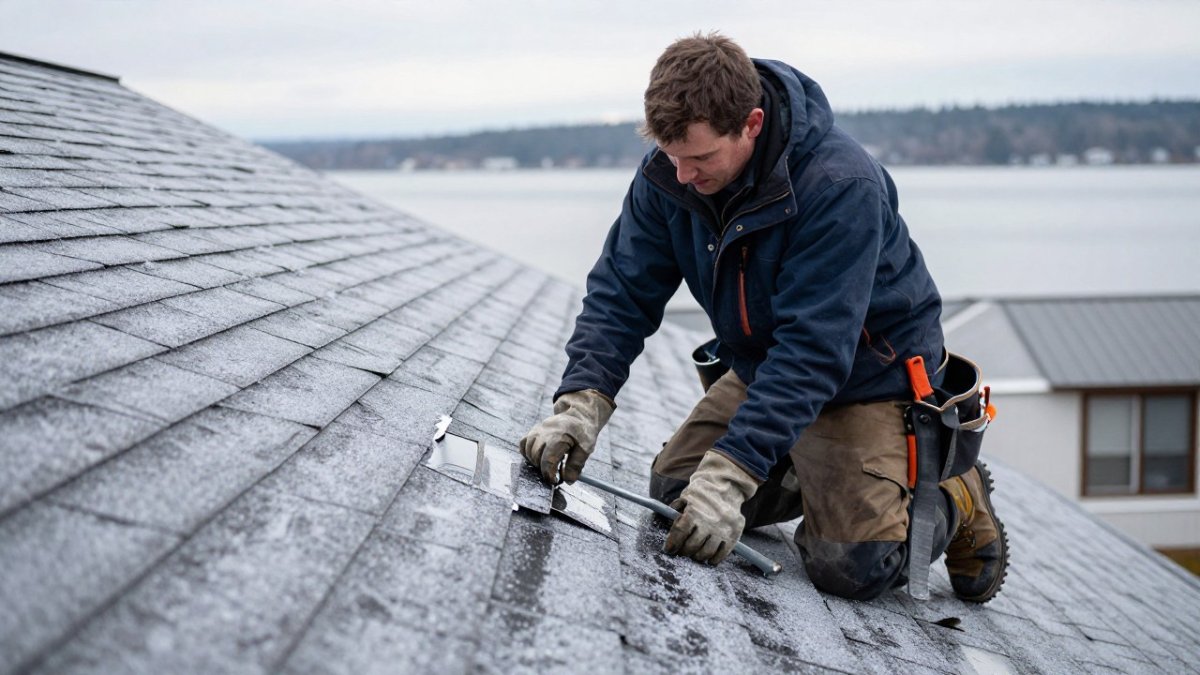
Learning how to prepare roof for heavy rain starts with one honest look at what you already have. A roof inspection before a storm tells you where water will get in, not just where it might. The homes that stay dry are usually the ones checked before the first storm, not during it.
Water finds weak spots fast. Loose flashing, worn seals, and clogged gutters all turn a normal rainstorm into an indoor problem. So start with a slow walk around the house and write down what you see.
How to Inspect Your Roof Safely From the Ground
Most homeowners should never climb on a wet roof. Stay on the ground and use binoculars or your phone camera zoom instead.
- Walk the full perimeter and scan the roof condition section by section
- Look for missing shingles, lifted edges, and dark patches
- Check gutters for sagging or visible gaps
- Photograph any damage so you can track it later
Use the National Roofing Contractors Association homeowner resources for guidance on what counts as normal wear versus a real problem. Safety first: if a slope looks steep or wet, stay off it.
Check Shingles, Flashing, and Roof Seams for Damage
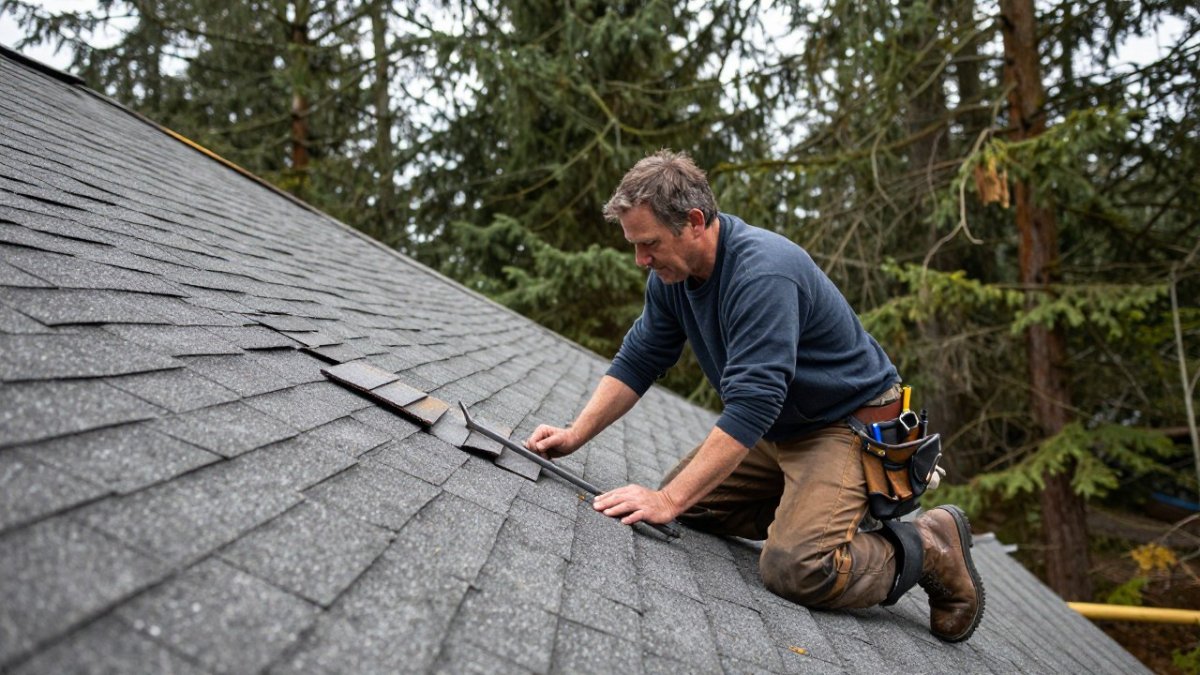
Shingles, flashing, and roof seams are the three places water intrusion begins. Shingles shed water, flashing seals the edges, and seams hold the whole roof together. Damage in any one of them invites a roof leak.
Look for these warning signs:
- Curling or cracked shingles that no longer lie flat
- Rusty or bent flashing around roof edges and seams
- Worn sealant along seams and penetrations
- Granules collecting in gutters, a sign of aging roofing materials
Cleaning Gutters Before Heavy Rain Keeps Water Moving
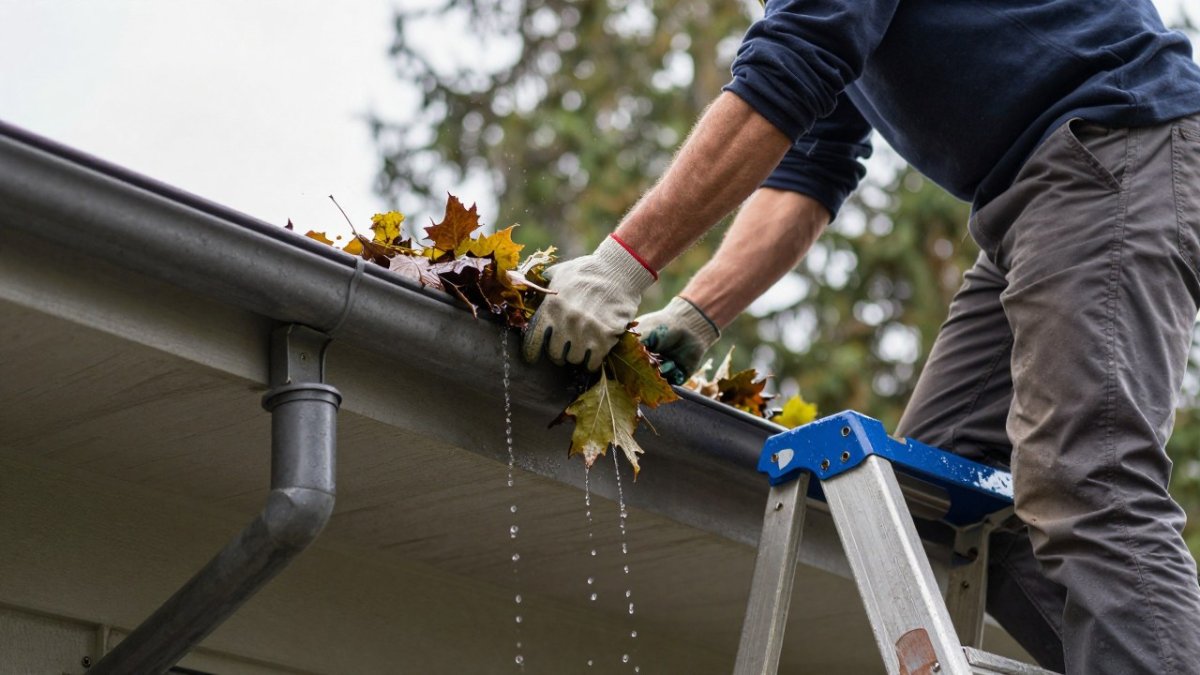
Cleaning gutters before heavy rain is the single cheapest way to protect your roof drainage. Clogged gutters back up, overflow, and push water under roof edges and into the walls.
Clear leaves, twigs, and debris from the gutters and downspouts. Then run a hose to confirm water flow reaches the ground and drains away from the foundation.
Watch out: standing water in a gutter after you clean it usually means the downspout is blocked, not the gutter. Check the downspout first.
Clear Debris, Trim Tree Branches, and Secure Loose Objects
Debris removal and tree trimming lower the odds of storm damage before it starts. Leaves and branches trap moisture and block drainage, and low branches scrape shingles during wind-driven rain.
Here is what to handle before the rainy season:
- Clear leaves and branches from the roof surface
- Trim tree branches back from the roof line
- Secure loose objects like patio furniture and bins
- Check that vents and caps sit tight
A simple priority list helps when time is short. Do gutters and debris first, then branches, then small fixes.
| Task | When to Do It | Why It Matters |
|---|---|---|
| Clean gutters and downspouts | 2-3 weeks before storm season | Prevents overflow and water backup |
| Clear roof debris | Same visit as gutter cleaning | Stops moisture trapping and rot |
| Trim tree branches | Before windy months | Reduces scraping and falling limbs |
| Secure loose objects | Days before a storm | Prevents impact damage |
Roof Leak Prevention: Sealing Chimneys, Skylights, and Vents
Roof leak prevention comes down to the penetrations: chimneys, skylights, and vents. These are the openings where water most often gets in. Check the flashing and seals around each one.
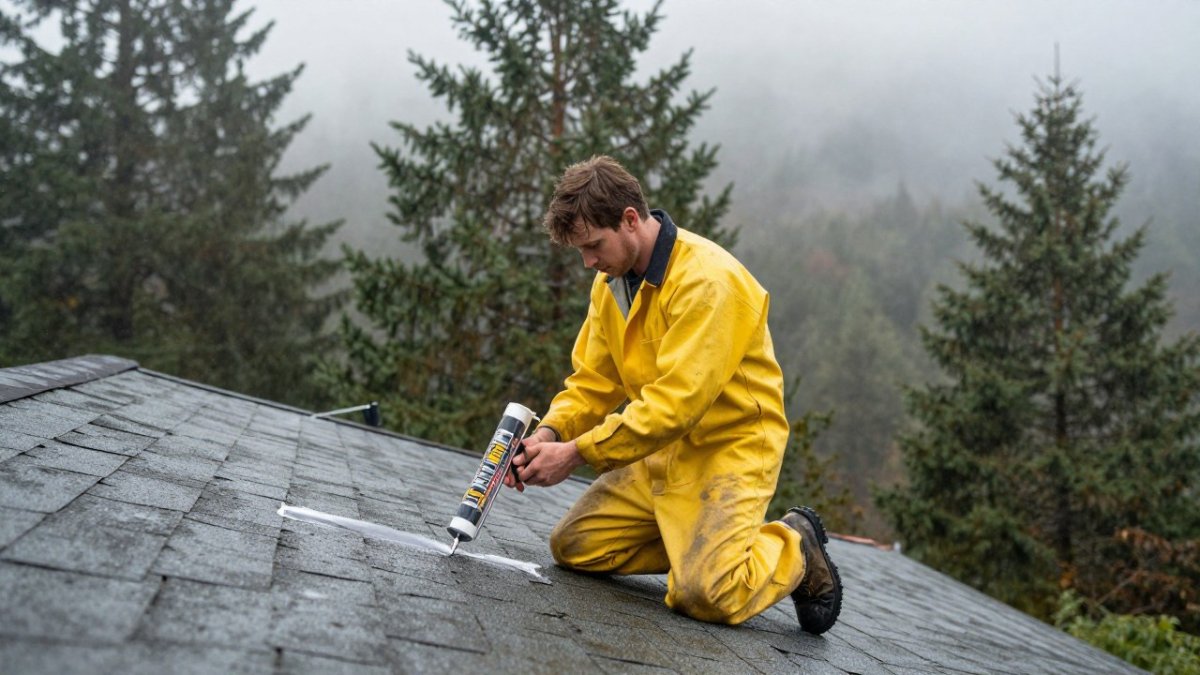
Look for cracked sealant, lifted metal, and gaps where the roof meets the chimney. Reseal small gaps with roofing sealant rated for wet climates. For a detailed walkthrough of one common fix, see our guide on 7 steps to fix a small roof leak around chimney flashing.
Skylights and vents need the same check. Loose components and worn gaskets let water slip past during wind-driven rain.
Emergency Roof Leak Repair in the Rain: What to Do Mid-Storm
When water is already coming in, the goal shifts from prevention to damage control. Emergency roof leak repair in the rain is about limiting damage and staying safe, not fixing the roof while it is wet. Work through these steps in order.
1. Protect people and belongings first. Move furniture, electronics, and valuables away from the leak and off the floor. Place buckets and towels to catch water, and put a plastic sheet or tarp over items you cannot move.
2. Relieve trapped water safely. A sagging ceiling holds water that can collapse. If the bulge is soft and clearly holding water, poke a small hole at the lowest point with a screwdriver or nail and let it drain into a bucket. This is a controlled release, not a repair, and it prevents a much larger failure.
3. Never climb onto a wet roof. Wet shingles, tile, and metal are slick, and wind-driven rain makes a ladder unstable. Stay off the roof during the storm and do not send anyone else up. If water is entering around a chimney, skylight, or vent, note the location from inside and wait for safer conditions.
4. Document as you go. Photograph the leak, the water damage, and any belongings affected, and write down the date, time, and where the water is entering. This record matters for insurance and for the contractor who will make the repair. Keep receipts for any emergency supplies you buy.
5. Contain and monitor. Check the attic if it is safe to access from inside, and look for water running down rafters or staining on the decking, which tells you where the water is traveling. Set a reminder to check the ceiling and attic again after the rain stops, since some leaks only show once the roof has been wet for hours.
**6. For step-by-step help right now, read our guide on how to stop a roof leak during rain. If the leak is spreading, book professional roof leak repair and let a crew handle it safely.
After the rain stops. Walk the perimeter from the ground and check the attic for new staining, then compare what you see against the photos you took before the storm. That comparison is how you tell existing wear from new damage, which is exactly what an insurance claim or a repair decision depends on.
Matching Storm Prep to Your Roofing Materials and Design
Generic storm-prep advice treats every roof the same, but the checks that actually prevent heavy-rain leaks depend on what the roof is made of and how it sheds water. Use the material-specific list below instead of a one-size-fits-all walkaround.
Asphalt shingles. Shingles shed water by overlapping, so the failure points are lifted tabs, missing shingles, exposed fasteners, and granule loss that signals an aging mat. Walk the perimeter and look for tabs that no longer lie flat, dark "bruised" spots where granules are gone, and shingle pieces in the gutters. Pay closest attention to valleys, ridges, and the bottom row at the eaves, where wind-driven rain pushes up under the tabs.
Tile and slate. These roofs rely on overlapping pieces plus underlayment, so a cracked or slipped tile is a water path even when the roof looks intact from the ground. Check for slipped, cracked, or chipped pieces, especially near valleys and the ridge, and look for moss or dark streaks that hold moisture against the surface.
Metal. Metal sheds water fast, but the weak points are the fasteners, seams, and any place the panels meet a wall, chimney, or skylight. Check that screws and fasteners sit tight and that their washers are not cracked or missing, since a backed-out fastener is a direct leak path.
Flat and low-slope roofs. Low-slope sections drain slowly, so they collect water, debris, and ponding that a steep roof never sees. Check that drains, scuppers, and roof drains are clear, that the membrane has no blisters, splits, or open seams, and that water flows toward the drain rather than standing in low spots.
Design and geometry. Roof design changes where water concentrates. Valleys funnel runoff from two planes into one channel, so they collect debris and wear fastest. Steep slopes shed water quickly but are dangerous to inspect when wet. Dormers, chimneys, and skylights create inside corners and transitions where flashing has to work hardest.
What to do with this list. Match your roof type to the checks above, then prioritize by consequence: a lifted shingle tab or a backed-out metal fastener is a small fix that prevents a large leak, while a slipped tile or a ponding low-slope section usually needs a professional assessment. For regional guidance tailored to local conditions, see our Roof Maintenance for Pacific Northwest: Complete Guide.
Schedule a Professional Roof Inspection With Sound Roof Care
A professional inspection catches what a ground-level check cannot. Sound Roof Care is a family-owned company serving the Puget Sound region since 2009, with honest pricing and no hidden fees.
If you are unsure whether you need a repair or a replacement, an inspection gives you a clear answer. Contact us to schedule your visit and get ahead of the rainy season.
Heavy rain rewards preparation and punishes guesswork. If you would rather not climb a ladder or second-guess your own roof, let our team take a look. Sound Roof Care offers professional cleaning, moss treatment, leak repair, and full inspections built for Washington's wet, moss-prone climate. Get started with Sound Roof Care and protect your home before the next storm hits.
Frequently Asked Questions
Can I put a tarp on my roof to stop a leak during heavy rain?
A tarp can slow water intrusion temporarily, but only if it is secured safely and correctly. Climbing onto a wet roof is dangerous, so if conditions are slick, wait for a break in the weather or call a professional for emergency roof leak repair in the rain. Drape the tarp so it overlaps the ridge and runs past the leak point, and weight the edges with sandbags rather than nailing through shingles. A tarp is a stopgap, not a fix: schedule a permanent repair once the storm passes.
How often should I schedule a roof inspection before a storm season?
Plan at least one professional roof inspection before a storm each year, ideally in late summer or early fall, so repairs can be completed before the rainy season starts. If your roof is over 20 years old, has moss growth, or has leaked before, twice a year is safer. Between professional visits, do your own visual checks from the ground after any wind event. Catching a lifted shingle or worn flashing early is far cheaper than repairing water intrusion after the fact.
Should I clean my gutters before heavy rain if they look clear?
Yes. Leaves and grit collect at the bottom of gutters and inside downspout elbows where you cannot see them from the ground. Cleaning gutters before heavy rain ensures full water flow and prevents overflow that can rot fascia and seep into the foundation. Flush each downspout with a hose and confirm water exits away from the house. In moss-prone climates, granule loss from shingles adds to the debris load, so check again mid-season.
What should I do if my roof starts leaking during heavy rain?
Move valuables and electronics away from the leak, place a bucket underneath, and if water is pooling near an electrical fixture, shut off power to that area and call an electrician. Do not climb onto the roof in wind-driven rain. Photograph the damage for insurance, then call a roofing company for emergency roof leak repair in the rain. A crew can often stop active water intrusion safely and identify whether the source is a failed seal, clogged drainage, or storm damage.