 comparison
Asphalt Shingles vs Metal Roofing for PNW Homes
Last Updated: November 5, 2026
Quick Summary
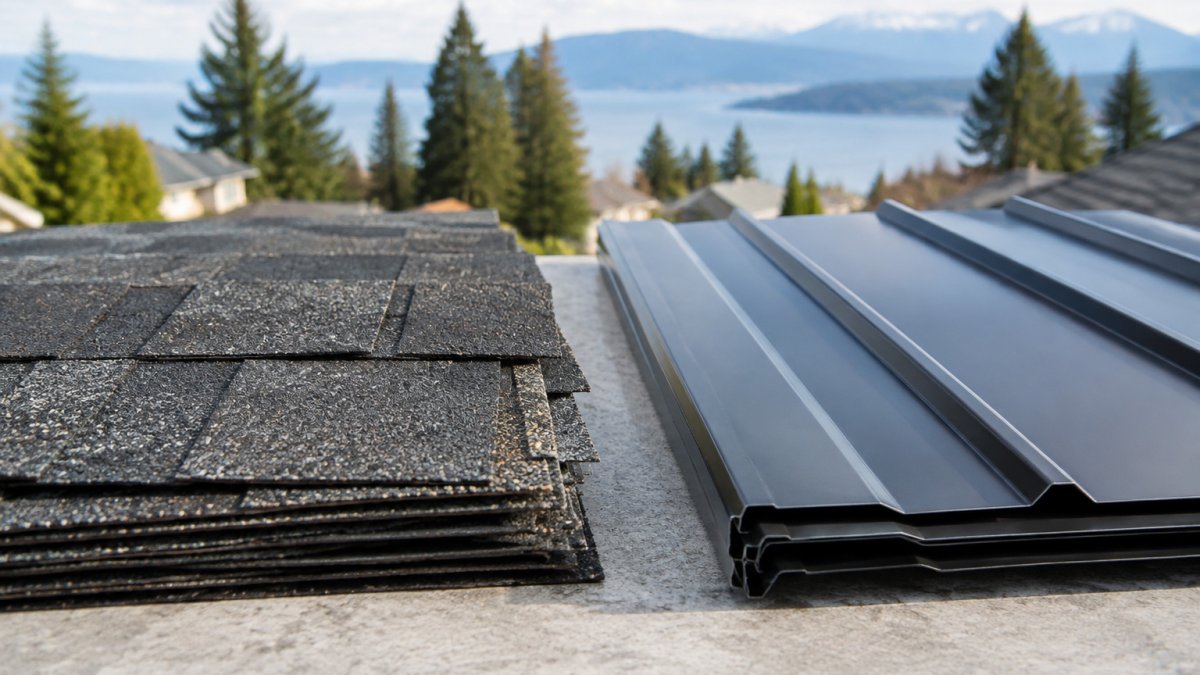
Asphalt shingles vs metal roofing for PNW homes is a trade between upfront cost and longevity: architectural shingles typically run $8,000 to $15,000 and last 20 to 30 years, while metal runs $19,000 to $25,000 or more and lasts 45 to 60 years. Shingles win on budget and repairability; metal wins on lifespan, water shedding, and moss resistance.
- Metal roofing often lasts 45 to 60 years, compared with 20 to 30 years for architectural shingles in this climate.
- A 2,000-square-foot metal roof typically costs $19,000 to $25,000 or more, depending on panel type, pitch, and complexity.
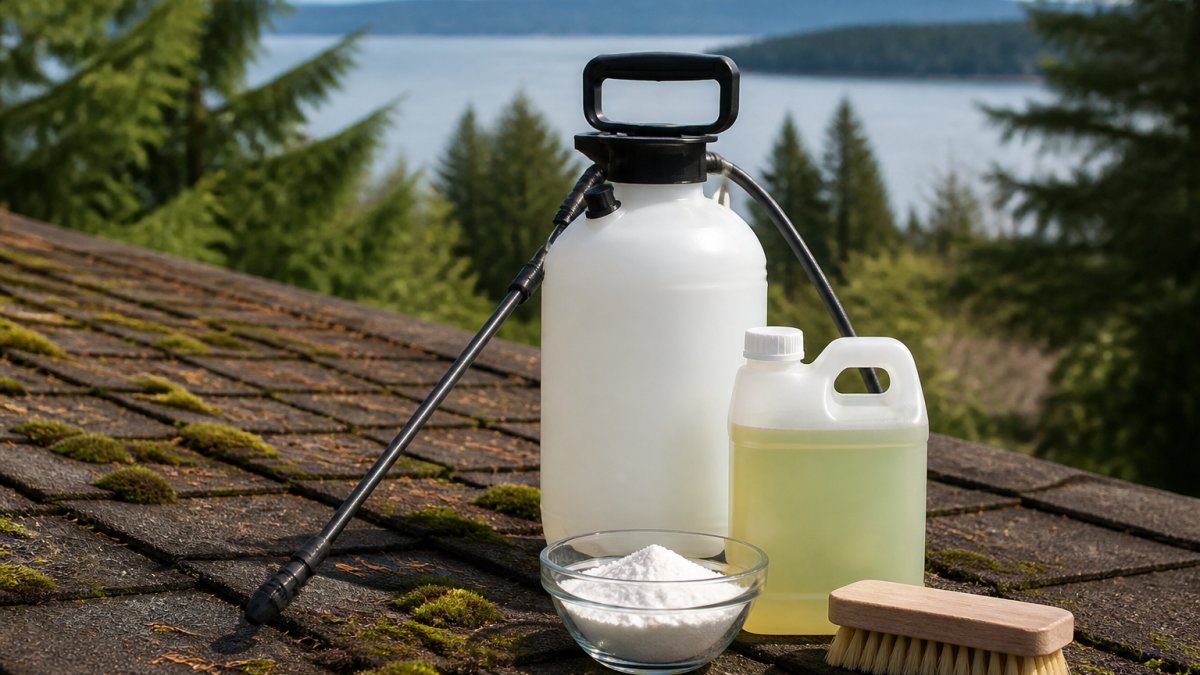
- Moss loves asphalt shingles because granules trap moisture and organic debris, giving it a foothold.
- Both systems need annual inspection, gutter and valley clearing, and proper underlayment, flashing, and ventilation.
- Steep, simple, sun-exposed roofs on a budget usually favor architectural shingles with a maintenance plan.
Table of Contents
- Asphalt Shingles vs Metal Roofing for PNW Cost: Upfront and Lifecycle Numbers
- Metal Roof Cost for a 2,000-Square-Foot House
- The Best Roofing Material for the Pacific Northwest Climate
- Expected Lifespan and Durability in Wet, Stormy Conditions
- Metal Roof Maintenance in Rainy Climates
- Roof Assembly, Site Suitability, and Regional Climate Differences
- Which Roofing Material Fits Your Home: Pros, Cons, and Tradeoffs
- Schedule a Roof Inspection Before You Choose
- Frequently Asked Questions
Asphalt Shingles vs Metal Roofing for PNW Cost: Upfront and Lifecycle Numbers
Asphalt shingles vs metal roofing for PNW homes comes down to a simple trade: shingles cost less on day one, metal costs less over decades. The honest answer is that neither wins outright.
Metal roofing costs more upfront than architectural shingles. Shingles win on initial budget and repairability; metal wins on lifespan and water shedding in steady rain. Below, we break down what drives each price and then run the lifecycle math with stated assumptions so you can see where the crossover happens.
What Drives the Installed Price
Material choice is only part of the bill. Labor, roof pitch, tear-off of old layers, underlayment, flashing, and ventilation all move the number more than most homeowners expect.
- Material and gauge: Architectural shingles cost less per square than standing-seam metal panels. Panel gauge, coating, and whether the metal is painted or mill-finish move the material line more than most homeowners expect.
- Labor: Metal panels demand more skilled installers and careful seaming, which raises labor costs. Steep pitch and complex geometry widen that labor gap because panel cuts and seams take longer than shingle courses.
- Tear-off and decking: Old layers must come off, and soft decking gets replaced before either roof goes on. Decking replacement is priced per sheet and is the same for either material, so it does not tilt the comparison.
Lifecycle Cost and Long-Term Value
Architectural shingles typically last 20 to 30 years in this climate when maintained. Metal roofing often lasts 45 to 60 years, according to Jobin Roofing's Pacific Northwest comparison.
Here is a transparent total-cost-of-ownership model for a 2,000-square-foot home over 50 years.
- Asphalt shingles, installed: roughly $8,000 to $15,000 for the first roof, based on Stanley Roof & Solar's Pacific Northwest figures. Assume one full replacement at year 25 at today's prices, plus moss treatment and minor repairs along the way.
- Metal roofing, installed: roughly $19,000 to $25,000 or more for a 2,000-square-foot house, depending on panel type, pitch, and complexity, per Jobin Roofing's cost breakdown. Assume one set of fastener, sealant, and flashing inspections and minor repairs over the same 50 years, with no full replacement.
- Maintenance: both systems need annual inspection and gutter and valley clearing. Shingles carry added moss treatment and periodic granule loss repairs; metal carries fastener and sealant checks, especially on exposed-fastener panels.
Over a long ownership horizon, the metal roof's higher install price can be partly offset by avoiding a second shingle roof and by lower moss-related maintenance.
Our advice: treat published ranges as starting points, not quotes. A steep roof, multiple valleys, or heavy moss remediation can push either system higher.
Metal Roof Cost for a 2,000-Square-Foot House
For a 2,000-square-foot house, metal roofing typically runs $19,000 to $25,000 or more, depending on panel type, pitch, and complexity, per Jobin Roofing's cost breakdown.
Compare that to asphalt shingles at roughly $8,000 to $15,000 for the same home, based on Stanley Roof & Solar's Pacific Northwest figures.
Our advice: treat those ranges as starting points, not quotes. A steep roof, multiple valleys, or heavy moss remediation can push either system higher.
The Best Roofing Material for the Pacific Northwest Climate
There is no single best material for every PNW home, because the Pacific Northwest is not one climate. A roof on the coast, a roof under dense canopy in western Washington or Oregon, a roof at mountain elevation, and a roof on a drier inland site face different loads. Metal often performs better in constant wet and moss pressure, while asphalt shingles are often a better fit for tight budgets and simple roof shapes.
Rain, Humidity, and Water Shedding
Water shedding is where metal earns its reputation. Standing-seam panels move rain off the roof in sheets, and their smooth surface leaves fewer places for moisture to sit. Shingles absorb some water and rely on overlap and gravity, which works well when the roof is sound but punishes poor installation. In the marine climate west of the Cascades, where drizzle can persist for days and roofs stay wet for long stretches, the assembly under either material matters more than the surface: a high-temp underlayment, ice-and-water shield at valleys and eaves, and correct flashing decide whether water ever reaches the deck.
Moss, Algae, and Wind Resistance
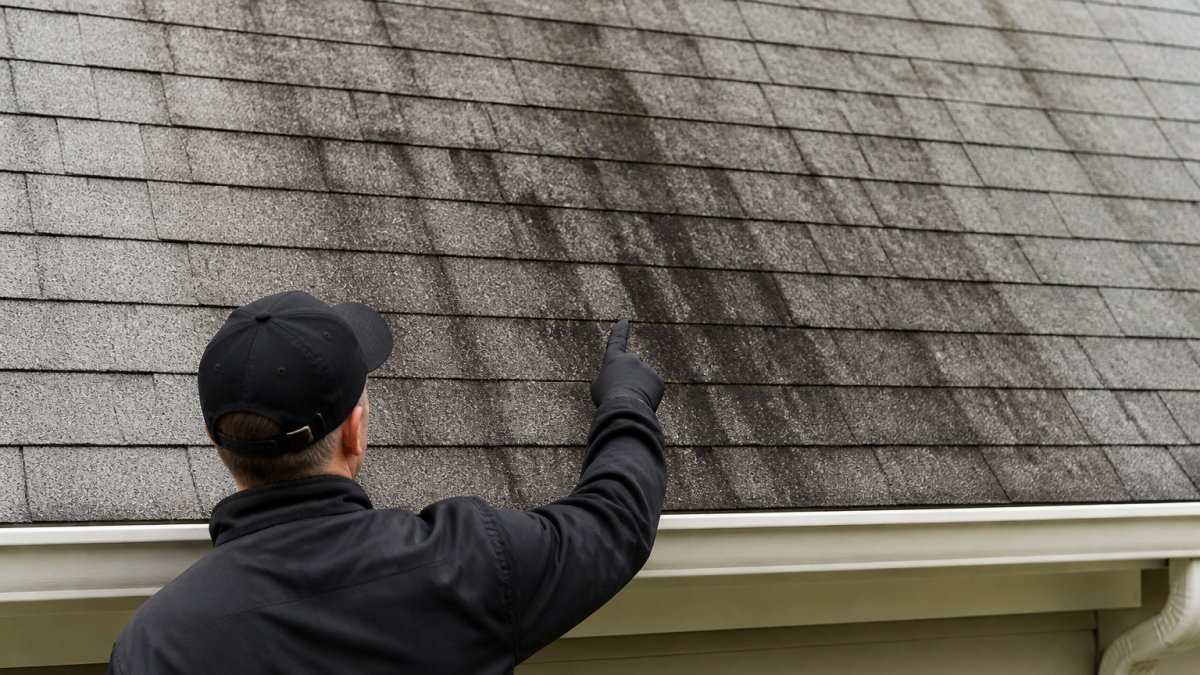
Moss growth is the PNW's real enemy, and it loves asphalt shingles. Granules trap moisture and organic debris, giving moss a foothold. Metal sheds debris more readily, though it still needs cleaning. On wind resistance, both systems hold up when fastened correctly; metal panels can be rated for high wind, while shingles depend on nail pattern and sealant. If moss is your main worry, our guide to the 7 best moss treatments for PNW roofs covers what actually works here.
Regional Climate Differences Within the Pacific Northwest
The ranking comparisons tend to blend the whole region, but the practical differences are large enough to change the decision:
- Coastal and marine sites: the wettest, most moss-prone conditions, with salt air near the shore. Metal's smooth surface and debris shedding reduce moss pressure, but salt exposure makes fastener and coating quality critical. Shingles can work here only with a disciplined moss and debris maintenance plan.
- Western Washington and Oregon lowlands: long wet seasons, heavy tree canopy, and moderate wind. This is the classic moss battleground. Metal tilts the decision when canopy is dense; shingles remain viable on simple, sun-exposed roofs with regular treatment.
- Mountain and foothill sites: snow accumulation, freeze-thaw cycles, and ice damming at eaves. Ice-and-water shield at eaves and valleys is essential for both materials, and metal's ability to shed snow reduces the risk of ice dams, though snow guards may be needed to keep snow from sliding off in sheets.
Pitch, Tree Exposure, and Site-Specific Suitability
Roof pitch changes everything. Low-slope roofs limit shingle options and favor metal's water shedding. Steep roofs raise labor for both but especially for metal. Heavy tree cover means more debris and more moss pressure, which tilts the decision toward metal or a strict shingle maintenance plan. A practical decision framework:
- Steep, simple, sun-exposed roof on a budget: architectural shingles with a maintenance plan are usually the better value.
- Low-slope or complex roof with valleys and dormers: metal's water shedding and custom flashing are worth the premium.
- Dense canopy or coastal exposure: metal, or shingles only with committed annual maintenance.
Installation quality ties it together: the best material installed poorly loses to a modest material installed right. For a deeper look at upkeep across the region, see our roof maintenance guide for the Pacific Northwest.
Expected Lifespan and Durability in Wet, Stormy Conditions
Durability in this climate is less about the material than the assembly beneath it. A well-ventilated, properly flashed roof of either type outlasts a poorly built one every time.
Metal does not grow moss the way shingles can. Shingles' advantage is that damage stays local: a blown-off shingle is a small repair, while a damaged metal panel can mean a larger fix.
Metal Roof Maintenance in Rainy Climates
Metal roof maintenance in rainy climates is lighter than shingle care, but it is not zero. Plan on annual inspection of fasteners, seams, and flashing, plus clearing debris from valleys and gutters.
The payoff is that metal resists the moss and algae pressure that drives so much shingle maintenance. Yearly inspections for both systems are a sound practice. Catching a lifted seam or a loose fastener early can prevent a leak into your attic later.
Roof Assembly, Site Suitability, and Regional Climate Differences
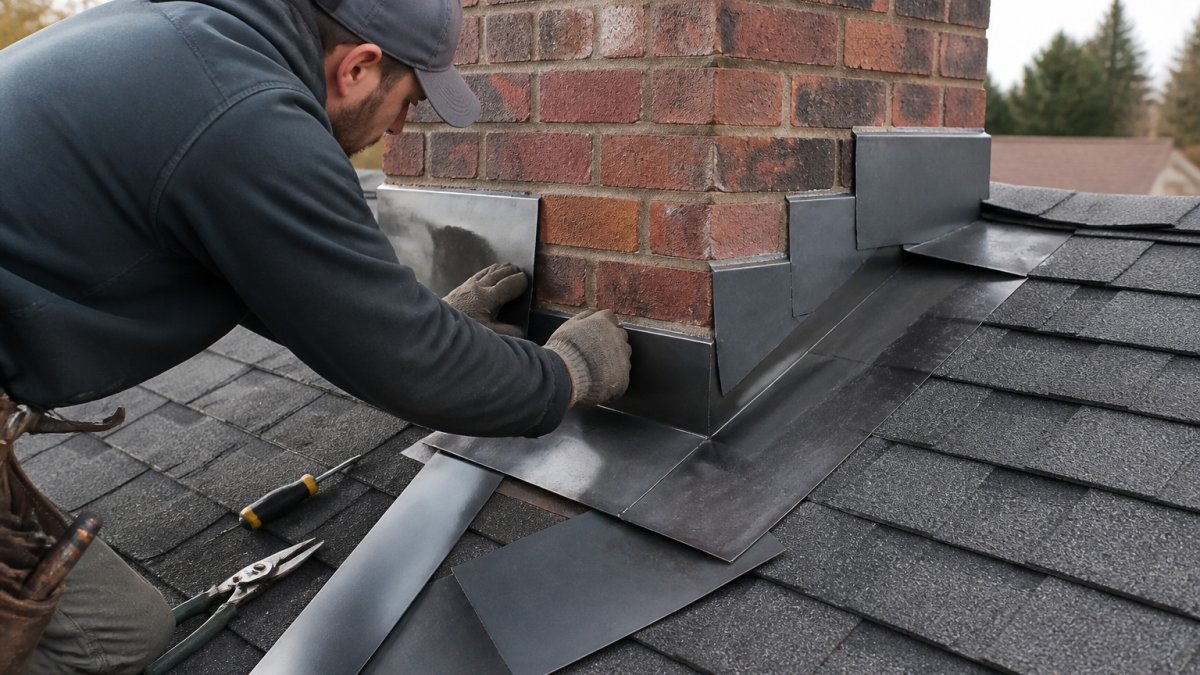
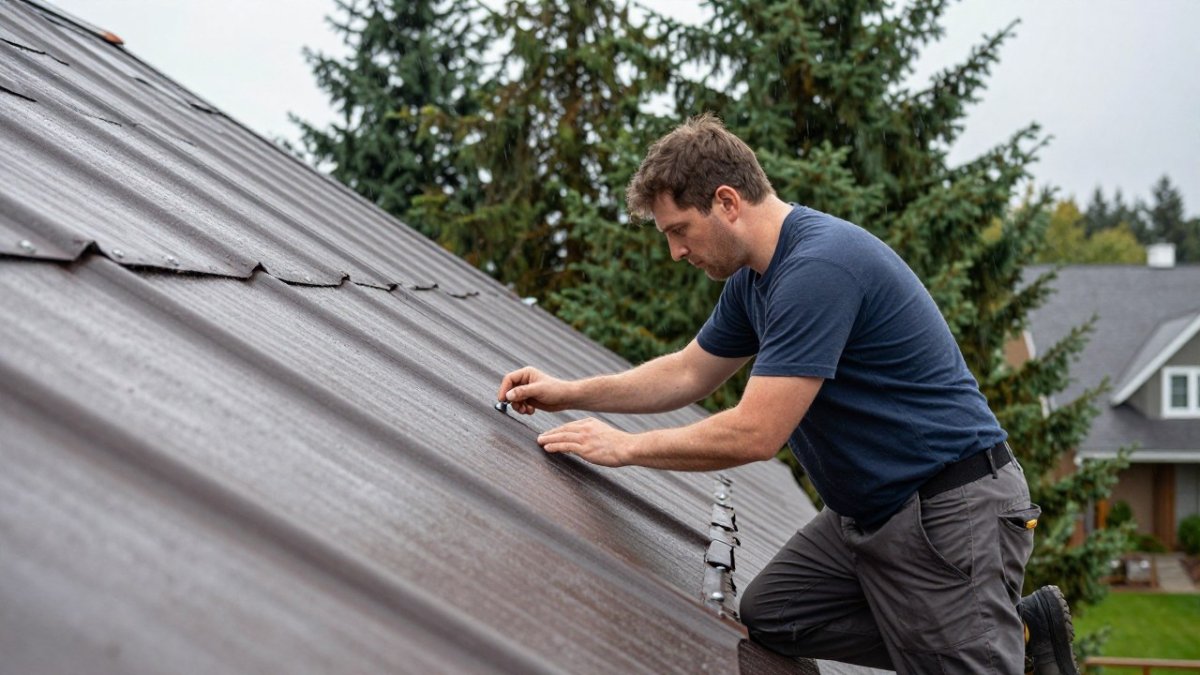
The assembly under the roof matters as much as the roof itself. Underlayment, ice-and-water shield at valleys and eaves, proper flashing, and attic ventilation determine whether either material performs. A metal roof over a wet, unvented deck will still fail.
Pitch, Tree Exposure, and Installation Quality
Roof pitch changes everything. Low-slope roofs limit shingle options and favor metal's water shedding. Steep roofs raise labor for both but especially for metal.
Regional differences matter too. Homes closer to the coast and under dense canopy face more moisture and moss than sunnier inland sites. Installation quality ties it together: the best material installed poorly loses to a modest material installed right.
Which Roofing Material Fits Your Home: Pros, Cons, and Tradeoffs
Neither roof is universally better. Here is how the two compare on the factors that decide most PNW projects.
| Factor | Asphalt Shingles | Metal Roofing |
|---|---|---|
| Upfront cost | Lower | Higher |
| Lifespan | 20-30 years | 45-60 years |
| Moss resistance | Low, needs treatment | Higher, still needs cleaning |
| Water shedding | Good when installed well | Excellent |
| Repairability | Easy, local fixes | Harder, panel-level |
| Best for | Tight budgets, shorter stays | Long-term owners, heavy moss sites |
Asphalt shingles pros: lower installed price, easy repairs, wide style range. Cons: shorter lifespan, moss-prone, more frequent replacement.
Metal roofing pros: long service life, strong water shedding, less moss pressure. Cons: higher upfront cost, skilled labor required, harder spot repairs.
For a detailed price breakdown on the shingle side, our cost of replacing an asphalt roof guide walks through the full numbers.
Schedule a Roof Inspection Before You Choose
Before you commit to either material, get your roof inspected. An inspection tells you the condition of your decking, flashing, and ventilation, which matters more than the shingle-versus-metal debate. It also reveals whether a repair buys you years or whether replacement is the smarter spend.
Sound Roof Care is family-owned and has served the Puget Sound region since 2009, with certified, safety-focused technicians and honest pricing with no hidden fees. If you are ready to move forward, you can schedule a roof replacement consultation or contact our team to book an inspection and get a clear, itemized quote.
Frequently Asked Questions
Which lasts longer in the Pacific Northwest: asphalt shingles or metal roofing?
Metal roofing generally outlasts asphalt shingles here. Metal roofing generally lasts longer than asphalt shingles. Constant moisture, moss, and tree debris shorten shingle life further, so a shingle roof that would last 25 years in a dry climate may need replacement sooner in the Puget Sound area. Metal costs more upfront but spreads its price over a longer service life.
How much should a 2,000-square-foot metal roof cost?
Metal roofing cost in the Pacific Northwest varies with panel type, roof complexity, and tear-off. A 2,000-square-foot home often carries more roof surface than floor area because of pitch and overhangs, so the actual square footage drives the price. Standing-seam metal sits at the higher end. Get a written quote based on your measured roof, not a per-square-foot estimate.
Are metal roofs better than asphalt shingles in rainy, moss-prone areas?
Metal sheds water and debris faster, and its smooth surface gives moss and algae less to grip. That matters in a climate with months of rain and heavy tree cover. Asphalt shingles absorb moisture, and their granular surface traps organic debris that feeds moss. Metal still needs occasional cleaning, but it usually holds up better under constant wet conditions. Budget and appearance remain the deciding factors for many homeowners.
How much does asphalt shingles vs metal roofing cost in the PNW?
Asphalt shingles are the lower upfront option. Asphalt shingles are generally the lower upfront option, while metal roofing typically costs more to install. Over a long ownership period, repeated replacement can narrow the gap in lifecycle cost once repair and maintenance are included. Compare total cost of ownership, not just the first invoice.
Which roofing material is easier to maintain in the Pacific Northwest?
Metal needs less routine work. Regular cleaning of gutters and debris covers much of it. Asphalt shingles need the same cleaning plus attention to granule loss, lifted or cracked shingles, and flashing after storms. Both materials benefit from professional inspections every few years. In this climate, moss treatment matters more than the material itself for keeping a roof healthy.
The real decision is not which material sounds better on paper. It is which roof fits your home, your timeline, and your tolerance for maintenance. Get started with Sound Roof Care and get an honest inspection, transparent pricing, and a roof plan built for this climate.