 how-to
Signs Your Roof Needs Replacement: 8 Warning Signs
Table of Contents
- When Small Roof Problems Become Replacement Decisions
- How Long Does a Roof Last? Material-by-Material Lifespans
- 8 Warning Signs Your Roof Needs Replacement
- Sign 1: Missing, Cracked, or Curling Shingles
- Sign 2: Granules in Gutters and Dark Streaks
- Sign 3: Leaks, Water Stains, and Attic Damage
- Sign 4: Sagging, Rot, and Structural Concerns
- Sign 5: Moss, Mold, and Algae Growth
- Sign 6: Wind and Storm Damage
- Sign 7: Roof Age Past Its Projected Lifespan
- Sign 8: Frequent Repairs and Recurring Leaks
- Your Roof Inspection Checklist: Ground-Level and Attic Walkthrough
- Roof Repair or Replacement? A Decision Framework
- What Roof Replacement Cost Factors Should You Plan For?
- Frequently Asked Questions
Last Updated: October 13, 2026
When Small Roof Problems Become Replacement Decisions
Most roofs don't fail overnight. They send warnings for years before the first drip hits your ceiling.
This guide from Sound Roof Care covers the eight warning signs we look for during Puget Sound inspections. We've protected homes here since 2009.
The honest truth most guides skip: a single missing shingle rarely means you need a new roof, but three or four warning signs stacking up usually does.
Below, we'll walk through each sign, show you how to check your roof safely from the ground, and give you a framework for choosing between repair and replacement.
How Long Does a Roof Last? Material-by-Material Lifespans
How long a roof lasts depends on material, climate, and maintenance. In a wet region, regular care can add years over a neglected roof.
Asphalt Shingles: 15 to 30 Years
Asphalt shingles are the most common roofing material. Three-tab shingles last 15 to 20 years; architectural shingles often reach 25 to 30. In a wet, moss-prone climate, expect the shorter end without maintenance.
Metal, Tile, and Wood Roofing Lifespans
Other materials last much longer but cost more upfront:
- Metal roofing: 40 to 70 years
- Concrete or clay tile: 50 years or more
- Wood shakes: 25 to 40 years with good care
The Asphalt Roofing Manufacturers Association guidance on roof lifespans notes that ventilation and maintenance play a major role in how long any material lasts.
8 Warning Signs Your Roof Needs Replacement
These are the eight signs we check first. One alone is a repair. Several together point toward replacement.
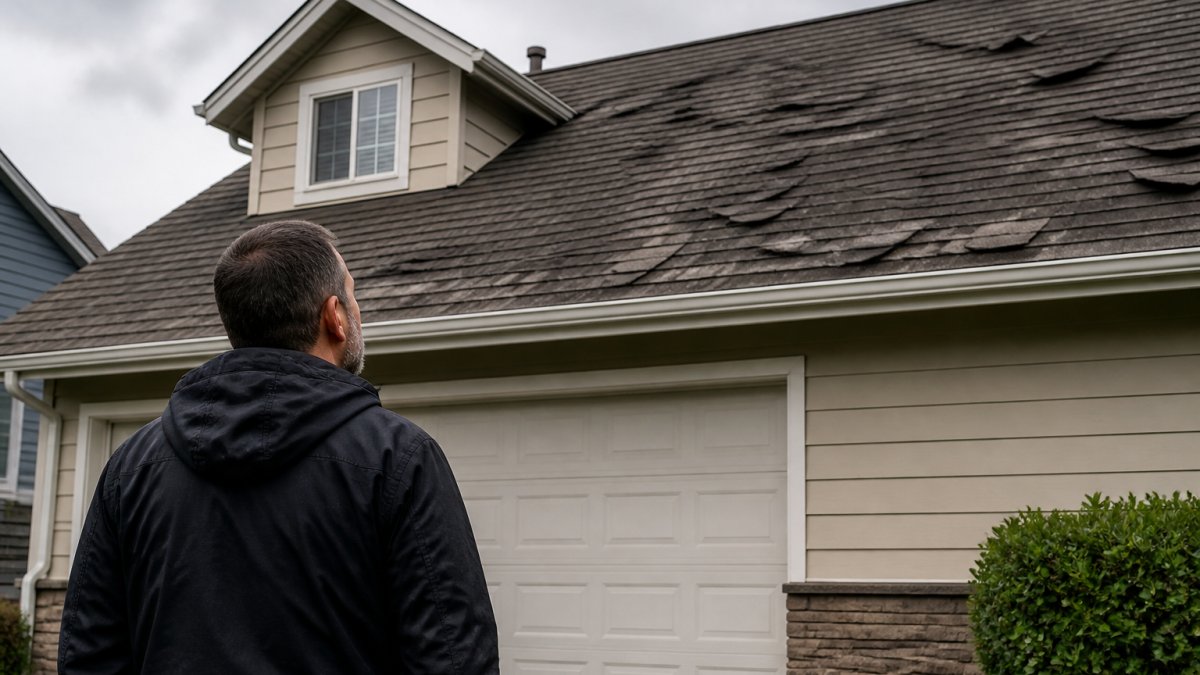
Sign 1: Missing, Cracked, or Curling Shingles
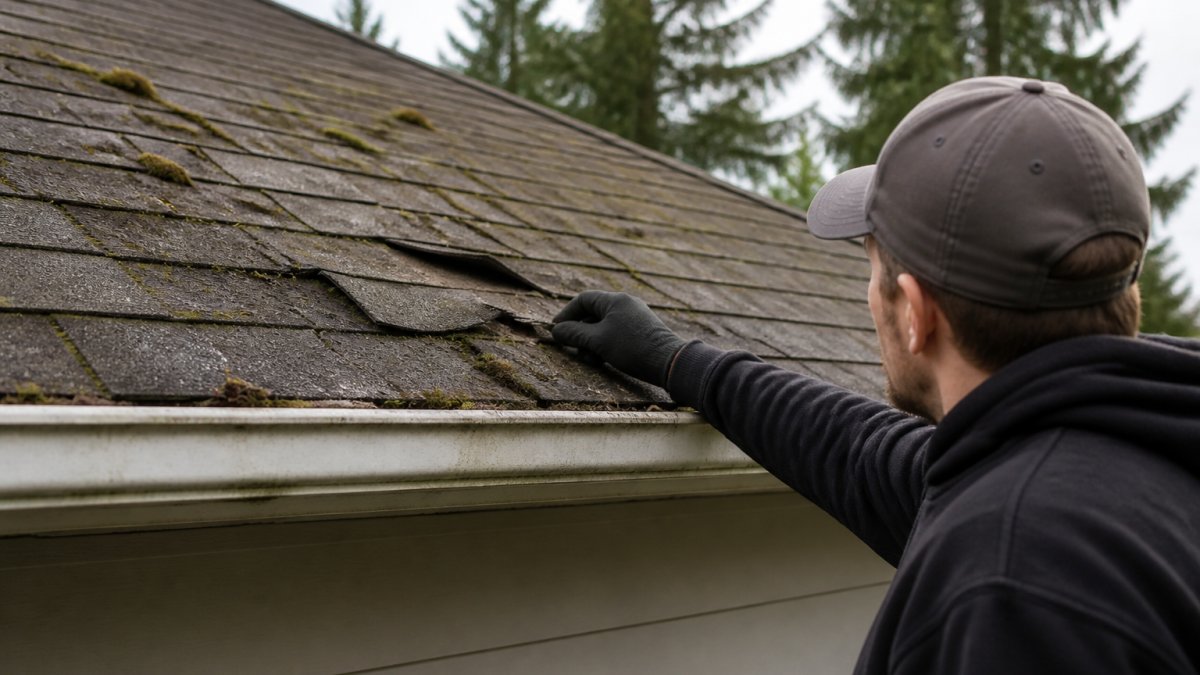
Shingles that curl, crack, or go missing are the clearest early signal. Curling happens when shingles dry out and lose oils; cracked shingles let water straight through. Missing ones leave dark gaps where the underlayment shows.
Sign 2: Granules in Gutters and Dark Streaks
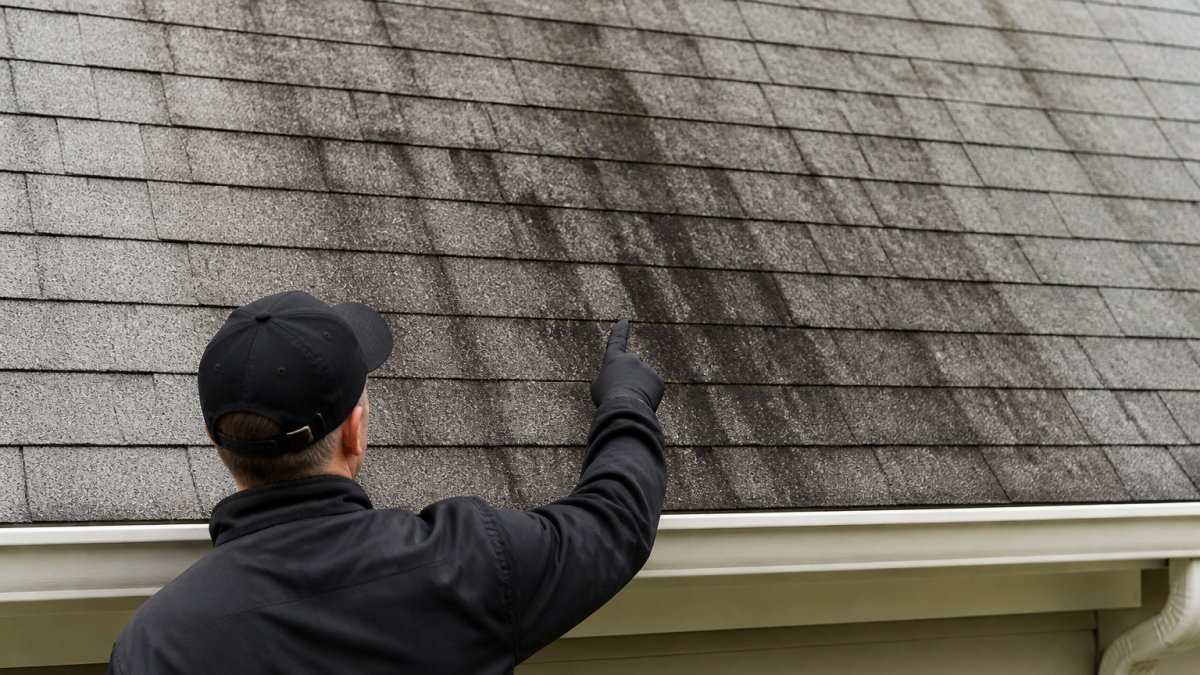
Asphalt shingles shed granules as they age. A little grit in gutters is normal; steady buildup means shingles are wearing thin. Dark streaks usually mean algae, mostly cosmetic, but it holds moisture and shortens shingle life.
Sign 3: Leaks, Water Stains, and Attic Damage
Water stains on upstairs ceilings or walls mean water is already getting in, by then, the leak has usually been active for a while. Check your attic after heavy rain for damp spots, dark streaks on rafters, or a musty smell.
Sign 4: Sagging, Rot, and Structural Concerns
A sagging roofline warns that the decking or framing underneath has taken on water and started to rot. This isn't a repair you can postpone, structural damage spreads and gets more expensive the longer it sits.
Sign 5: Moss, Mold, and Algae Growth
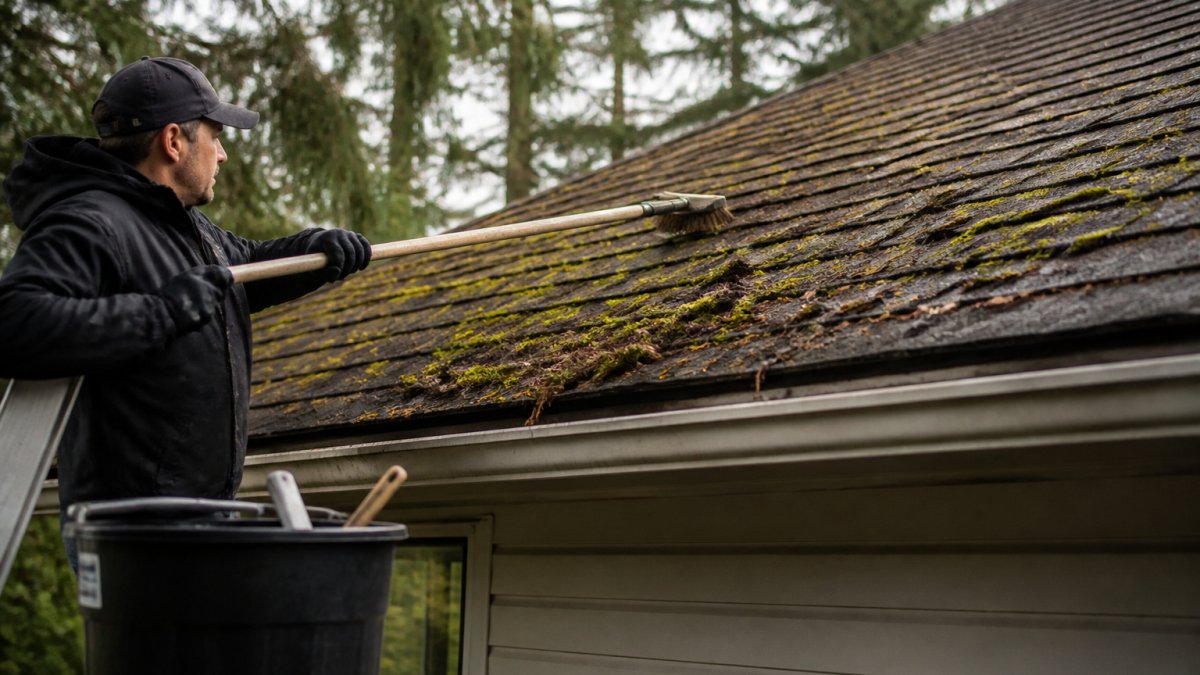
Moss is the number one roof killer in this region, it holds water against shingles and lifts them as it grows. Mold and fungi signal long-term moisture already causing decay. If moss keeps returning no matter how often you clean it, the shingles underneath may already be compromised.
Sign 6: Wind and Storm Damage
After a storm, check for shingles that blew off, lifted, or creased. Wind often hits one side harder and can crack seals between shingles, opening the door to leaks months later.
Sign 7: Roof Age Past Its Projected Lifespan
If your roof is past its expected lifespan, start planning. An asphalt roof over 20 years old is living on borrowed time, even if it looks fine from the street.
Age plus any other warning sign on this list usually tips the decision toward replacement.
Sign 8: Frequent Repairs and Recurring Leaks
One repair is normal; three in two years is a pattern. When you keep patching the same leak or finding new ones, you're spending money on a roof that's already failing.
Recurring leaks often mean the problem is the whole roof, not one spot.
| Warning Sign | What It Means | Urgency |
|---|---|---|
| Curling or missing shingles | Shingles drying out or blowing off | Medium |
| Granules in gutters | Shingles wearing thin | Medium |
| Water stains inside | Active leak | High |
| Sagging roofline | Possible structural damage | Urgent |
| Moss and mold | Trapped moisture, decay | Medium to high |
| Storm damage | Broken seals, lifted shingles | High |
| Roof past lifespan | End of service life | Plan ahead |
| Recurring leaks | Whole-roof failure | High |
Your Roof Inspection Checklist: Ground-Level and Attic Walkthrough
You can spot most warning signs without climbing on the roof. A ground and attic check tells you plenty, and gives a contractor something concrete instead of a vague description. Do the ground pass on a dry day with binoculars and your phone camera, and the attic pass right after heavy rain.
Ground-Level Pass
- Scan the full roof plane with binoculars for missing, curled, or cracked shingles, work one section at a time so you do not miss a patch
- Look for dark streaks, moss patches, or bare spots where granules have worn away
- Check gutters and downspout splash zones for granule buildup, a handful after a storm is normal; a visible layer is not
Attic Pass
- Look for water stains or dark streaks on rafters and roof decking
- Feel for damp or soft spots in the wood, probe gently with a screwdriver, not your hand
- Check for a musty or earthy smell
What Each Material Fails Like
Warning signs look different depending on your roofing material. Knowing what to look for keeps you from misreading normal wear as failure.
- Asphalt shingles: Curling edges, cracking, granule loss, and bald patches where the mat shows through. Three-tab shingles tend to fail faster than architectural shingles.
- Metal roofing: Loose or backed-out fasteners, rust at panel seams and penetrations, and sealant that has dried and pulled away. Standing-seam panels can also develop oil-canning, which is usually cosmetic.
- Clay and concrete tile: Cracked or slipped tiles, broken corners, and failed underlayment. The tile itself can outlast the underlayment by decades, so a leak often means the underlayment is done, not the tile.
Attic Ventilation and Why It Matters
A roof doesn't fail from rain alone. Poor attic ventilation traps heat and moisture, cooking shingles from underneath in summer and feeding condensation and mold in winter. Watch for:
- Rusted nails or staples poking through the roof deck
- Dark staining on the underside of the decking
- A hot attic in summer or a damp, cold one in winter
If you see any of these, the roof may be aging faster than its material lifespan suggests. Ventilation is often corrected at the same time as a replacement.
What a Professional Inspection Adds
A contractor's inspection goes beyond what you can see safely. Expect checks of:
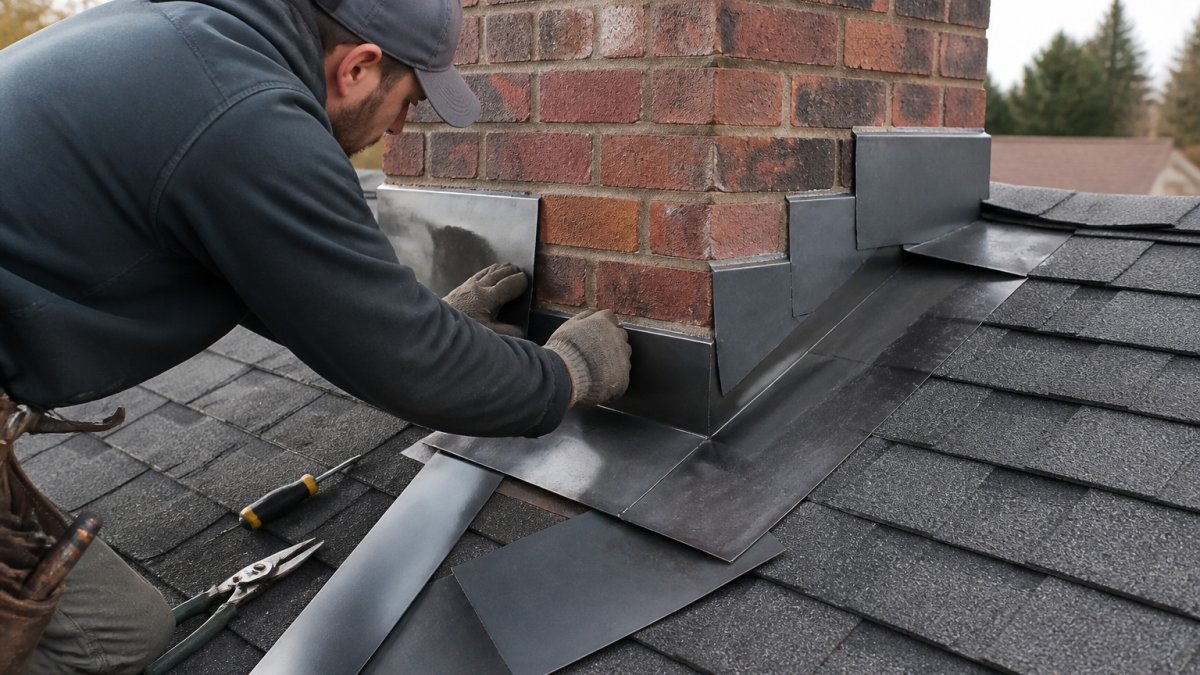
- Flashing at chimneys, valleys, vents, and skylights, the most common leak points
- Pipe boots and other penetrations for cracked rubber or failed seals
- Soffit and ridge ventilation for adequate intake and exhaust
Ask for photos of anything flagged, a written summary, and a clear statement of what's urgent versus what can wait. A replacement recommendation without photos or a written scope is hard to evaluate.
Roof Repair or Replacement? A Decision Framework
Use this framework to decide. The answer usually comes down to age, extent, and how repair cost compares to the roof's remaining life.
Step 1: Age and Remaining Service Life
Start with the roof's age against its expected lifespan. An asphalt roof 20 years into a 25-year life means a repair buys a few years at best; 8 years into a 30-year life usually means repair is right. One way to think about it: divide repair cost by the years it's likely to last.
Step 2: Extent and Location of Damage
- Isolated damage, a few missing shingles after a storm, one cracked pipe boot, a single failed flashing detail, is usually a repair.
- Widespread damage, granule loss across the whole roof, curling on multiple slopes, or leaks in more than one area, points toward replacement.
- Damage at valleys, ridges, or the roof deck is harder and more expensive to repair in place, which shifts the math toward replacement.
Step 3: Leak History and Repair Frequency
One repair is normal. Three repairs in two years is a pattern. When you keep patching the same leak or finding new ones, you are spending money on a roof that is already failing. Recurring leaks often mean the problem is the whole roof, not one spot.
Step 4: The One-Third Rule
A common rule of thumb: if the repair cost is more than about one-third of a full replacement, and the roof is already in the second half of its expected life, replacement is usually the better long-term value. Below that threshold, or on a younger roof, repair usually wins.
Step 5: Structural and Safety Concerns
A sagging roofline, soft decking, or visible rot is not a repair you can postpone. Structural damage spreads and gets more expensive the longer it sits, and a shingle-only repair won't fix compromised decking.
Step 6: Insurance and Storm Claims
If the damage came from a covered event, hail, wind, a fallen limb, your homeowner's policy may pay for part or all of the replacement. A few things to know:
- Most policies cover sudden storm damage but not wear-and-tear or neglect.
- Claims are usually settled on an actual cash value or replacement cost basis, and the difference matters.
- An adjuster will inspect and may approve a repair rather than a full replacement if only part of the roof is damaged.
A contractor experienced with insurance claims can help you understand what your policy is likely to cover, but the coverage decision is between you and your insurer.
Repair vs. Replace at a Glance
| Situation | Likely Path |
|---|---|
| Roof under 15 years old, isolated damage | Repair |
| Roof past 20 years, damage in one area | Evaluate, often replace |
| Roof past 20 years, damage in multiple areas | Replace |
| Active leak with interior staining | Repair or replace depending on extent |
| Sagging or soft decking | Replace |
| Storm damage with insurance coverage | File claim, then decide |
| Repairs becoming a yearly event | Replace |
The Federal Emergency Management Agency guidance on roof damage assessment offers useful tips on judging storm-related roof damage and when to call in a professional.
What Roof Replacement Cost Factors Should You Plan For?
Roof replacement cost depends on several factors, not just home size. Understanding them helps you plan and compare quotes fairly.
The main cost factors include:
- Roof size and pitch: Steeper and larger roofs take more labor and material
- Material choice: Asphalt costs less than metal, tile, or slate
- Layers to remove: Old shingles must be torn off first
Sound Roof Care offers honest pricing with no hidden fees, so you know what you're paying for before work starts. You can review current pricing on our website.
Planning ahead also matters. If a full replacement isn't in the budget yet, professional maintenance and moss treatment can often buy you more time before the job becomes unavoidable.
Frequently Asked Questions
How can I tell if my roof needs to be replaced or just repaired?
The decision usually comes down to age, extent, and repetition. If your roof is under 15 years old and the damage is isolated to one area, a repair often makes sense. But if shingles are failing across multiple slopes, you have recurring leaks, or the roof is past its projected lifespan, replacement is the better investment. A roof inspection checklist that covers shingle condition, granules, attic moisture, and flashing will help you see the full picture before deciding.
Can missing or curling shingles mean I need a new roof?
Not automatically, but they are strong indicators. A few missing shingles after a windstorm can often be replaced individually. When shingles are curling, cracking, or buckling across large sections, it usually means the shingle layer has reached the end of its service life and the underlying deck may be compromised. If you are seeing widespread curling plus granules in your gutters, that combination points toward replacement rather than patching.
Should I get a professional roof inspection before replacing my roof?
Yes. A professional inspection documents your roof's actual condition with photos and a written assessment, so you are not guessing. It also separates cosmetic issues from structural ones, like sagging areas, roof rot, or attic water damage that a ground-level look cannot reveal. Ask the inspector to walk you through what they find and explain which items are urgent versus which can wait.
What should I expect during a professional roof inspection?
A thorough inspection covers the shingles, flashing, valleys, vents, gutters, and attic. The inspector checks for damaged shingles, granule loss, sealant strength, and signs of water intrusion inside the home. They will also look at ventilation, because poor airflow shortens roof lifespan in wet climates. You should receive a written report with photos and a clear recommendation: repair, monitor, or replace.
Roof problems rarely wait for a convenient moment, and this wet climate pushes aging roofs harder than most. At Sound Roof Care, our certified technicians provide honest assessments, professional moss treatment, and full replacements built for the Pacific Northwest. We've helped thousands of homeowners protect their roofs, and we'll tell you straight whether you need a repair or a replacement. Get in touch today to schedule your inspection.