 How-to
7 Steps to Patch a Roof Leak Temporarily
Last Updated: November 7, 2026
Quick Summary
To patch roof leak damage temporarily, first trace the entry point in the attic, then stop the drip inside with a bucket and plastic sheeting. Only climb up in dry, stable conditions, and match your material to the surface: roofing cement or fabric patches on dry shingles, wet-surface tape or membrane in rain.
- Water runs downslope along the deck, so the true entry point sits higher than the ceiling stain.
- Never stand under a bulging ceiling; release the water with a small hole from the side.
- Standard roofing cement will not stick to a soaked roof, so use tape, membrane, or a tarp in rain.
- EPDM and TPO membranes reject asphalt-based products, which can swell or degrade the membrane.
- A temporary roof patch lasts weeks to a few months, so plan a permanent repair within weeks.
Table of Contents
- Find the Leak Source Before You Patch Anything
- Temporary Roof Leak Fix From Inside: Stop the Drip First
- Safety Limits: When You Should Not Get on the Roof
- How to Fix a Roof Leak While Raining
- Temporary Roof Repair Materials and What Each One Handles
- Step-by-Step: Patching Shingles, Flashing, and Small Roof Leaks
- How Long Does a Temporary Roof Patch Last?
- Document the Damage and Book a Professional Repair
- Frequently Asked Questions
Find the Leak Source Before You Patch Anything
A roof leak rarely shows up where the water enters. Water travels along framing, insulation, and sheathing before it finds a gap, so the ceiling stain is often several feet from the actual hole.
This guide from Sound Roof Care walks through the whole sequence: tracing the leak, stopping the drip inside, deciding whether it is safe to go up, and applying a patch that will last until a permanent repair.
Trace Water From the Ceiling Stain to the Roof Surface
Start in the attic with a flashlight and a notepad. Look for water tracks, dark staining on rafters, or damp insulation. Follow the trail uphill.
Check common suspects first:
- Chimney and vent flashing
- Pipe boots and roof penetrations
- Valleys where two roof planes meet
Mark the spot with chalk on the underside of the deck. That mark tells you where to look once you are on the roof. For a deeper walkthrough of attic tracing, see our guide on how to find a roof leak source in the attic.
Temporary Roof Leak Fix From Inside: Stop the Drip First
The fastest temporary roof leak fix from inside is to catch the water and move it away from your belongings. You are not stopping the leak here. You are limiting interior water damage while you plan the roof work.
Start with these steps:
- Place a bucket under the drip. Set it on a towel to catch splashes.
- Move furniture, electronics, and rugs out of the path.
- If water is pooling in a sagging ceiling, poke a small hole with a nail to release it into the bucket. A controlled drip beats a collapsed ceiling.
- Roll up plastic sheeting and tack it above the ceiling to channel water toward the bucket.
Watch out: never stand under a bulging ceiling. That pocket of water is heavy and can come down without warning.
Safety Limits: When You Should Not Get on the Roof
Some conditions make a roof climb too dangerous, no matter how small the leak. A wet, steep, or storm-damaged roof is not worth the risk of a fall. Use the decision path below to choose between an interior-only measure, a ladder-edge repair, and calling for help.
The Safety Decision Path
Start with the roof surface and the weather, then work down the list. Stop at the first condition that applies.
- Is the roof wet, icy, or covered in dew or frost? Stay off. Work from the inside and use wet-surface products only from a stable ladder at the eave, or call a roofer.
- Are winds strong or gusting? Stay off. Wind can lift a tarp, shift a ladder, and push you off balance. Secure what you can from the ground and wait.
- Is the pitch steep, or do you lack a harness and roof anchors? Stay off the roof surface. A ladder-edge repair or an interior measure is the limit.
- Are shingles loose, soft, or storm-damaged underfoot? Stay off. Soft decking and loose shingles are a fall and a punch-through risk.
- Is your ladder placement unstable, or do you have no helper to spot you? Do not climb. Fix the ladder setup or find a spotter before you go up.
If none of those apply, a dry, low-slope roof with stable footing and a solid ladder can be worked on carefully. Even then, keep the work short and stay away from the edges.
Interior-Only Measures vs. Ladder-Edge Repairs
An interior-only measure is the right choice when the roof is wet, windy, steep, or damaged. Catch the drip, move belongings, and relieve a bulging ceiling.
A ladder-edge repair is the middle option.
A full roof-surface repair is only for dry, stable conditions with proper fall protection.
Watch out: a bulging ceiling can collapse without warning. Never stand under it, and release the water with a small hole from the side, not from below.
When to Call Emergency Services or a Roofer
Call emergency services if water is near electrical fixtures, a ceiling is sagging heavily, or the roof structure looks compromised. Those are not patch-and-wait situations.
Call a roofer when the leak is not near the edge, when the roof is steep or damaged, when you cannot find the entry point, or when the patch you applied has already failed once.
The Occupational Safety and Health Administration guidance on fall protection treats falls as a leading cause of serious injury in construction and repair work, and roof work sits at the top of that list.
How to Fix a Roof Leak While Raining
You can fix a roof leak while it is raining, but only with materials that bond to a wet surface.
What works in active rain:
- Peel-and-stick roofing tape pressed over the leak
- A self-adhering membrane patch
- A tarp tied down over the damaged area
Work from a ladder at the eave, not on the roof itself. Press the tape firmly with a roller or the back of a putty knife.
For the full emergency sequence, read our guide on how to stop a roof leak during rain.
Temporary Roof Repair Materials and What Each One Handles
Temporary roof repair materials fall into two groups: wet-surface products for active leaks, and dry-surface products for a solid, lasting patch. Pick the material to match the weather, the roof surface, and how long you need the patch to hold. The table below is a starting point; the notes after it explain where each product fails.
| Material | Best For | Bonds to Wet Surface? | Typical Lifespan | Surface Limits |
|---|---|---|---|---|
| Roofing cement | Small cracks, nail holes | No | Weeks to a few months | Clean, dry asphalt, metal, or masonry; not for EPDM or TPO |
| Roof patch (fabric + cement) | Larger holes, torn shingles | No | A few months | Dry asphalt shingles and flat roofs; mesh needed over gaps wider than about 1 inch |
| Roofing tape | Quick seam and flashing fixes | Yes | Weeks to months | Best on clean metal flashing and asphalt; may not stick to dirty or granulated surfaces |
| Self-adhering membrane | Flashing, valleys, wide areas | Yes | Months | Dry or damp clean surfaces; not over ponding water or loose gravel |
| Roof tarp | Storm damage, big openings | Yes | Until a contractor arrives | Any roof type; needs battens and anchors to resist wind |
Match the Material to the Roof Type
Asphalt shingles accept roofing cement, fabric patches, roofing tape, and self-adhering membrane.
Metal roofs are slick and expand and contract with temperature. Use a roofing-grade sealant labeled for metal or a butyl tape designed for metal seams.
Flat roofs and low-slope membranes are a different category.
Flashing and penetrations are the most common leak points.
Watch out: mixing product families, such as asphalt cement on an EPDM membrane, can damage the roof surface and create a bigger repair than the leak you started with.
Choose by Weather and Surface Condition
If the roof is wet or it is actively raining, limit yourself to wet-surface products: roofing tape, self-adhering membrane, or a tarp.
If the roof is dry and you have time, a fabric patch with cement or a self-adhering membrane gives the longest temporary life.
Temperature matters. Most roofing tapes and self-adhering membranes are rated for application above roughly 40°F to 50°F, and some need warmer conditions for the adhesive to flow.
What Each Product Will Not Do
Roofing cement is not a structural filler. It seals small cracks and nail holes, but it will sag out of a hole wider than a pencil.
Roofing tape is not a substitute for flashing repair.
A tarp is only as good as its tie-down.
For a closer comparison of patch products, see our roundup of the best temporary roof patch materials.
Step-by-Step: Patching Shingles, Flashing, and Small Roof Leaks
It is straightforward to patch roof leak damage once the roof is dry and safe. Work in dry weather, keep your feet on stable footing, and follow these steps.
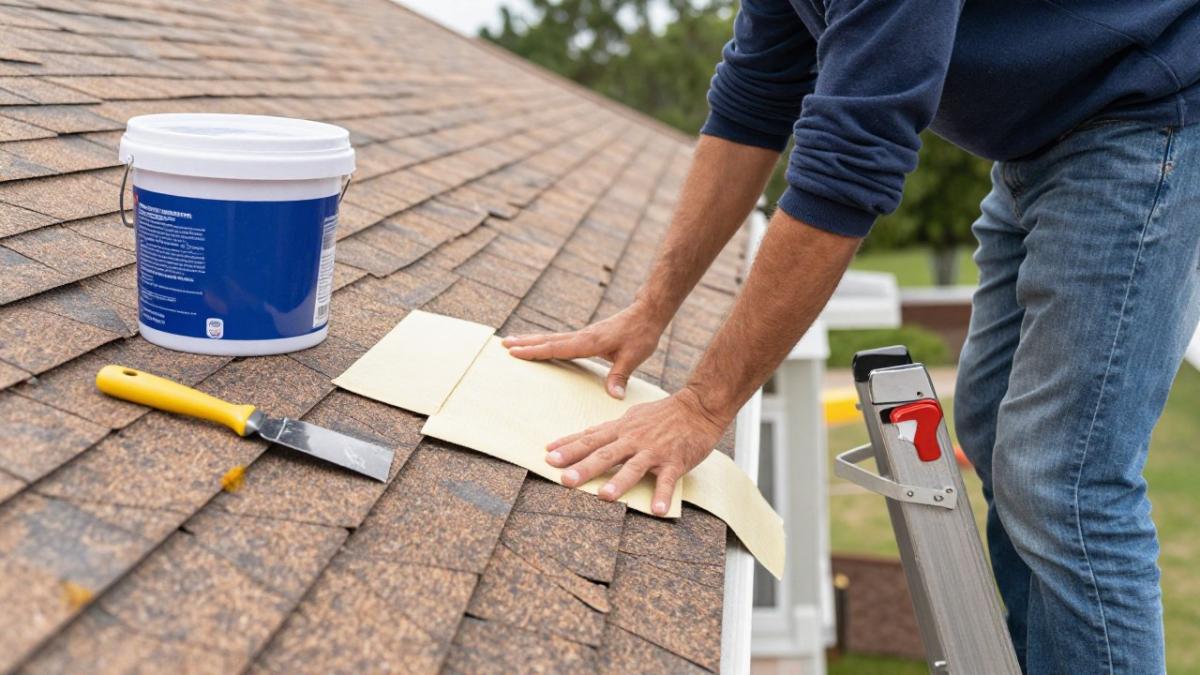
- Clear the area. Sweep away debris, moss, and loose grit so the patch can bond.
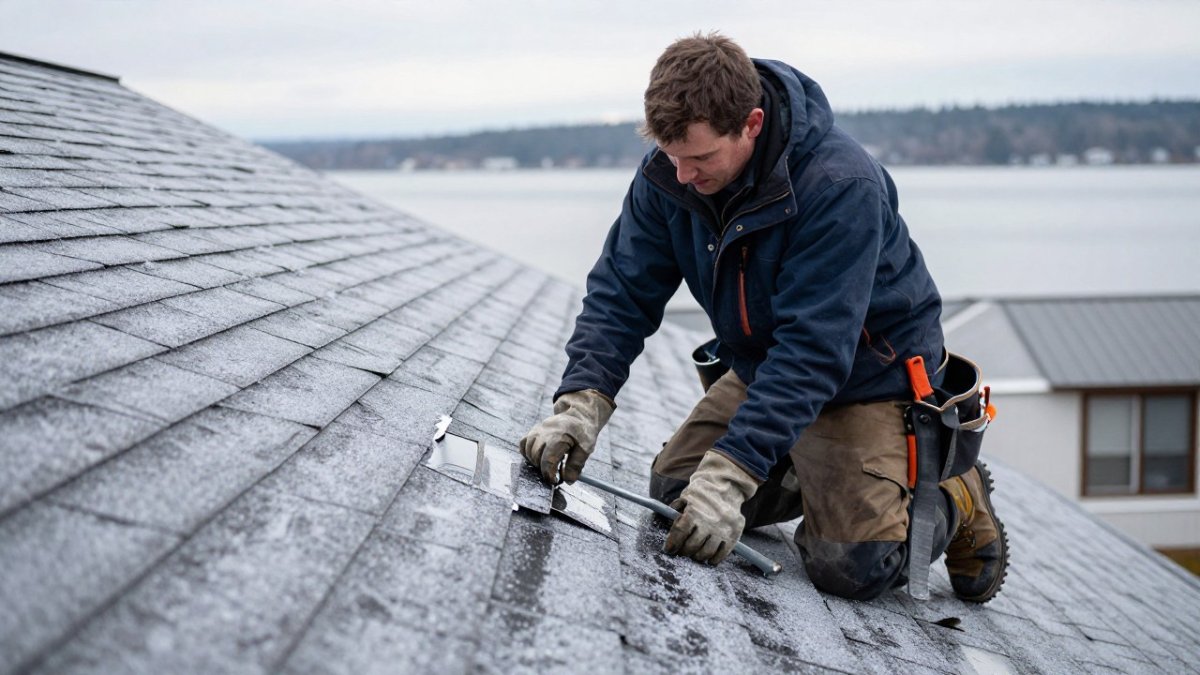
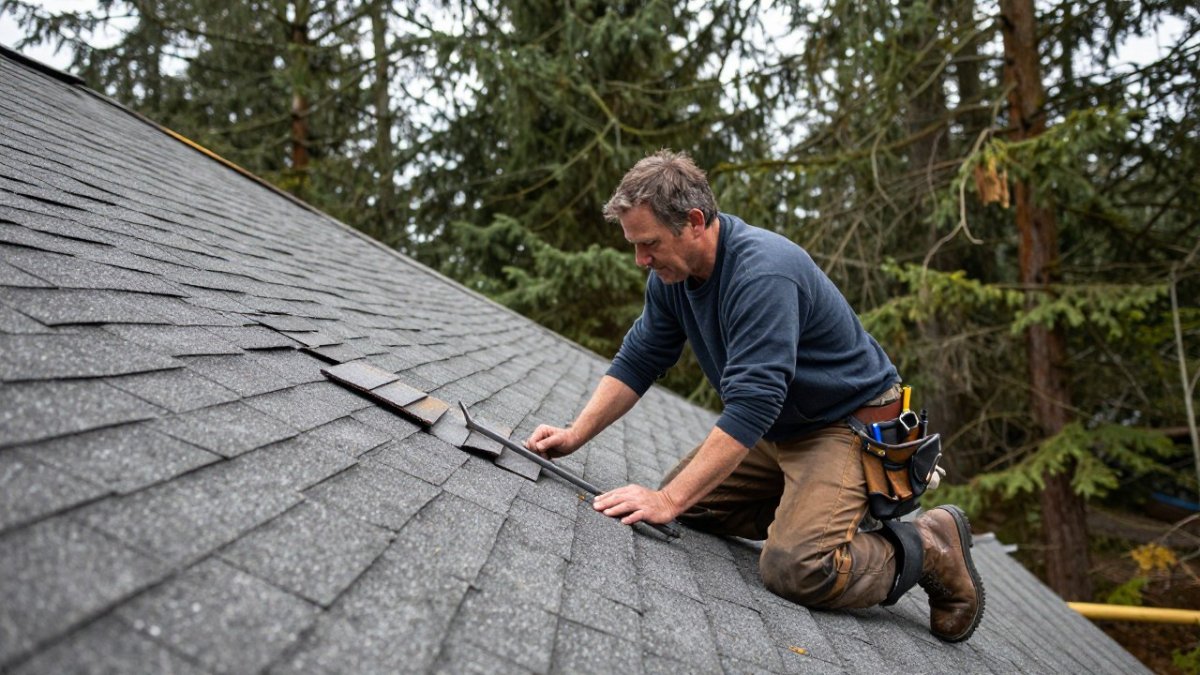
- Fix damaged shingles. Slide a new shingle under the one above, or seal a lifted edge with roofing cement.
- Seal flashing. Run roofing tape or membrane along the flashing edge, overlapping the metal and the shingle.
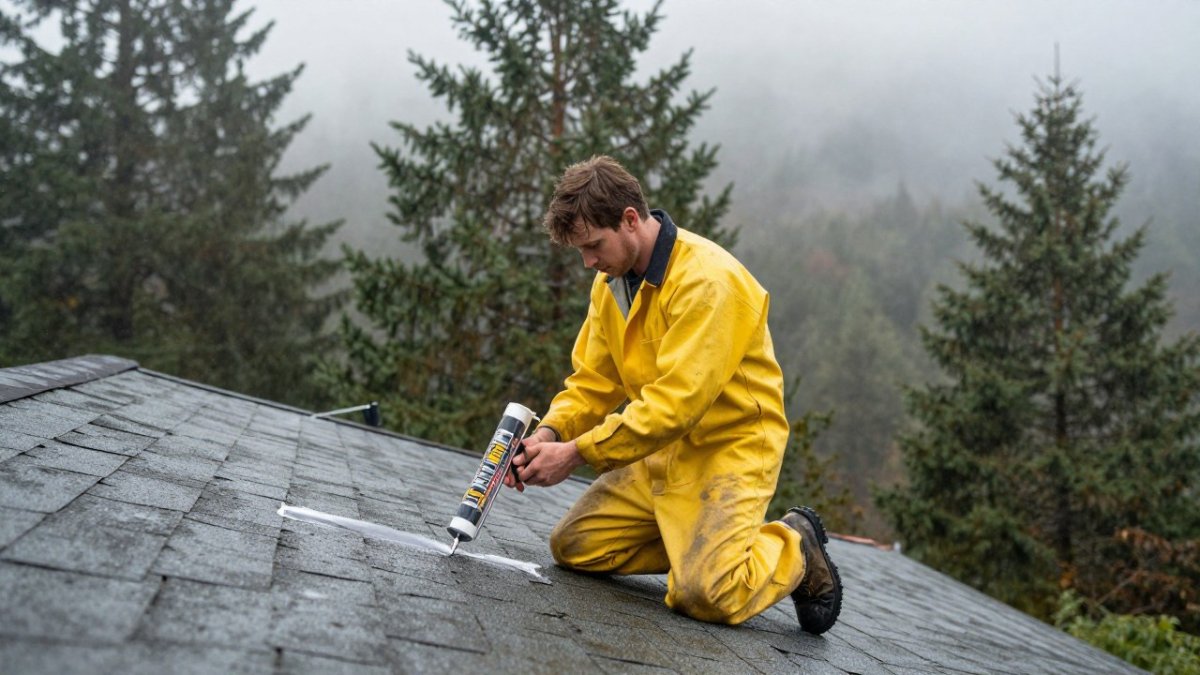
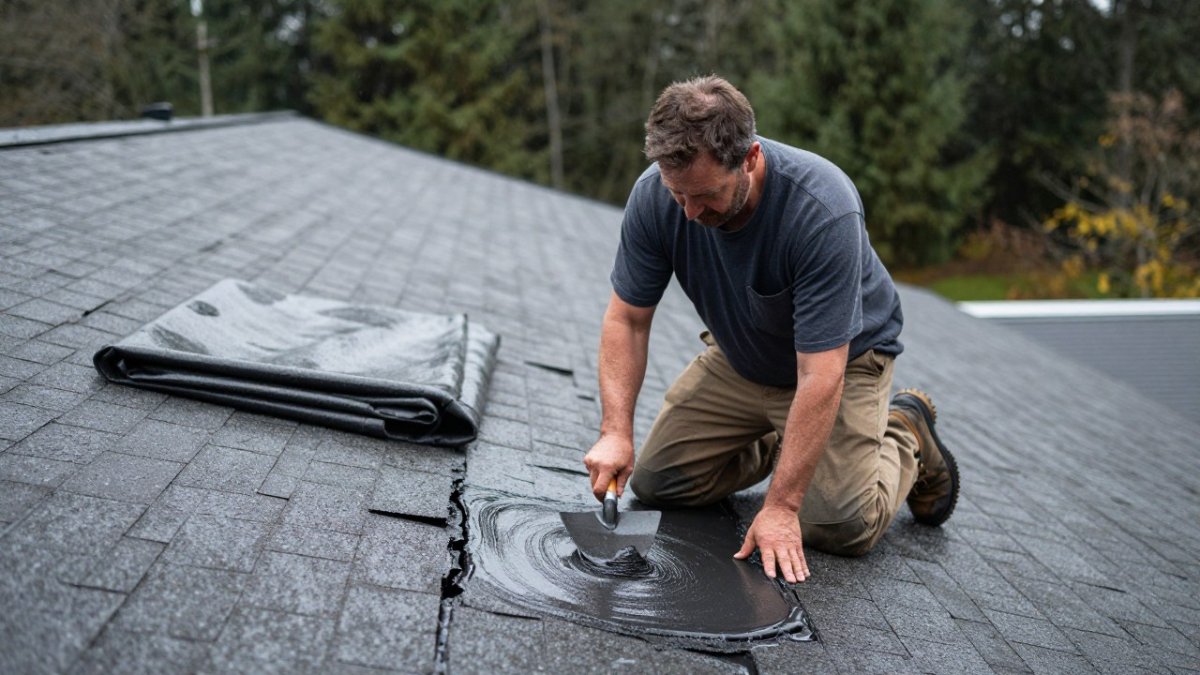
- Patch small leaks. Apply roofing cement into cracks, or set a fabric patch over the hole and coat it.
- Press and roll. Smooth every edge so water cannot get under the patch.
- Check from inside. Watch the attic mark for a dry spell to confirm the leak has stopped.
For chimney flashing specifically, our guide on fixing a small roof leak around chimney flashing breaks down the seven steps.
How Long Does a Temporary Roof Patch Last?
A temporary roof patch lasts weeks to a few months, depending on the material and the weather. Tape and cement are short-term.
Sun, rain, and freeze-thaw cycles break down temporary materials fast. Plan a permanent repair within weeks, not seasons. Check the patch after every storm and reapply if edges lift.
A patch is a bridge, not a fix. The longer it stays, the more chance water finds another path.
Document the Damage and Book a Professional Repair
Take photos of the leak, the stain, and the patch before you call anyone.
The Insurance Information Institute's guidance on filing a homeowners claim recommends documenting damage promptly and saving all receipts, which supports your claim and speeds the process.
A temporary patch buys you time. A permanent repair protects the roof deck, insulation, and attic.
When you are ready to move from a patch to a real fix, book a professional roof leak repair with our team.
A temporary patch will get you through the next storm, but it will not stop the leak for good.
Frequently Asked Questions
Can you fix a roof leak from inside while it is raining?
You can slow the leak from inside, but you cannot patch the roof itself from indoors. Move belongings away from the drip, place a bucket underneath, and if water is pooling in the ceiling, pierce a small hole at the lowest point with a nail to drain it in a controlled way. That reduces interior water damage and ceiling sag until the weather clears. The actual patch goes on the roof surface once it is dry enough for materials to adhere.
How long can a temporary roof patch last?
It depends on the material and weather. A tarp secured over a damaged area can hold for weeks to a few months, while roofing cement or a self-adhering patch on a small leak often lasts several months if the surface was clean and dry when applied. Treat every temporary patch as a bridge, not a repair. Inspect it after heavy rain and schedule a professional roof inspection before the next storm season.
What temporary roof repair materials should I keep on hand?
A basic kit covers most emergencies: a heavy-duty polyethylene tarp, roofing cement, a roll of self-adhering roofing tape or membrane, roofing nails, a putty knife, and a stiff brush for cleaning the surface. Add a bucket and plastic sheeting for interior protection. Buy materials rated for wet or cold application if you live in a rainy climate, since standard adhesives may not bond to a damp roof deck.
Will flex seal or similar spray products fix a roof leak?
Spray-on rubberized coatings can seal small cracks on clean, dry surfaces, but they are not a reliable fix for damaged shingles, worn flashing, or active leaks in heavy rain. They also make it harder for a roofer to assess the original damage. For a patch roof leak job that has to hold through storms, use roofing cement, self-adhering membrane, or a properly secured tarp, then have the area inspected.